Microplastics and nanoplastics have become an emerging global concern as they spread through air, water, soil, and even the food we eat. These tiny plastic particles, often invisible to the human eye, originate from the breakdown of larger plastic items, synthetic clothing, cosmetics, packaging, and industrial processes. As the environment continues to accumulate plastic waste, humans are increasingly exposed to particles small enough to enter the body through breathing, ingestion, or skin contact. While research is ongoing, scientific evidence suggests that microplastics and nanoplastics may influence human health through inflammation, oxidative stress, and potential disruption of cellular processes. Understanding these risks helps individuals, communities, and policymakers make informed decisions to reduce exposure and support healthier environments.
What Microplastics and Nanoplastics Are
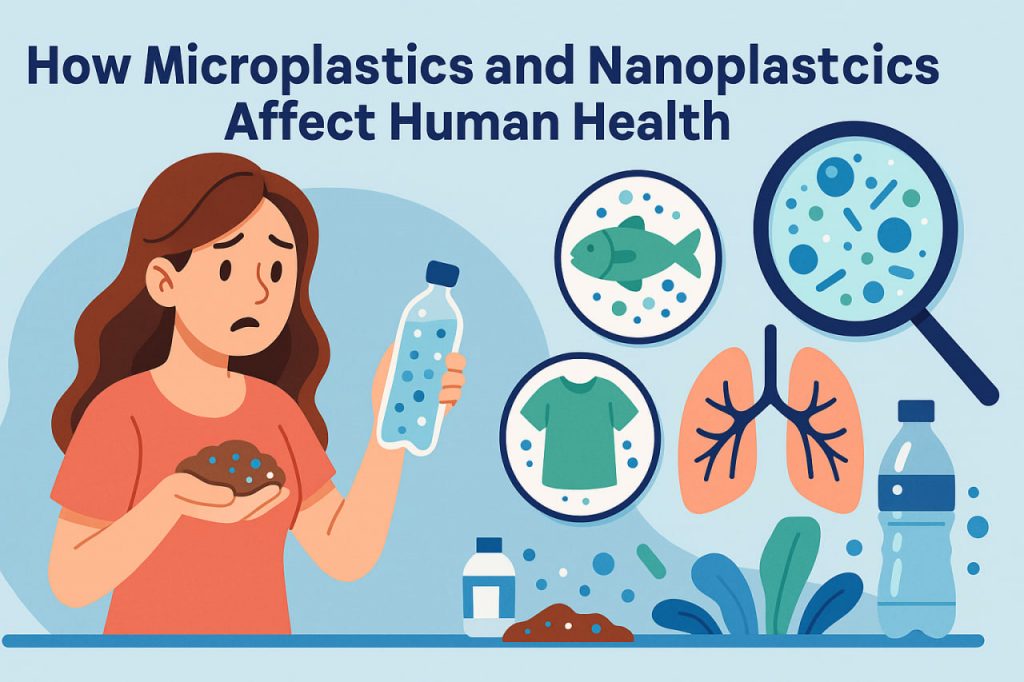
Microplastics are plastic fragments smaller than 5 millimeters, while nanoplastics are even smaller — often less than 1 micrometer in size. Their tiny scale allows them to move easily through water systems, food chains, and atmospheric currents. Nanoplastics can even penetrate biological membranes, increasing their potential health impact. These particles originate from various sources: degraded bottles and packaging, tire wear on roads, washing synthetic clothes, cosmetics with microbeads, and industrial waste. According to environmental toxicologist Dr. Helena Strauss:
“The danger of micro- and nanoplastics lies not only in their size
but in the chemicals they carry and the biological systems they can reach.”
Understanding their pathways is the first step toward minimizing exposure.
How These Particles Enter the Human Body
Microplastics and nanoplastics can enter the body through inhalation, ingestion, and, to a lesser degree, skin contact. Inhaled particles may accumulate in the lungs, while ingested ones can be found in drinking water, seafood, salt, fruits, vegetables, and even household dust. Some studies show that nanoplastics can cross the gut barrier and circulate in the bloodstream, potentially reaching organs such as the liver, kidneys, and possibly even the brain. Their ability to interact with biological tissues raises concerns about long-term accumulation and potential health effects.
Potential Health Effects: What Science Suggests
Although research is still developing, several potential health impacts have been identified:
- Inflammation: Plastic particles can trigger immune responses, leading to local or systemic inflammation.
- Oxidative Stress: Many plastics contain additives and chemicals that may increase oxidative stress inside cells.
- Chemical Exposure: Microplastics can absorb toxic pollutants such as heavy metals, pesticides, and industrial chemicals, transporting them into the body.
- Respiratory Issues: Inhaled particles may irritate lung tissue or contribute to chronic respiratory discomfort.
- Possible Cellular Interference: Early studies suggest nanoplastics may interfere with cell division, energy production, or communication pathways.
While scientists emphasize that more research is needed to clarify long-term risks, the presence of microplastics in human blood, lungs, and organs signals an urgent need for global attention.
Environmental Pathways and Bioaccumulation
Microplastics and nanoplastics accumulate throughout terrestrial and aquatic ecosystems. Fish, shellfish, and other marine organisms ingest them, allowing particles to move up the food chain. Soil contamination may affect crops, while airborne particles spread through wind and household dust. These widespread pathways demonstrate that exposure is not limited to specific regions but is a global issue linked to plastic waste mismanagement.
How to Reduce Exposure and Protect Health
Although complete avoidance is impossible, individuals can take steps to reduce exposure:
- Choose products with minimal plastic packaging.
- Use natural fiber clothing instead of synthetics when possible.
- Install filters that reduce microplastics released during laundry.
- Avoid heating food in plastic containers.
- Ventilate indoor spaces to reduce airborne particles.
- Support recycling, waste reduction, and environmental regulations.
As environmental researcher Dr. Marco Bennett explains:
“Reducing microplastic exposure begins with everyday choices —
small habits can significantly lower the burden on our bodies and ecosystems.”
Long-term solutions require collective efforts from industry, policy-makers, and consumers.
Interesting Facts
- Humans may ingest tens of thousands of microplastic particles annually through food and water.
- Nanoplastics are so small they can potentially cross the blood–brain barrier.
- Plastic fibers released during laundry are one of the largest sources of microplastics in oceans.
- Microplastics have been detected in rainwater, showing how deeply they infiltrate the environment.
- Some marine organisms mistake microplastics for food, disrupting entire food webs.
Glossary
- Microplastics — plastic particles smaller than 5 mm found in air, water, and food.
- Nanoplastics — extremely small plastic particles capable of entering cells and tissues.
- Bioaccumulation — the gradual build-up of substances within living organisms.
- Oxidative Stress — an imbalance between free radicals and antioxidants in the body.
- Pollutant Transport — the ability of microplastics to carry toxic chemicals into biological systems.