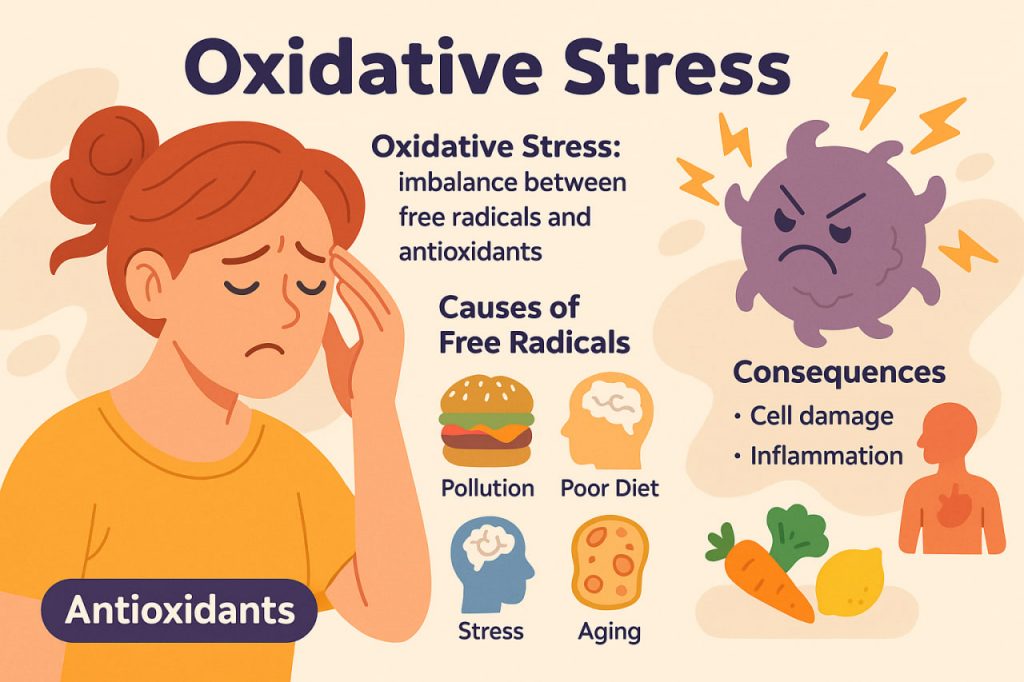
Oxidative stress is a biological condition that occurs when the body’s natural antioxidant defenses are unable to neutralize an excess of free radicals — unstable molecules that can damage cells, proteins, and DNA. Although free radicals are a normal byproduct of metabolism, their levels rise significantly during illness, environmental exposure, poor lifestyle habits, or aging. When oxidative stress becomes chronic, it may influence the development of various health conditions, ranging from inflammation to metabolic imbalance. Understanding oxidative stress is essential for maintaining long-term well-being, as it helps explain how lifestyle choices, environmental toxins, and cellular processes interact. Research shows that managing stressors, supporting antioxidant systems, and promoting healthy habits can help reduce the harmful effects of oxidative stress on the body.
What Causes Oxidative Stress and Why It Matters
Free radicals form naturally during processes such as energy production, immune response, and detoxification. However, factors like pollution, smoking, lack of sleep, poor diet, and high stress can significantly increase their concentration. When free radicals overwhelm antioxidants, they begin damaging cell membranes and genetic material. This imbalance is linked to fatigue, inflammation, and premature cellular aging. According to molecular biologist Dr. Helena Brooks:
“Oxidative stress is not just a chemical imbalance —
it is a signal that the body is struggling to maintain stability under pressure.”
Recognizing these triggers helps individuals make choices that support cellular health and reduce long-term risks.
How Oxidative Stress Affects the Body
Oxidative stress impacts nearly every system of the body. It can weaken immune function, contribute to chronic inflammation, and reduce the body’s ability to repair damage. At the cellular level, oxidative stress may alter proteins, disrupt communication between cells, and interfere with energy production in mitochondria. Over time, this can influence aging processes and general vitality. Although oxidative stress alone does not directly cause disease, it acts as a contributing factor that makes the body more vulnerable to various health challenges.
Natural Antioxidant Defenses and Their Role
The human body is equipped with a sophisticated defense network of antioxidants — molecules that neutralize free radicals and repair damage. These include vitamin C, vitamin E, glutathione, and various enzymes produced inside cells. A balanced diet rich in fruits, vegetables, nuts, and whole grains strengthens this system. Sleep, stress management, and regular physical activity also support antioxidant defenses. When these systems function efficiently, the body maintains equilibrium and prevents oxidative stress from escalating.
Lifestyle Factors That Influence Oxidative Stress
Daily habits have a strong impact on oxidative balance. Diets high in processed foods, sugars, and unhealthy fats contribute to free radical formation, while nutrient-rich diets help reduce cellular stress. Environmental factors — such as pollution, UV radiation, and cigarette smoke — expose the body to higher oxidative loads. Chronic psychological stress increases hormone levels that stimulate free radical production. As wellness researcher Dr. Samuel Patel explains:
“Healthy lifestyles don’t eliminate oxidative stress,
but they allow the body to manage it without long-term harm.”
Small, consistent habits greatly influence cellular resilience.
Strategies to Reduce Oxidative Stress
While oxidative stress cannot be avoided entirely, it can be minimized through practical daily choices:
- Eating antioxidant-rich foods like berries, leafy greens, nuts, and whole grains
- Staying hydrated to support detoxification
- Engaging in regular, moderate physical activity
- Protecting skin from UV exposure
- Ensuring adequate sleep
- Managing emotional stress through mindfulness, rest, and balanced routines
- Avoiding tobacco smoke and limiting exposure to pollutants
These steps help maintain cellular balance and support overall health.
Interesting Facts
- Free radicals are natural byproducts of cellular energy production in mitochondria.
- Exercise briefly increases oxidative stress but strengthens antioxidant systems long-term.
- Emotional stress can elevate oxidative stress levels by increasing stress hormones.
- The body produces its most powerful antioxidant, glutathione, inside cells.
- Air pollution is one of the major external sources contributing to oxidative stress worldwide.
Glossary
- Free Radicals — unstable molecules that can damage cells when present in excess.
- Antioxidants — molecules that neutralize free radicals and protect cells.
- Mitochondria — organelles that generate cellular energy and produce some free radicals.
- Inflammation — the body’s response to injury or stress, which can be influenced by oxidative imbalance.
- Glutathione — a key antioxidant produced naturally by the body.