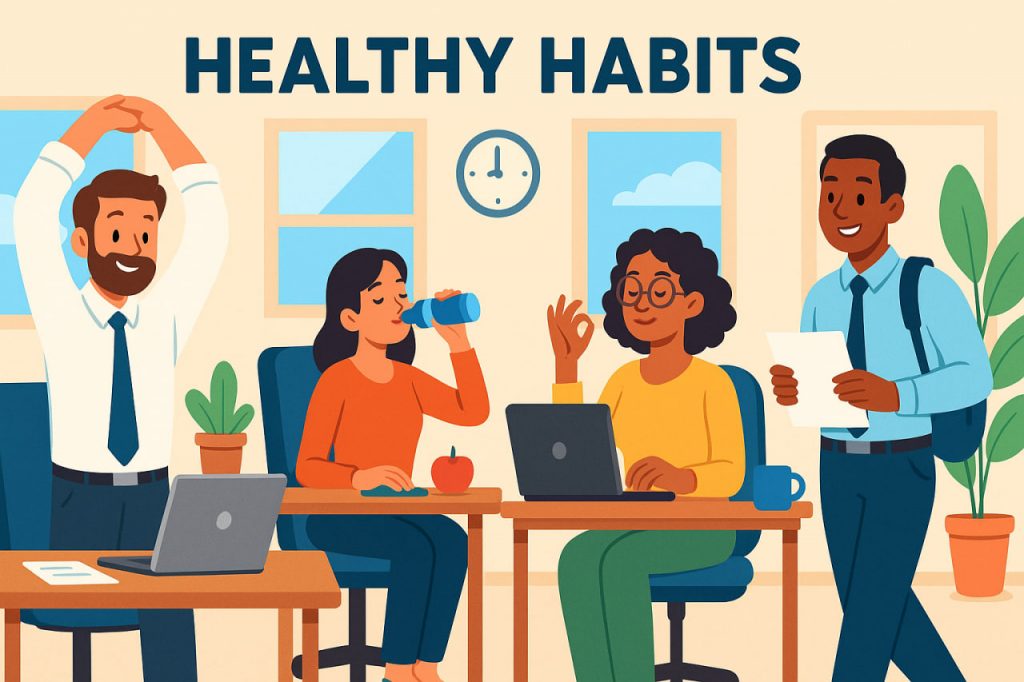
Office work has become one of the most common forms of employment worldwide, but spending long hours sitting, staring at screens, and working in confined indoor spaces can negatively affect physical and mental health. Prolonged sedentary behavior is linked to back pain, fatigue, weight gain, eye strain, stress, and reduced cardiovascular fitness. However, simple daily habits, ergonomic adjustments, and mindful routines can significantly improve health and productivity. Understanding how to balance work demands with physical and emotional well-being is essential for long-term health in modern office environments.
Many office workers struggle with low energy, tight muscles, and difficulty maintaining concentration. These issues often arise not from the work itself, but from how the body reacts to inactivity and inadequate workspace design. Fortunately, even small changes — better posture, short movement breaks, hydration, and adjusted screen settings — can greatly reduce strain and support overall wellness.
Ergonomics: Creating a Healthier Workspace
Proper workstation setup is one of the most effective ways to prevent discomfort and long-term health problems.
Key principles include:
- keeping the monitor at eye level
- maintaining neutral wrist positions
- choosing a chair with lumbar support
- keeping feet flat on the floor or on a footrest
- placing the keyboard and mouse at elbow height
According to occupational health expert Dr. Megan Hollister:
“Ergonomics isn’t just comfort —
it prevents injury and keeps workers productive for years.”
Movement Matters: Breaking Up Sitting Time
The human body is not designed for long periods of stillness. Even light movement increases blood flow, activates muscles, and improves focus.
Helpful strategies:
- stand or stretch every 30–45 minutes
- take walking breaks during calls
- use stairs instead of elevators
- incorporate short breathing or mobility exercises
- consider a sit–stand desk if available
Even 2–3 minutes of movement can reset posture and reduce tension.
Protecting Eye Health
Screen use is one of the biggest sources of strain for office workers.
Effective habits include:
- following the 20-20-20 rule (every 20 minutes look 20 feet away for 20 seconds)
- adjusting brightness and contrast
- using blue-light filters or warmer color modes
- blinking intentionally to prevent dryness
- positioning screens to minimize glare
Proper eye care supports concentration and reduces headaches.
Managing Stress and Mental Health
Office environments often involve deadlines, multitasking, and digital overload. To support mental well-being:
- practice short breathing or mindfulness exercises
- avoid skipping meals
- limit notifications during focused tasks
- maintain healthy work–life boundaries
- take breaks outdoors when possible
Social interaction with coworkers also helps reduce stress and improve mood.
Hydration and Nutrition
Office workers often forget to drink water or rely on sugary snacks for quick energy.
Helpful habits:
- keep a water bottle at your desk
- choose fruits, nuts, and whole grains over processed snacks
- avoid excessive caffeine late in the day
- eat balanced meals to maintain energy and focus
Hydration supports cognitive function, digestion, and physical comfort.
Posture Awareness
In the office, poor posture can lead to chronic pain.
Remember to:
- relax shoulders away from ears
- keep the spine aligned
- avoid leaning forward toward the screen
- position elbows close to the body
Small posture corrections throughout the day help prevent long-term musculoskeletal issues.
Exercise Outside Work Hours
Regular movement beyond the office offers major health benefits:
- improved cardiovascular health
- reduced stress
- better sleep
- stronger muscles and bones
- enhanced mood and energy
Even moderate activities such as walking, cycling, swimming, or yoga make a significant difference.
Interesting Facts
- Sitting for more than 8 hours per day without activity increases health risks similar to smoking.
- Office workers blink 66% less than normal when focusing on screens.
- Standing for just 10 minutes per hour reduces back pain and boosts productivity.
- Good ergonomics can reduce musculoskeletal injuries by up to 60%.
- Short movement breaks improve cognitive performance and creativity.
Glossary
- Ergonomics — the science of designing environments to fit human needs and prevent injury.
- Sedentary Behavior — prolonged sitting with little physical activity.
- Blue-Light Filter — a screen adjustment that reduces eye strain from high-energy light.
- Mobility Exercises — movements that improve joint flexibility and reduce stiffness.
- Work–Life Balance — maintaining healthy boundaries between work and personal life.