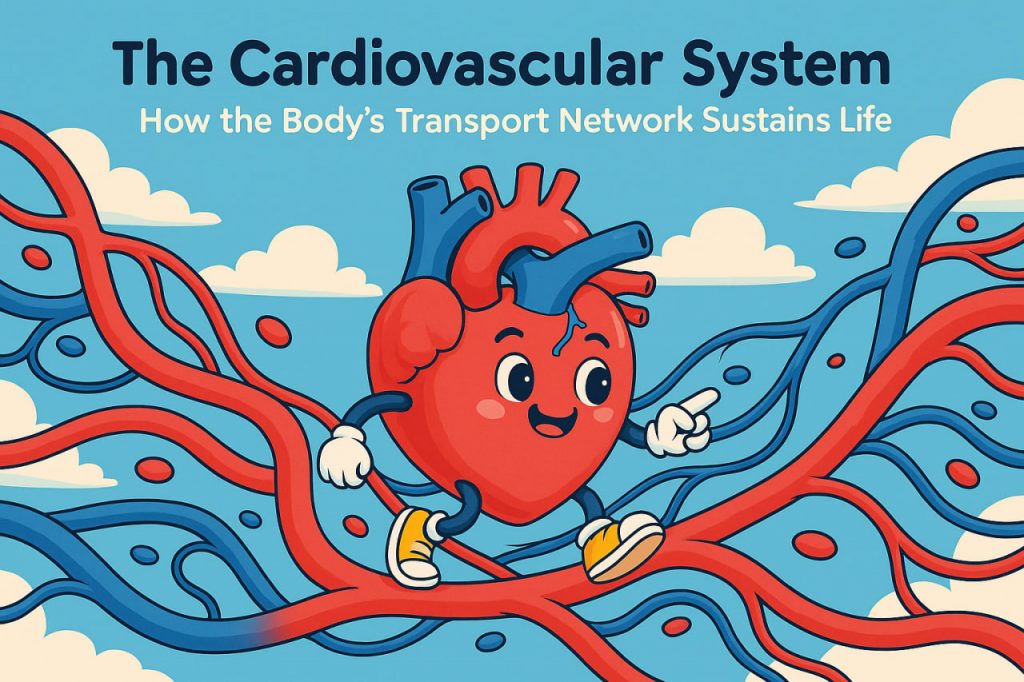
The cardiovascular system is one of the most vital biological systems of the human body. It delivers oxygen, nutrients, hormones, and immune cells to tissues while removing waste products such as carbon dioxide and metabolic by-products. Composed of the heart, blood vessels, and blood, this intricate system functions as the body’s transportation and communication network. Without it, cells could not survive, energy could not be produced efficiently, and the body would lose its ability to adapt to stress, infection, or physical activity.
The cardiovascular system must respond instantly to changes in the body’s needs — supplying more blood during exercise, conserving heat during cold exposure, or increasing pressure when you stand up. Its ability to self-regulate is essential for maintaining homeostasis, the internal balance required for life.
The Heart: A Powerful Biological Pump
The heart is a muscular organ that beats approximately 100,000 times per day. It has four chambers:
- Right atrium
- Right ventricle
- Left atrium
- Left ventricle
The right side pumps deoxygenated blood to the lungs, while the left side sends oxygen-rich blood throughout the body.
According to cardiologist Dr. Elena Foster:
“The heart is the most reliable engine known to biology —
it works nonstop for decades without conscious control.”
This continuous function is coordinated by electrical impulses generated within the heart itself.
Blood Vessels: The Highways of the Body
The cardiovascular system includes three main types of blood vessels:
1. Arteries
Carry oxygen-rich blood away from the heart.
They have thick muscular walls to withstand high pressure.
2. Veins
Return deoxygenated blood back to the heart.
They contain valves that prevent backflow.
3. Capillaries
Microscopic vessels where nutrient and gas exchange occurs.
They reach every cell in the body.
Together, blood vessels form a network roughly 100,000 km long, enough to encircle Earth more than twice.
Blood: The Fluid of Life
Blood is a complex tissue composed of:
- red blood cells — carry oxygen
- white blood cells — defend against infection
- platelets — assist in clotting
- plasma — nutrient-rich fluid
Blood transports energy, regulates temperature, and maintains pH balance.
How the Cardiovascular System Works
The heart pumps blood through two interconnected circuits:
Pulmonary Circulation
Heart → lungs → heart
Here, blood releases carbon dioxide and absorbs oxygen.
Systemic Circulation
Heart → body → heart
Delivers oxygen and nutrients to tissues.
This dual circulation allows efficient gas exchange and adaptable oxygen delivery.
How the System Responds to Activity
During physical exertion:
- heart rate increases
- blood vessels dilate
- oxygen delivery rises
- muscles receive more nutrients and energy
The cardiovascular system adapts instantly to meet demand.
Common Conditions Affecting the Cardiovascular System
While strong, the cardiovascular system is vulnerable to disease, especially when lifestyle factors are involved.
Common issues include:
- hypertension
- atherosclerosis
- coronary artery disease
- arrhythmias
- stroke
Most cardiovascular disorders develop gradually, influenced by diet, physical activity, stress, and genetic factors.
How to Support Cardiovascular Health
Healthy lifestyle habits significantly reduce risk:
- balanced nutrition
- regular moderate activity
- adequate sleep
- stress management
- avoiding tobacco
- maintaining healthy blood pressure and cholesterol levels
Even small, consistent improvements protect heart function over time.
Interesting Facts
- The heart pumps about 7,500 liters of blood daily.
- A single red blood cell circulates the body in about 60 seconds.
- Capillaries are so narrow that red blood cells pass through in single file.
- The cardiovascular system begins forming only weeks after conception.
- If stretched end-to-end, all blood vessels in one body would span roughly 2.5 times around Earth.
Glossary
- Homeostasis — the body’s ability to maintain internal stability.
- Atria / Ventricles — upper and lower chambers of the heart.
- Atherosclerosis — buildup of plaque in arteries.
- Pulmonary Circulation — blood flow between the heart and lungs.
- Capillaries — tiny vessels enabling nutrient and gas exchange.