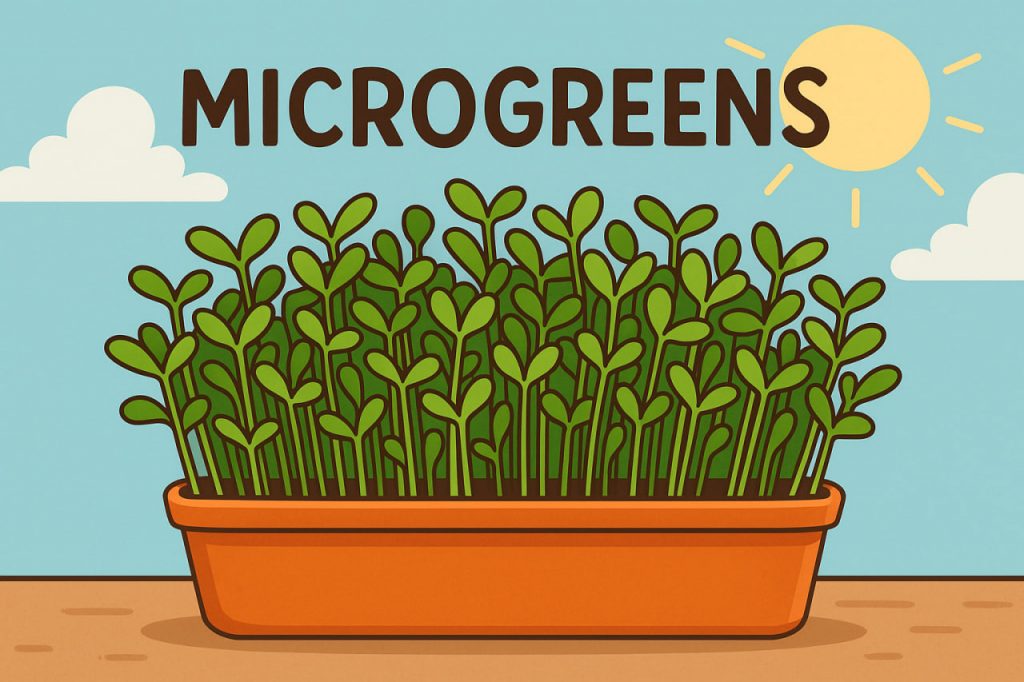
Microgreens are young, edible seedlings of vegetables and herbs harvested just days after sprouting, usually when the first true leaves appear. Despite their tiny size, microgreens are incredibly rich in nutrients, offering concentrated vitamins, minerals, antioxidants, and phytonutrients. This makes them one of the most nutrient-dense food categories available, often containing far higher nutrient levels than mature plants of the same species. Because they grow quickly, require minimal space, and thrive indoors, microgreens have become popular among chefs, home gardeners, and health enthusiasts worldwide.
Microgreens offer a unique combination of intense flavor, bright color, and high nutritional value, making them ideal for salads, sandwiches, soups, smoothies, and gourmet dishes. Their rising popularity is also linked to sustainability: microgreens use significantly less water and land than traditional farming, and they can be grown year-round with simple equipment.
How Microgreens Grow
Microgreens are typically grown in shallow trays using soil or hydroponic mats. Seeds germinate quickly, and plants are harvested when they reach 3–10 cm in height — usually after 7–14 days.
Popular microgreen varieties include:
- sunflower
- broccoli
- radish
- mustard
- pea shoots
- kale
- beet
- basil
- cilantro
According to urban agriculture scientist Dr. Megan Liu:
“Microgreens concentrate the entire nutritional potential of a plant
into a tiny, flavorful leaf.”
This explains why they are used both as a culinary garnish and a nutritional supplement.
Nutritional Benefits
Microgreens offer exceptional health benefits due to their high concentration of micronutrients:
- Vitamins A, C, E, and K
- Iron, magnesium, potassium, and zinc
- Antioxidants that reduce oxidative stress
- Phytonutrients linked to improved cellular health
Research shows that microgreens may contain up to 40 times more nutrients than their mature plant counterparts.
Why Microgreens Are Easy to Grow at Home
Microgreens are ideal for indoor cultivation because they require:
- minimal space
- low light or simple LED grow lights
- quick harvest cycles
- shallow trays and small amounts of water
Even beginners can grow microgreens successfully with just a windowsill and a spray bottle. They provide fresh food quickly, making them perfect for small apartments or kitchens.
Common Mistakes and How to Avoid Them
While microgreens are easy to grow, several common mistakes can affect quality:
- overwatering, leading to mold
- insufficient airflow
- excessive seed density
- poor drainage
- contaminated growing medium
Proper care ensures safe, clean, and flavorful harvests.
Culinary Uses
Microgreens add color, texture, and bold flavor. They are commonly used in:
- salads
- sandwiches
- soups
- stir-fries
- sushi
- smoothies
- gourmet plating
Each variety offers distinct taste profiles — spicy, sweet, earthy, or nutty.
Sustainability and Microgreens
Microgreens are environmentally friendly because:
- they use up to 90% less water than traditional crops
- they require no pesticides
- they grow rapidly with minimal energy
- they reduce food waste due to small harvest portions
They represent a promising direction in sustainable urban agriculture.
Interesting Facts
- Microgreens first became popular in upscale restaurants in the 1980s.
- They can be harvested in 7–14 days, making them one of the fastest crops on Earth.
- Sunflower microgreens contain all nine essential amino acids.
- NASA has explored microgreens as part of future space agriculture systems.
- Red cabbage microgreens are exceptionally high in vitamin C and antioxidants.
Glossary
- Microgreens — young seedlings harvested shortly after sprouting.
- Hydroponics — growing plants without soil using nutrient-rich water.
- Phytonutrients — plant compounds that support cellular health.
- Oxidative Stress — cellular damage caused by free radicals.
- Germination — the process of a seed sprouting into a young plant.