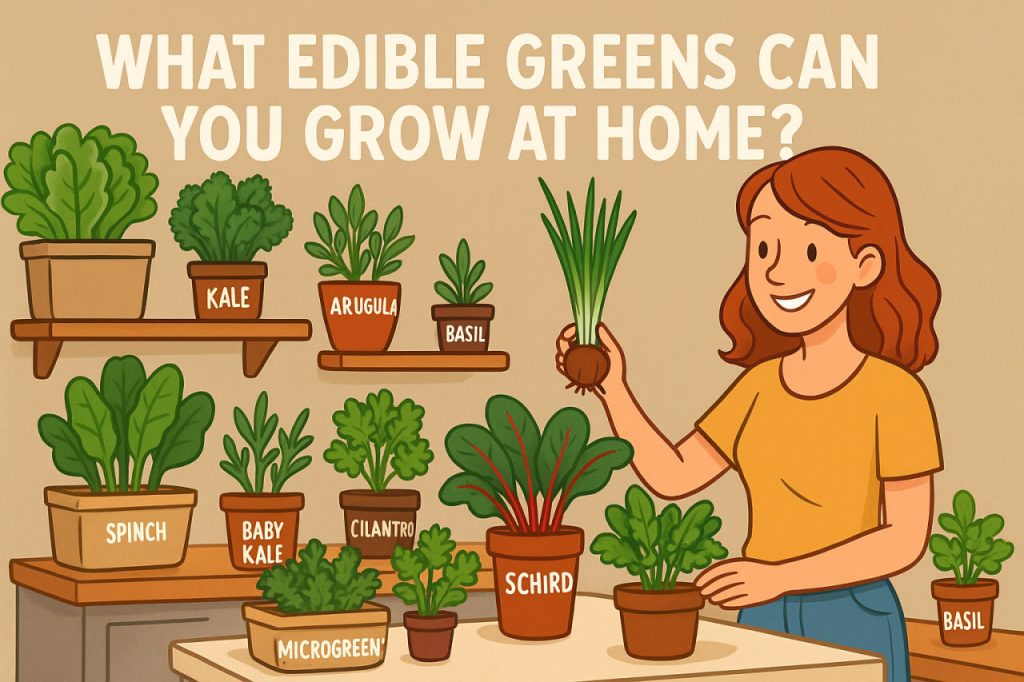
Growing edible greens at home has become increasingly popular as people look for fresh, nutritious, and pesticide-free foods that can be harvested year-round. Indoor gardening does not require large spaces or complex equipment — many greens grow easily on windowsills, kitchen counters, or small shelves with simple light sources. Homegrown greens offer impressive nutritional value, rich flavor, and the satisfaction of cultivating your own food. Understanding which plants thrive indoors helps beginners choose the right varieties and maintain a steady supply of fresh leaves for salads, soups, smoothies, and cooking.
Indoor greens grow quickly because they have shallow root systems and short life cycles. They adapt well to controlled environments and need only moderate sunlight or LED grow lights. Many species tolerate imperfect conditions, making them ideal for home gardeners with limited experience. These greens not only enhance nutrition but also improve indoor air quality and create a pleasant natural atmosphere in the home.
1. Lettuce Varieties
Lettuce is one of the easiest greens to grow indoors. Loose-leaf types grow fastest and allow continual harvesting.
Common indoor-friendly varieties include:
- green leaf lettuce
- red leaf lettuce
- romaine minis
- butterhead (Bibb)
They grow well in small pots and prefer cool temperatures.
According to urban agriculture specialist Dr. Helen Carter:
“Lettuce thrives indoors because it needs minimal soil depth
and grows well even under moderate artificial light.”
2. Spinach
Spinach is rich in iron, vitamins, and antioxidants. It grows well indoors if:
- kept in cool conditions
- watered regularly
- provided with partial sun or grow light
Baby spinach leaves mature within 30–40 days.
3. Arugula
Arugula (rocket) adds a spicy, peppery flavor and is extremely fast-growing. It tolerates lower light levels and can be harvested leaf-by-leaf for continuous production.
4. Kale and Micro-Kale
Kale grows slowly outdoors but performs surprisingly well indoors when grown as:
- baby kale
- microgreens
- young leaves for salads
It provides vitamins A, C, K, and essential minerals.
5. Herbs Considered as Greens
Soft herbs are excellent edible greens that thrive indoors:
- basil
- parsley
- cilantro
- mint
- dill
- chives
These herbs add flavor and nutritional value to meals while requiring minimal care.
6. Swiss Chard
Colorful and nutrient-rich, Swiss chard grows well indoors and tolerates low humidity. Young leaves are tender and perfect for salads or light cooking.
7. Microgreens
Microgreens are nutrient-packed young plants harvested early. They grow in shallow trays and require very little light.
Popular microgreens include:
- sunflower
- broccoli
- radish
- mustard greens
- pea shoots
Microgreens can be ready to eat in 7–14 days, making them ideal for fast indoor gardening.
8. Green Onions (Scallions)
One of the easiest greens to regrow from kitchen scraps. Simply place trimmed roots in water or soil, and they regrow quickly.
Tips for Growing Greens Successfully Indoors
- use well-draining potting soil
- ensure 4–6 hours of light each day
- maintain proper watering (avoid overwatering)
- rotate pots for even light exposure
- harvest early and often to encourage new growth
Indoor greens grow quickly but need consistent care to remain healthy and flavorful.
Why Growing Greens Indoors Is Beneficial
Indoor gardening offers many advantages, including:
- access to fresh produce year-round
- reduced grocery costs
- improved indoor air quality
- fewer pesticides and contaminants
- enjoyment and stress relief from caring for plants
It is an excellent option for apartments, small homes, or anyone seeking fresh, nutritious food without a garden.
Interesting Facts
- Microgreens can contain up to 40 times more nutrients than mature greens.
- Green onions can regrow indefinitely from the same root base.
- Lettuce grows faster indoors than outdoors during hot summers because it prefers cool conditions.
- Plants grown indoors often require less water due to reduced evaporation.
- Basil grows best when harvested frequently — cutting stimulates new leaf growth.
Glossary
- Microgreens — young edible plants harvested shortly after sprouting.
- Potting Mix — a soil-like medium designed for indoor container gardening.
- Humidity — the amount of moisture in the air, affecting plant growth.
- Regrowth — a plant’s ability to produce new leaves after harvesting.
- Grow Light — an artificial light supporting plant photosynthesis indoors.