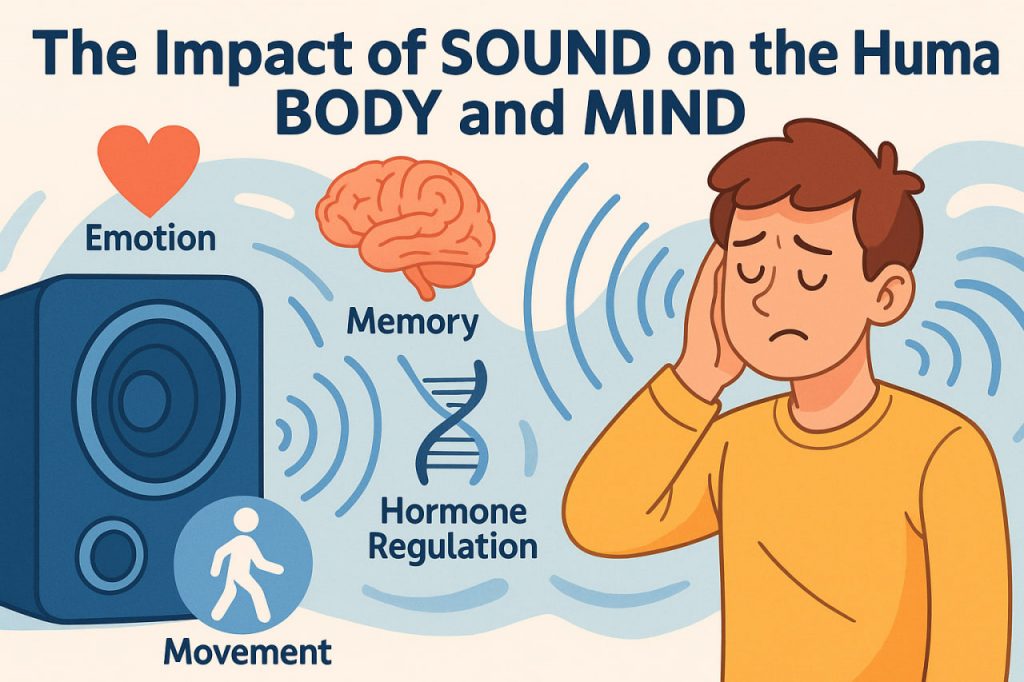
Sound is a powerful physical phenomenon that surrounds us constantly — from the soft rhythm of breathing to the loud noise of urban life. While sound is simply a vibration traveling through air or other media, its effects on the human body and mind can be profound. Depending on its intensity, frequency, rhythm, and emotional context, sound can heal, stress, energize, or harm. Understanding how sound interacts with the nervous system, the brain, and physiological processes reveals why it has such a strong influence on human well-being.
Sound affects humans on both conscious and subconscious levels. Some sounds promote relaxation and concentration, while others can trigger anxiety or fatigue without us realizing it. Because the human auditory system evolved to detect threats, communication, and environmental cues, sound remains deeply connected to our behavior, emotions, and overall health.
How Sound Interacts With the Human Body
When sound waves enter the ear, they are transformed into electrical signals that travel through the auditory nerve to the brain. This process activates areas responsible for:
- emotion
- memory
- movement
- hormone regulation
This is why sound can evoke strong emotional reactions or physical responses such as chills, relaxation, or stress. According to neuroscientist Dr. Elise Harrington:
“Sound does not only enter the ears —
it interacts with the entire nervous system.”
This explains why sound environments influence mental and physical states so strongly.
Positive Effects of Sound
Certain types of sound can provide measurable health benefits:
1. Stress Reduction
Calming frequencies, including nature sounds and gentle music, lower cortisol levels and activate the parasympathetic nervous system.
2. Improved Focus
Soft background sound or specific frequencies (like alpha-wave audio) can improve concentration, especially during studying or creative work.
3. Emotional Regulation
Music therapy helps process emotions, reduce anxiety, and improve mood.
4. Better Sleep
Rhythmic, low-frequency sound promotes deeper sleep by synchronizing brain waves with calming patterns.
5. Physical Healing Support
Sound therapy and vibroacoustic techniques may support pain management, muscle relaxation, and rehabilitation.
Negative Effects of Sound
Not all sounds are beneficial. Excessive or harmful sound exposure can lead to:
1. Hearing Damage
Sounds above 85 dB can cause:
- hearing loss
- tinnitus
- sensitivity to noise
Prolonged exposure increases risk significantly.
2. Stress and Fatigue
Chaotic or high-frequency noise activates the stress response, increasing:
- heart rate
- blood pressure
- cortisol levels
This is common in urban environments and noisy workplaces.
3. Sleep Disruption
Irregular sounds — traffic, alarms, loud neighbors — interfere with natural sleep cycles, affecting memory and immune function.
4. Reduced Cognitive Performance
Chronic exposure to noise can impair:
- attention
- memory
- decision-making
This is especially impactful in children.
How Frequencies Affect Us
Different frequency ranges influence humans in distinct ways:
- Low frequencies (20–200 Hz) — can be felt physically; may cause discomfort at high volumes.
- Mid-range frequencies (200–5,000 Hz) — most sensitive range for human speech.
- High frequencies (5,000–20,000 Hz) — sharp, attention-grabbing; can cause irritation.
Certain therapeutic practices use specific frequencies to support relaxation or concentration, though scientific evidence varies by method.
Cultural and Psychological Role of Sound
Sound has shaped human culture for millennia:
- music
- storytelling
- rituals
- communication
- emotional expression
It influences group behavior, social bonding, and personal identity.
Environmental Soundscapes
Modern research shows that environments rich in calming sounds — forests, rivers, ocean waves — improve mental health. In contrast, noise pollution is now recognized by the WHO as a major environmental health risk.
Interesting Facts
- The human ear can detect vibrations as small as the width of a single atom.
- Long-term exposure to city noise can increase stress hormones by up to 40%.
- Music activates more brain regions than any other sensory input.
- Heartbeat and breathing naturally synchronize with rhythmic sound.
- Babies recognize their mother’s voice before they are born.
Glossary
- Frequency — number of sound vibrations per second, measured in Hertz (Hz).
- Decibel (dB) — unit used to measure sound intensity.
- Tinnitus — persistent ringing or buzzing in the ears.
- Auditory System — the organs and neural pathways responsible for hearing.
- Parasympathetic Nervous System — the part of the nervous system that promotes relaxation and recovery.