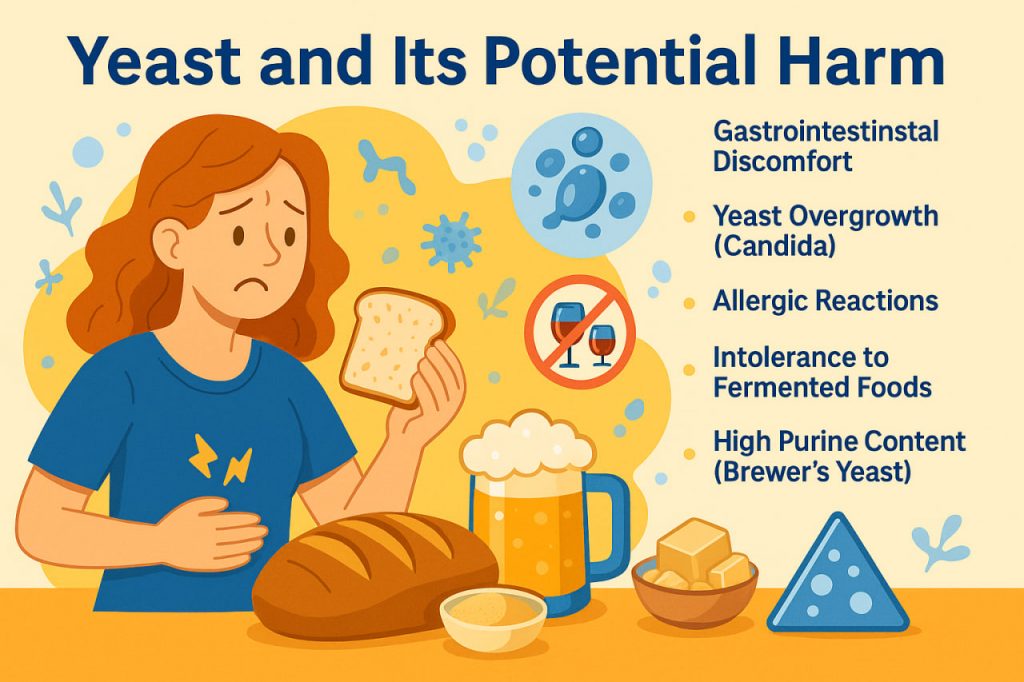
Yeast is a type of single-celled fungus widely used in baking, brewing, and fermentation. While yeast is generally safe and plays an essential role in food production, certain forms and quantities of yeast can cause health concerns under specific conditions. Understanding how yeast behaves in the body, how it is used in food, and what risks may arise from excessive intake or imbalance helps create a clearer and more scientifically grounded picture. It is important to distinguish between nutritional yeast, baker’s yeast, brewer’s yeast, and naturally occurring Candida species, as these organisms differ in function and impact on health.
Most people can safely consume yeast-containing foods. However, for individuals with sensitivities, underlying conditions, or compromised immune systems, yeast overgrowth or improper use may lead to discomfort or digestive issues. The goal is not to avoid yeast entirely but to understand its risks and how to manage them through informed dietary choices.
What Yeast Is and How It Works
Yeast converts sugars into carbon dioxide and alcohol through fermentation. This makes dough rise and helps produce beverages like beer and wine. Baker’s yeast (Saccharomyces cerevisiae) is the most common species in food production.
Yeast also contains nutrients such as:
- B-vitamins
- protein
- trace minerals
- antioxidants
In small amounts, these can be beneficial. Problems arise when yeast contributes to digestive imbalance, triggers sensitivities, or proliferates in ways that disrupt normal flora.
According to microbiologist Dr. Lauren Whitfield:
“Yeast is harmless in most situations,
but like many microbes, trouble begins when balance is lost.”
This reinforces that moderation and awareness are key.
Possible Harmful Effects of Yeast
1. Gastrointestinal Discomfort
Some individuals experience:
- bloating
- gas
- stomach cramps
- diarrhea
This is often linked to fermentation reactions in the gut or yeast sensitivity.
2. Yeast Overgrowth (Candida)
Naturally occurring yeast in the body can become problematic if it overgrows, especially Candida albicans.
Risk factors include:
- high-sugar diets
- weakened immunity
- prolonged antibiotic use
- hormonal imbalances
While yeast in food does not directly cause Candida overgrowth, an imbalanced diet may contribute to symptoms.
3. Allergic Reactions
Though rare, some people may be allergic to yeast proteins, leading to:
- skin irritation
- respiratory symptoms
- digestive upset
Allergies require evaluation by a healthcare specialist.
4. Intolerance to Fermented Foods
Individuals with histamine intolerance or certain digestive conditions may react negatively to:
- bread
- beer
- wine
- kombucha
These reactions are connected to the fermentation process rather than yeast itself.
5. High Purine Content (Brewer’s Yeast)
Brewer’s yeast contains purines, which can produce uric acid.
Excessive consumption may pose risks for people prone to gout or kidney issues.
Who Should Be Cautious With Yeast?
Caution may be necessary for individuals with:
- weakened immunity
- yeast allergies
- gout or uric acid disorders
- irritable bowel syndromes
- chronic Candida-related symptoms
Anyone experiencing persistent symptoms should seek professional medical advice.
Is Yeast Always Harmful?
No. Yeast is safe for the vast majority of people and plays a key role in nutritious fermented foods. Harm typically arises only when:
- consumed in excess
- improperly stored or contaminated
- contributing to dietary imbalance
- interacting with individual sensitivities
A balanced diet and proper food handling greatly reduce risks.
P.S. Well, you can get rid of an unnecessary source of legal poison – alcohol in your diet – by removing yeast and products containing it from your diet, right?
Interesting Facts
- Yeast has been used in baking for over 5,000 years.
- One gram of yeast contains tens of billions of living cells.
- Baker’s yeast and Candida are related but behave very differently biologically.
- Yeast ferments sugar without oxygen, producing carbon dioxide that makes bread rise.
- Nutritional yeast is deactivated, meaning it cannot cause overgrowth or fermentation in the body.
Glossary
- Fermentation — a metabolic process where yeast converts sugar into alcohol and carbon dioxide.
- Candida — a genus of yeast species naturally present in the human body.
- Overgrowth — excessive proliferation of microorganisms disrupting normal balance.
- Purines — natural substances that can form uric acid when broken down.
- Allergen — a substance that can trigger an immune reaction in sensitive individuals.