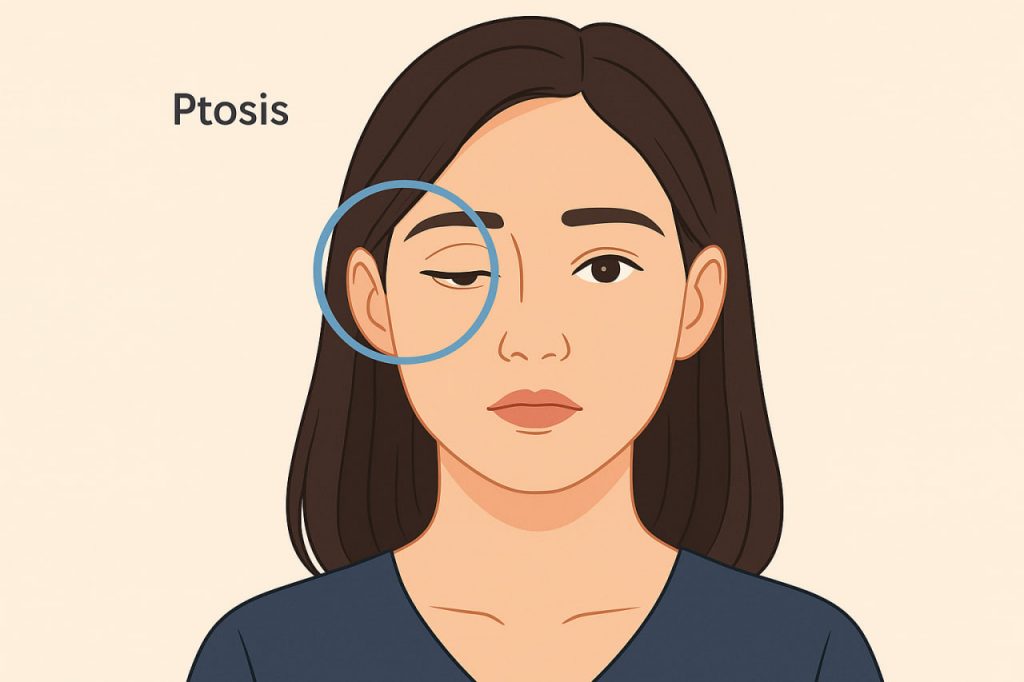
Ptosis, also known as drooping eyelid, is a condition in which the upper eyelid falls lower than its normal position. This can affect one or both eyes and may vary from a mild cosmetic issue to a significant medical concern that interferes with vision. Ptosis can appear at any age — from birth (congenital ptosis) to older adulthood — and its underlying causes range from muscle weakness and nerve damage to age-related changes in the eyelid. Understanding ptosis is important because it may be a sign of underlying health conditions that require professional examination.
In many cases, ptosis develops gradually as the muscles responsible for lifting the eyelid weaken over time. In other cases, it appears suddenly due to neurological or traumatic factors. Because the eyelids play a major role in protecting the eyes and maintaining visual clarity, untreated severe ptosis can lead to eye strain, headaches, or even lifelong vision impairment in children.
What Causes Ptosis?
Ptosis occurs when the levator muscle, which lifts the eyelid, or the nerves controlling this muscle fail to function properly. The most common causes include:
- Age-related changes — stretching or weakening of the levator tendon
- Nerve damage affecting the oculomotor nerve
- Muscle disorders that impair eyelid movement
- Congenital malformation of eyelid muscles in newborns
- Trauma — injury to the eyelid or surrounding structures
- Eye surgery side effects
- Underlying neurological conditions
According to ophthalmologist Dr. Rebecca Miles:
“Ptosis by itself is often harmless,
but a sudden onset requires medical evaluation to rule out neurological causes.”
This highlights the importance of professional assessment.
Symptoms of Ptosis
The most recognizable sign is a visibly drooping eyelid. Additional symptoms may include:
- a tired or “sleepy” appearance
- difficulty keeping the eye fully open
- forehead muscle strain from trying to lift the eyelid
- eye irritation or dryness
- blurred or partially blocked vision
- asymmetry between the two eyes
Children may tilt their heads back or raise their eyebrows constantly to compensate for reduced vision.
Types of Ptosis
Ptosis can be classified into several categories:
1. Congenital Ptosis
Present at birth, usually caused by abnormal muscle development.
2. Acquired Ptosis
Develops later in life due to:
- aging
- trauma
- nerve damage
- muscle weakening
- medical conditions
3. Mechanical Ptosis
Caused by something weighing the eyelid down, such as swelling or tumors.
4. Neurogenic Ptosis
Resulting from disrupted nerve signals controlling eyelid movement.
5. Myogenic Ptosis
Linked to disorders that weaken the eyelid muscles.
Who Is at Risk?
Risk increases with:
- older age
- history of eye surgery
- certain neurological or muscular conditions
- trauma
- chronic eye rubbing
- congenital factors
Complications
If severe or left untreated, ptosis may lead to:
- amblyopia (lazy eye) in children
- chronic headaches from compensating muscle strain
- reduced peripheral vision
- persistent eye fatigue
Early evaluation is especially important in infants and children, where vision is still developing.
Diagnosis
Diagnosis typically includes:
- physical eye examination
- vision testing
- eyelid position measurement
- neurological assessment
- analysis of muscle function
A qualified medical specialist determines the cause and appropriate management strategy based on the individual case.
How Ptosis Is Managed
Management depends on severity and cause. Options are determined entirely by trained specialists. These may include:
- observation for mild, age-related cases
- correction of underlying medical conditions
- lifestyle adjustments to reduce eye strain
- specialist-recommended procedures when vision is significantly affected
Treatment decisions must always be made only by medical professionals — self-treatment is unsafe.
Interesting Facts
- Ptosis can affect people of any age, from newborns to seniors.
- Some babies are born with ptosis because their levator muscles never fully developed.
- People with ptosis often unknowingly use their forehead muscles to lift their eyelids.
- Severe childhood ptosis can interfere with visual development if not assessed early.
- Not all drooping eyelids are ptosis — some are caused by excess skin or swelling.
Glossary
- Levator Muscle — the muscle responsible for lifting the upper eyelid.
- Amblyopia — reduced vision in one eye due to poor development.
- Neurogenic — related to nerve function or nerve damage.
- Mechanical Ptosis — drooping caused by physical weight on the eyelid.
- Oculomotor Nerve — the nerve controlling eyelid and eye movement.