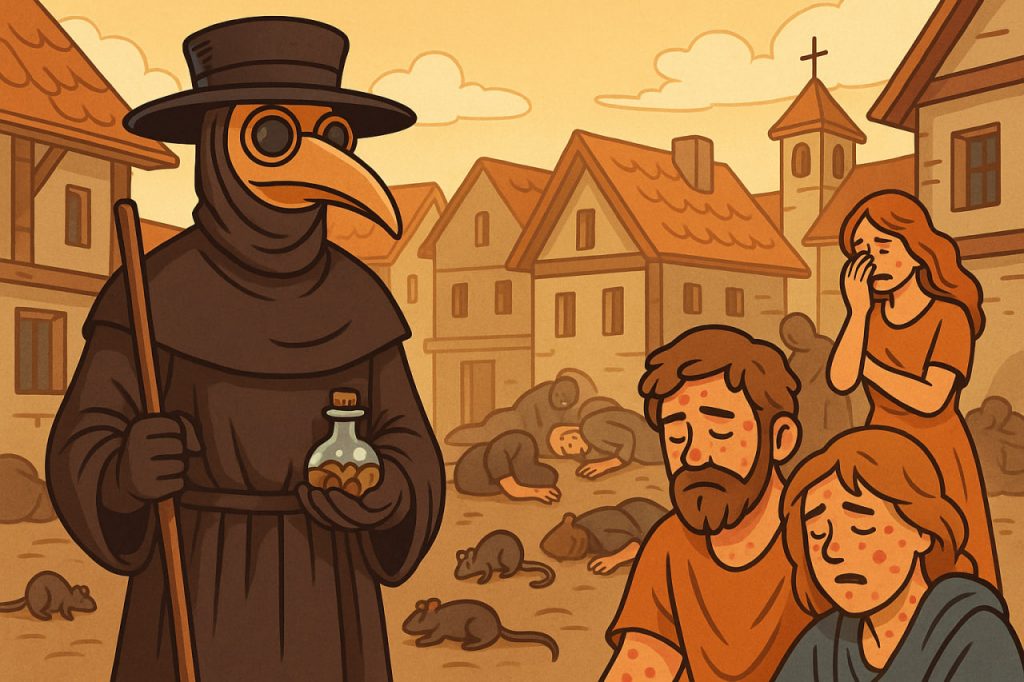
The plague is one of the most infamous infectious diseases in human history. Caused by the bacterium Yersinia pestis, it triggered several devastating pandemics that reshaped societies, economies, and population structures across continents. Although often associated with the Middle Ages, the plague has existed for thousands of years and still appears in rare cases today. Despite its terrifying reputation, modern science has allowed doctors to understand the disease, track outbreaks, and treat infections effectively. Learning about the plague helps us understand how diseases shape civilization and how scientific progress protects public health.
Historically, the plague spread rapidly due to poor sanitation, crowded living conditions, and limited medical knowledge. Its ability to infect both humans and animals made it especially persistent throughout history. Today, surveillance systems and scientific tools ensure that outbreaks are quickly detected and managed, preventing widespread transmission.
What Causes the Plague?
The plague is caused by the bacterium Yersinia pestis, typically transmitted through:
- bites from infected fleas
- contact with infected rodents (rats, marmots, squirrels)
- contaminated materials
- in rare cases, respiratory droplets from infected individuals
Y. pestis survives in rodent populations, forming natural “reservoirs” that occasionally spill over into humans.
According to infectious disease historian Dr. Olivia Hartman:
“The plague was not just a medical disaster —
it was a force that transformed societies and redefined human history.”
Its far-reaching consequences demonstrate how deeply diseases can shape civilization.
Forms of the Plague
There are three main clinical forms:
1. Bubonic Plague
The most common form, involving swollen lymph nodes (“buboes”).
Transmitted mainly by flea bites.
2. Septicemic Plague
Occurs when bacteria spread into the bloodstream.
Can develop from untreated bubonic plague.
3. Pneumonic Plague
Affects the lungs and can spread through respiratory droplets.
This form is the most dangerous due to rapid transmission.
Major Plague Pandemics
Three major pandemics have shaped world history:
The Justinian Plague (6th century)
Killed millions across the Byzantine Empire and Mediterranean regions.
The Black Death (14th century)
The most devastating pandemic in recorded history, killing up to 50% of Europe’s population and altering global demographics, economics, and culture.
The Third Pandemic (19th–20th centuries)
Began in China and spread worldwide, leading to major scientific breakthroughs including the discovery of Y. pestis.
How the Plague Shaped Civilization
The plague influenced nearly every aspect of life:
- economic collapse due to labor shortages
- changes in social structure as peasants gained bargaining power
- religious shifts caused by mass fear and loss
- advances in public health including quarantine and sanitation measures
- acceleration of scientific inquiry into diseases and immunity
The Black Death alone transformed European society for centuries.
Plague in the Modern World
While rare today, the plague still appears in isolated regions:
- parts of Africa
- western United States
- Central Asia
- South America
Small outbreaks are closely monitored by global health agencies. Modern medicine allows timely diagnosis and structured treatment; individuals with symptoms should seek professional medical help immediately.
Prevention and Control Today
Governments and health agencies prevent outbreaks by:
- monitoring rodent populations
- controlling fleas
- promoting sanitation
- educating communities in endemic regions
- tracking human and animal cases
These measures ensure the plague remains under control in the modern era.
Interesting Facts
- The Black Death may have reduced the world’s population by up to 100 million people.
- Medieval doctors wore iconic “plague masks” filled with herbs, though they offered no real protection.
- The word quarantine comes from the Italian quaranta giorni — “40 days,” the isolation period for ships during plague outbreaks.
- Yersinia pestis evolved from a less deadly ancestor bacteria thousands of years ago.
- Some genetic traits in modern Europeans may come from survival advantages during the Black Death.
Glossary
- Yersinia pestis — the bacterium that causes plague.
- Buboes — swollen lymph nodes typical of bubonic plague.
- Reservoir — animal population where a pathogen naturally persists.
- Pandemic — a disease outbreak that spreads across multiple continents.
- Quarantine — isolation used to prevent the spread of infection.