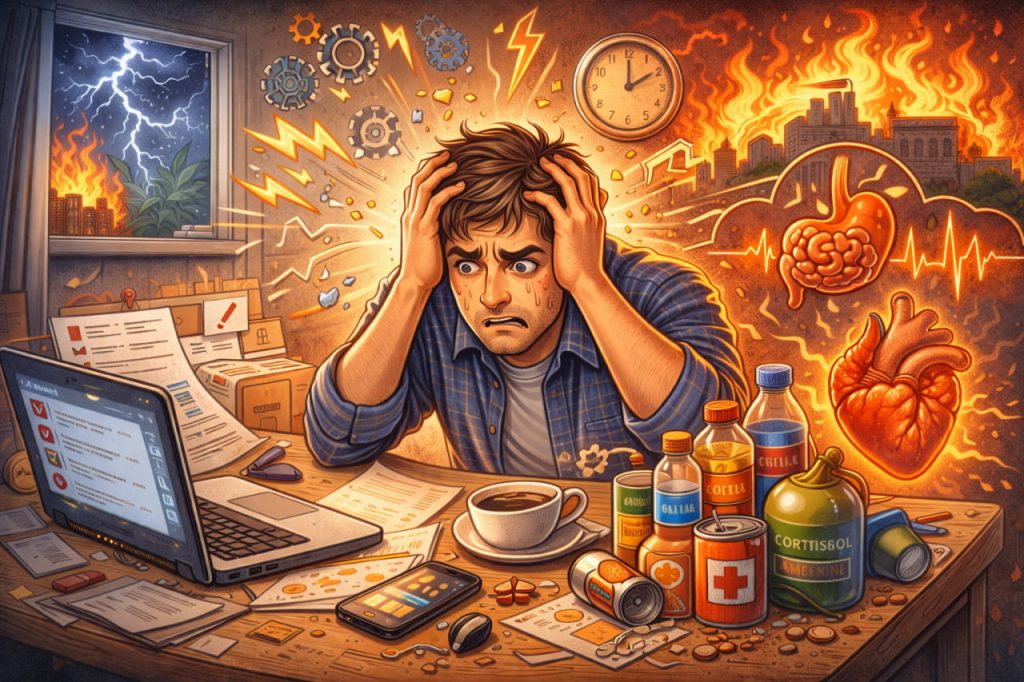
Stress is a natural reaction of the human organism to perceived threat, pressure, or uncertainty. It evolved as a survival mechanism, helping our ancestors respond quickly to danger. In the modern world, however, stress is often chronic and triggered not by physical threats, but by psychological and social factors. When stress becomes prolonged, it begins to affect both mental and physical health. Understanding what happens in the body during stress explains why it can be both useful and harmful.
The Stress Response: Fight or Flight
When a person experiences stress, the brain immediately activates the fight-or-flight response. The amygdala signals danger, and the hypothalamus triggers hormonal systems that prepare the body for action. Adrenaline and cortisol are released into the bloodstream. Heart rate increases, breathing becomes faster, and muscles tense. These changes are designed to improve short-term survival.
Changes in the Brain
Stress significantly affects brain function. Attention narrows, focusing on perceived threats while ignoring non-essential information. Logical thinking and long-term planning are temporarily reduced as the brain prioritizes rapid response. Memory formation can be disrupted, especially under intense or prolonged stress. According to neuroscientist Dr. Laura Chen:
“Under stress, the brain shifts from reflection to reaction,
favoring speed over accuracy.”
This explains why people may make impulsive decisions during stressful moments.
Hormonal Effects on the Body
Cortisol, the primary stress hormone, plays a central role in stress physiology. In short bursts, it helps mobilize energy and regulate inflammation. However, when cortisol levels remain elevated for long periods, negative effects emerge. These include weakened immune function, disrupted sleep, and changes in appetite. Chronic stress places continuous strain on the body’s regulatory systems.
Emotional and Psychological Impact
Emotionally, stress can manifest as anxiety, irritability, or emotional numbness. People under stress may experience mood swings or difficulty concentrating. Long-term stress increases the risk of anxiety disorders and depression. Emotional regulation becomes more difficult as mental resources are depleted. Stress also reduces tolerance for frustration and conflict.
Physical Symptoms of Stress
Stress is often felt physically, not just mentally. Common symptoms include muscle tension, headaches, digestive issues, and fatigue. Cardiovascular strain increases as blood pressure and heart rate remain elevated. Over time, chronic stress contributes to serious health problems. The body pays a physical price for prolonged psychological pressure.
Behavioral Changes Under Stress
Behavior often changes noticeably under stress. Some people withdraw socially, while others become restless or overactive. Sleep patterns may be disrupted, and reliance on stimulants or comfort behaviors can increase. Stress can also impair judgment and risk assessment. These behavioral shifts are signals rather than personal failures.
Short-Term Stress vs. Chronic Stress
Not all stress is harmful. Short-term stress can improve focus and performance. Problems arise when stress becomes constant and recovery is insufficient. Chronic stress prevents the body from returning to balance. This imbalance gradually erodes mental resilience and physical health. Recovery is as important as response.
Why Understanding Stress Matters
Recognizing stress responses helps people respond with awareness rather than self-blame. Stress reactions are biological processes, not weaknesses. Understanding them allows for healthier coping strategies and early intervention. Managing stress protects long-term health and emotional stability. Awareness transforms stress from an invisible force into a manageable one.
Interesting Facts
- Stress activates ancient survival mechanisms.
- The brain prioritizes speed over logic during stress.
- Chronic stress weakens the immune system.
- Physical symptoms often appear before emotional awareness.
- Recovery time is essential for restoring balance.
Glossary
- Stress — the body’s response to perceived threat or pressure.
- Cortisol — a hormone released during stress.
- Fight-or-Flight Response — automatic survival reaction.
- Chronic Stress — prolonged exposure to stress without recovery.
- Emotional Regulation — ability to manage emotional responses.