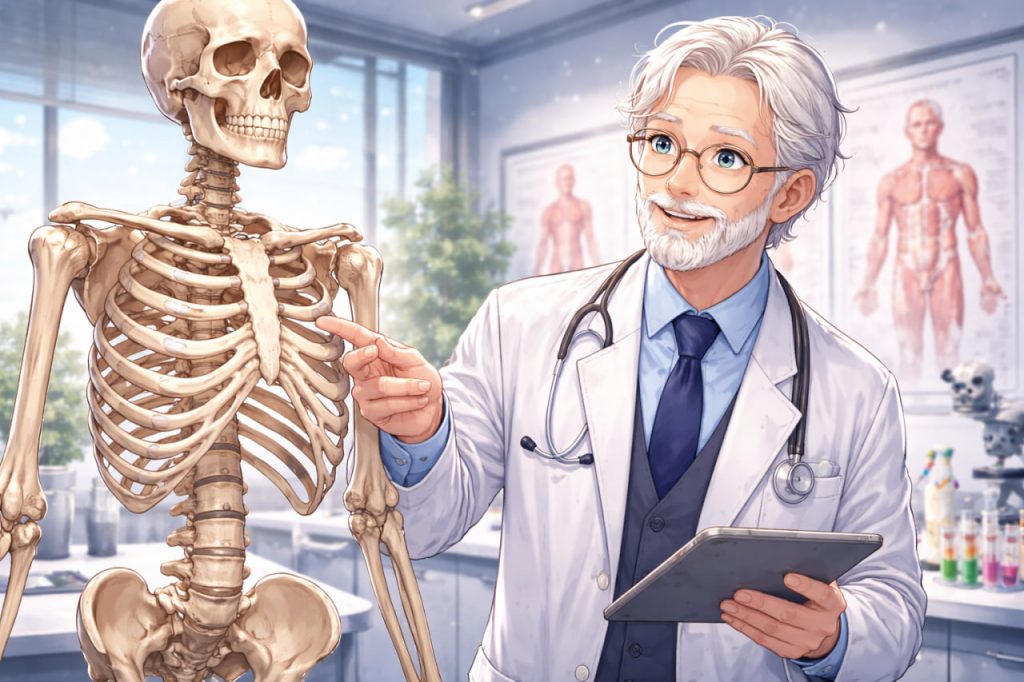
The human skeleton is the internal structure that supports the body, protects vital organs, and enables movement. Far from being a static frame, the skeleton is a living system that grows, adapts, and constantly renews itself throughout life. It works closely with muscles, joints, and connective tissues to allow everything from simple posture to complex motion. Without the skeleton, the human body would not be able to stand, move, or protect its most important systems. Understanding the skeleton is essential for appreciating how the body functions as an integrated whole.
What the Human Skeleton Is Made Of
An adult human skeleton consists of 206 bones, while newborns have more because some bones fuse during growth. Bones are composed of a hard outer layer rich in minerals such as calcium and phosphorus, combined with flexible collagen fibers. This combination gives bones both strength and slight elasticity, helping them withstand stress. Inside many bones lies bone marrow, which produces red blood cells, white blood cells, and platelets. This makes the skeleton not only a support structure but also a critical part of the circulatory and immune systems.
Main Functions of the Skeleton
The skeleton performs several vital functions simultaneously. Its primary role is support, allowing the body to maintain shape and posture. It also provides protection for delicate organs, such as the skull shielding the brain and the rib cage protecting the heart and lungs. The skeleton enables movement by serving as a system of levers for muscles. In addition, bones store essential minerals and release them into the bloodstream when needed. These multiple roles make the skeleton indispensable for life.
Axial and Appendicular Skeleton
The human skeleton is divided into two major sections. The axial skeleton includes the skull, vertebral column, ribs, and sternum, forming the central axis of the body. Its main functions are protection and structural stability. The appendicular skeleton consists of the bones of the arms, legs, shoulders, and pelvis. This part of the skeleton is responsible for movement and interaction with the environment. Together, these two systems create a balance between stability and mobility.
Joints and How Movement Happens
Bones themselves do not move; movement occurs at joints, where bones meet. Some joints, such as those in the skull, are fixed and provide protection. Others, like the knee or elbow, allow controlled motion, while joints such as the shoulder and hip enable a wide range of movement. Cartilage cushions the ends of bones, ligaments hold joints together, and synovial fluid reduces friction. Healthy joints are essential for smooth, pain-free motion throughout life.
Bone Growth and Constant Renewal
Bones are not permanent structures; they are constantly renewed through a process called bone remodeling. Old bone tissue is broken down and replaced with new tissue, allowing bones to repair damage and adapt to physical нагрузкам. Weight-bearing activities stimulate bone growth and strength. As people age, this renewal process slows, which can lead to reduced bone density. Regular physical activity and proper nutrition help maintain bone health over time.
The Skeleton and Overall Health
A healthy skeleton supports overall physical well-being. Strong bones reduce the risk of fractures, support posture, and protect internal organs. Conditions affecting the skeleton can impact mobility, balance, and quality of life. Understanding how the skeleton works encourages habits that support long-term health, including movement, nutrition, and injury prevention.
Interesting Facts
- Babies are born with over 270 bones, many of which fuse later.
- The smallest bones in the body are located in the inner ear.
- Bone tissue renews itself approximately every 10 years.
- The skeleton accounts for about 15% of body weight.
- Bones are stronger than steel of the same thickness.
Glossary
- Skeleton — the internal framework of bones supporting the body.
- Bone Marrow — soft tissue inside bones that produces blood cells.
- Joint — the place where two or more bones meet.
- Axial Skeleton — bones forming the body’s central structure.
- Appendicular Skeleton — bones of the limbs and their attachments.