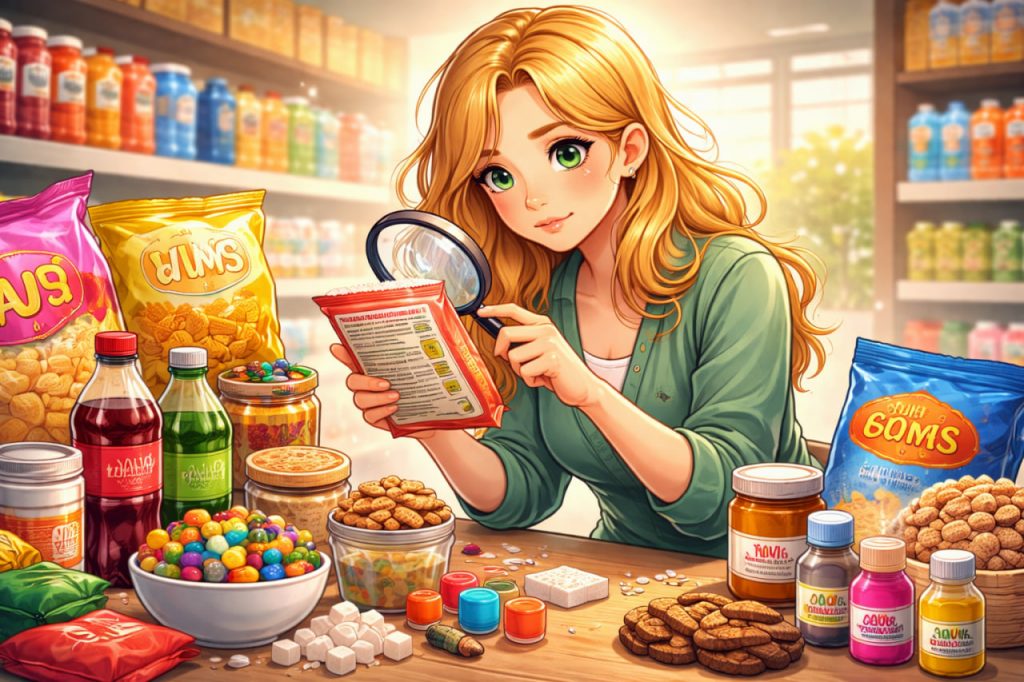
Modern supermarkets offer thousands of packaged products, but attractive packaging often hides complex ingredient lists that are difficult to understand. Learning how to read food labels is an essential skill for making informed choices and avoiding substances that may negatively affect long-term health. Ingredients are listed in descending order by weight, meaning the first items dominate the product’s composition. Some additives are used to improve shelf life, texture, or taste, while others are included primarily to reduce production costs. Understanding which ingredients deserve special attention helps consumers navigate food labels with confidence rather than confusion.
Why Ingredient Lists Matter
Food labels are not just formalities; they provide crucial insight into how a product is made. Ingredients influence digestion, energy levels, and how often a food can reasonably fit into a balanced diet. Highly processed foods tend to contain long lists of additives, while simpler products usually have fewer components. The challenge is that many ingredients appear under unfamiliar names, masking their true nature. According to food science analyst Dr. Rebecca Collins:
“The length and complexity of an ingredient list often reflect how far a food has moved away from its natural form.”
Reading labels carefully allows consumers to recognize patterns associated with lower nutritional quality.
1. Artificial Trans Fats
Artificial trans fats are created through industrial hydrogenation to improve texture and shelf life. They may appear on labels as partially hydrogenated oils, even when products claim to contain “zero trans fat” due to labeling thresholds. These fats are commonly found in baked goods, margarine, and processed snacks. Research has consistently linked artificial trans fats to negative effects on cardiovascular health. Many countries have restricted their use, but they can still appear in some processed foods. Checking ingredient lists remains the most reliable way to identify them.
2. High-Fructose Corn Syrup
High-fructose corn syrup is a widely used sweetener derived from corn starch. It is inexpensive, highly palatable, and commonly added to soft drinks, sauces, and packaged desserts. Because it is easy to overconsume, it is often associated with excessive calorie intake. Unlike whole-food sources of sweetness, this ingredient provides little nutritional value. Its presence high on an ingredient list usually indicates a heavily sweetened product.
3. Artificial Colorings
Artificial food colorings are added to enhance visual appeal rather than nutritional quality. Ingredients such as Red 40, Yellow 5, and Blue 1 are commonly found in candies, flavored drinks, and processed snacks. These additives do not improve taste or preservation and are used purely for appearance. Some consumers choose to avoid them in favor of foods colored naturally by fruits, vegetables, or spices. Products with bright, unnatural colors often rely heavily on artificial dyes.
4. Flavor Enhancers
Flavor enhancers intensify taste without adding real ingredients. One of the most common is monosodium glutamate (MSG), along with similar compounds such as disodium inosinate. These substances are frequently used in instant meals, chips, and seasoning mixes. While considered safe by regulatory agencies, they are indicators of highly processed foods designed for maximum palatability. A product relying heavily on flavor enhancers often contains minimal whole-food components.
5. Excessive Sodium Compounds
Salt is a natural ingredient, but processed foods often contain multiple sodium-based additives beyond simple salt. These include sodium nitrite, sodium phosphate, and sodium benzoate. Such compounds are used for preservation and texture control, especially in processed meats and ready-to-eat meals. When several sodium compounds appear in one ingredient list, total sodium content can be significantly higher than expected. Reading beyond the nutrition panel helps identify hidden sources of salt.
How to Read Labels More Effectively
A practical approach to label reading involves scanning the first five ingredients, as they make up the majority of the product. If these ingredients include refined sugars, artificial fats, or multiple additives, the food is likely highly processed. Comparing similar products side by side often reveals significant differences in ingredient quality. Over time, label reading becomes faster and more intuitive, empowering consumers to make choices aligned with their preferences and goals.
Interesting Facts
- Ingredients are listed by weight, not importance.
- Different names can hide the same type of additive.
- “Natural flavor” does not always mean a whole-food source.
- Products marketed as healthy can still be highly processed.
- Short ingredient lists usually indicate less processing.
Glossary
- Ingredient List — a breakdown of all substances used to make a food product.
- Trans Fat — an industrially modified fat used to improve shelf life.
- Flavor Enhancer — an additive that intensifies taste without adding nutrients.
- Artificial Coloring — a synthetic dye added for visual appeal.
- Processed Food — a product altered significantly from its natural state.