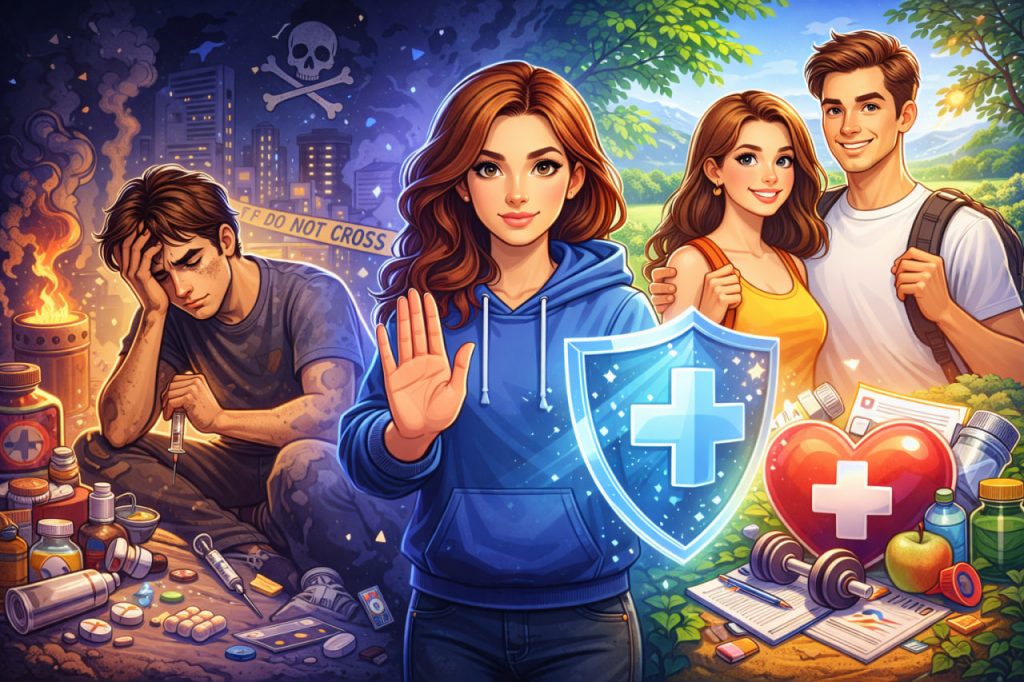
Drugs pose a serious threat to individual health and public well-being, affecting the body, mind, and social life in complex ways. While substances differ in origin and effect, they share a common risk: the potential to disrupt brain chemistry, impair judgment, and create dependence. Drug-related harm extends beyond the user, influencing families, communities, and healthcare systems. Understanding these risks is essential for making informed choices and reducing harm at both personal and societal levels. Protection begins with knowledge—recognizing how drugs affect the body and what practical steps can reduce exposure and risk.
How Drugs Affect the Body and Brain
Many drugs interfere with the brain’s natural communication systems, altering perception, mood, and behavior. Repeated use can change how neural circuits function, making it harder to experience pleasure without the substance. Over time, this can lead to tolerance, where higher amounts are needed to achieve the same effect, and dependence, where stopping use causes distress. Beyond the brain, drugs can damage the heart, liver, lungs, and immune system, increasing the risk of acute emergencies and long-term disease. According to public health researcher Dr. Elena Morris:
“Drug-related harm is not limited to addiction;
it affects nearly every organ system and accumulates silently over time.”
These effects vary by substance, dose, and frequency, but the underlying risks are consistent.
Psychological and Social Consequences
Drug use often affects mental health, increasing anxiety, depression, and the risk of psychotic episodes in vulnerable individuals. Cognitive functions such as memory, attention, and decision-making can deteriorate, making everyday tasks more difficult. Social consequences may include strained relationships, academic or workplace problems, and financial instability. In communities, drug misuse can contribute to crime, accidents, and reduced social cohesion. These broader impacts highlight why drug harm is not solely a personal issue.
Why Some People Are More Vulnerable
Vulnerability to drug harm is shaped by a combination of biological, psychological, and social factors. Genetics can influence how the body responds to substances, while early life stress and trauma may increase risk. Social environments—such as peer pressure, availability, and lack of support—also play a critical role. Importantly, vulnerability does not imply weakness; it reflects circumstances that can affect anyone. Recognizing risk factors allows for earlier support and prevention.
Prevention Through Information and Boundaries
One of the most effective protective measures is accurate information. Understanding what substances do, how dependence develops, and what warning signs look like helps people set clear boundaries. Avoiding environments where drug use is normalized, planning responses to peer pressure, and choosing supportive social circles can significantly reduce risk. Education that emphasizes decision-making skills and self-awareness is more effective than fear-based messaging. Prevention works best when it empowers rather than shames.
Protective Habits and Support Systems
Strong protective factors include stable routines, meaningful activities, and reliable support networks. Engaging in sports, creative pursuits, or community involvement provides alternatives that fulfill needs for connection and achievement. Access to mental health support can address underlying stressors that sometimes lead to substance use. If concerns arise, seeking help early—from healthcare professionals, counselors, or trusted adults—can prevent escalation. According to addiction specialist Dr. Samuel Reed:
“Early support changes outcomes;
addressing stress and isolation reduces the appeal of substances.”
Support systems are a cornerstone of resilience.
Responding to Risk and Seeking Help
Recognizing early warning signs—such as increased secrecy, changes in mood, or declining performance—allows for timely intervention. Seeking help is a proactive step, not a failure. Confidential, evidence-based services focus on health, safety, and recovery. Reducing stigma encourages people to ask for help sooner, improving outcomes for individuals and communities alike. Protection is ongoing, combining awareness, boundaries, and access to care.
Interesting Facts
- Drug effects often accumulate gradually, making early harm easy to overlook.
- Social environment strongly influences risk and resilience.
- Education focused on skills is more effective than fear-based messages.
- Early support significantly improves long-term outcomes.
- Stigma delays help-seeking and increases harm.
Glossary
- Tolerance — reduced response to a substance over time, requiring more to achieve the same effect.
- Dependence — a state where the body or mind relies on a substance to function normally.
- Prevalence — how common a condition or behavior is within a population.
- Protective Factors — conditions that reduce the likelihood of harm.
- Stigma — negative attitudes that discourage people from seeking help.