Antioxidants are substances that play a crucial role in protecting the human body from internal and external stress. They are often mentioned in discussions about healthy diets, longevity, and disease prevention, yet their function is frequently oversimplified. In reality, antioxidants are not miracle compounds, but part of a complex defense system that operates continuously inside the body. They help maintain balance by counteracting processes that can damage cells over time. Understanding what antioxidants do and where they come from allows for more informed and realistic dietary choices. Rather than focusing on single “super” compounds, science emphasizes patterns of regular intake through whole foods.
What Antioxidants Actually Do
Antioxidants protect cells by neutralizing free radicals, unstable molecules produced during normal metabolism and under environmental stress. Free radicals can damage proteins, fats, and DNA if their activity becomes excessive. Antioxidants stabilize these molecules by donating electrons, reducing potential harm. The body produces some antioxidants on its own, while others must come from food. According to biochemistry researcher Dr. Laura Chen:
“Oxidative stress is a normal part of life,
but antioxidants help keep it within manageable limits.”
This balance is essential, as both excessive oxidation and excessive antioxidant supplementation can be problematic.
Antioxidants in the Human Body
The antioxidant system in the body is layered and cooperative. Enzymes such as superoxide dismutase and catalase work alongside dietary antioxidants like vitamin C and vitamin E. These components do not act in isolation; they regenerate and support one another. This is why antioxidant function cannot be reduced to a single nutrient or food. Health outcomes depend on the overall network rather than individual elements. A varied diet supports this network far more effectively than targeted supplementation.
Foods Naturally Rich in Antioxidants
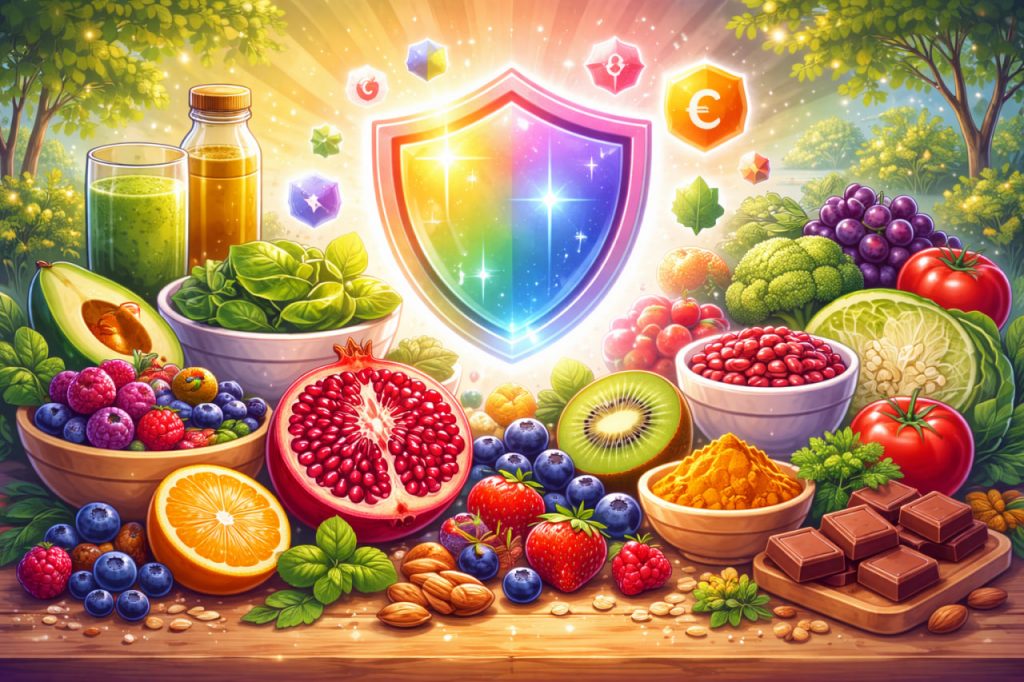
Antioxidants are widely distributed in everyday foods, especially those of plant origin. Fruits and vegetables contain compounds such as polyphenols, flavonoids, carotenoids, and vitamin C. Berries, apples, leafy greens, onions, and cruciferous vegetables are common and affordable sources. Nuts, seeds, whole grains, and legumes also contribute antioxidant compounds. Nutrition specialist Dr. Michael Harris explains:
“The most reliable antioxidant intake comes from
eating a wide variety of minimally processed plant foods.”
Color diversity in foods often signals different antioxidant profiles.
Do Exotic Products Offer Extra Benefits
Many exotic products are marketed for their high antioxidant content, but their advantage over local foods is often overstated. While foods like acai or matcha are rich in antioxidants, similar compounds exist in blueberries, cabbage, or beets. Bioavailability, freshness, and preparation methods often matter more than origin. Regular consumption of accessible foods usually provides sufficient antioxidant support. From a scientific perspective, consistency outweighs novelty.
Antioxidants and Balance, Not Extremes
More antioxidants do not automatically mean better health. Excessive intake, especially from supplements, may interfere with normal cellular signaling. The body relies on controlled oxidative processes for immunity and adaptation. Antioxidants support health best when consumed naturally and regularly as part of meals. The goal is balance, not elimination of oxidation. Whole diets, not individual compounds, determine long-term outcomes.
Interesting Facts
- Free radicals are produced during normal metabolism, not only from pollution.
- The body creates its own antioxidants but also relies on food sources.
- Colorful vegetables often indicate diverse antioxidant compounds.
- Cooking methods can increase or decrease antioxidant availability.
- Supplements do not always mimic the effects of whole foods.
Glossary
- Antioxidants — substances that neutralize free radicals.
- Free Radicals — unstable molecules that can damage cells.
- Oxidative Stress — imbalance between free radicals and antioxidants.
- Polyphenols — plant compounds with antioxidant properties.
- Bioavailability — the degree to which nutrients are absorbed and used.