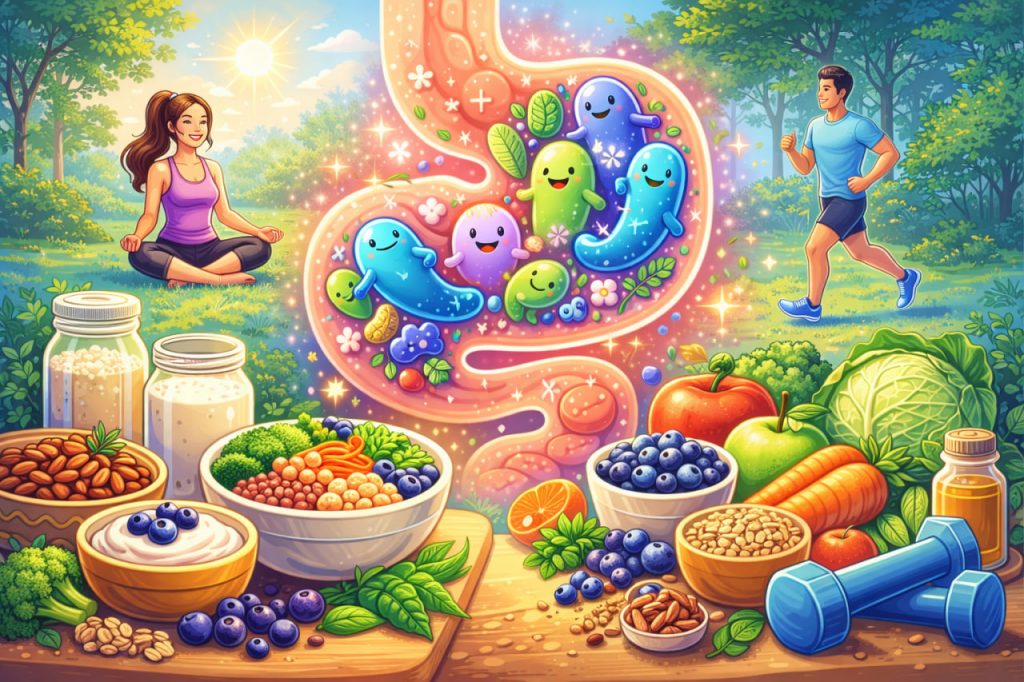
The gut microflora plays a central role in digestion, immunity, and overall metabolic balance. Trillions of microorganisms living in the intestines help break down food, produce vitamins, protect against pathogens, and communicate with the nervous system. When this complex ecosystem is disrupted, the effects may include digestive discomfort, reduced resilience, and long-term imbalance. While antibiotics are sometimes necessary in medical contexts, many people seek ways to support and restore gut microflora without pharmaceutical intervention. Scientific research shows that lifestyle, nutrition, and daily habits strongly influence microbial recovery. A gentle, consistent approach often proves more effective than aggressive or short-term solutions.
Understanding Gut Microflora Balance
Gut microflora is not a single organism but a diverse community of bacteria, fungi, and other microorganisms. Health depends not on eliminating microbes, but on maintaining diversity and stability. Stress, poor diet, lack of fiber, and irregular routines can disrupt this balance. When beneficial bacteria decline, opportunistic microbes may dominate, leading to functional imbalance rather than disease. According to microbiome researcher Dr. Emily Foster:
“The goal is not to ‘kill bad bacteria,’
but to create conditions where beneficial microbes thrive naturally.”
This perspective shifts focus from eradication to environmental support.
The Role of Whole Foods and Fiber
One of the most effective ways to restore gut microflora is through dietary fiber. Fiber acts as a primary fuel source for beneficial gut bacteria, especially those producing short-chain fatty acids. Vegetables, legumes, whole grains, seeds, and fruits provide diverse fibers that support microbial variety. Unlike processed foods, whole foods arrive in the gut with complex structures that microbes are adapted to metabolize. Regular intake of plant-based fiber helps rebuild microbial populations gradually and sustainably. Consistency matters more than quantity when it comes to microbial nourishment.
Fermented Foods as Natural Support
Fermented foods introduce live microorganisms and metabolic byproducts that support gut ecology. Foods such as yogurt, kefir, sauerkraut, kimchi, and fermented vegetables contain naturally occurring bacteria shaped by traditional preparation methods. These foods do not colonize the gut permanently, but they help modulate the existing environment, supporting beneficial species. Gastroenterologist Dr. Martin Keller explains:
“Fermented foods work best when combined with fiber,
because microbes need both introduction and nourishment.”
This synergy reinforces long-term microbial balance rather than temporary effects.
Stress, Sleep, and the Gut
Gut microflora is highly sensitive to stress and circadian rhythm disruption. Chronic stress alters gut motility, secretion, and immune signaling, indirectly affecting microbial composition. Poor sleep quality has also been linked to reduced microbial diversity. Relaxation practices, regular sleep schedules, and exposure to daylight help stabilize the gut–brain axis. These non-dietary factors are often underestimated, yet they strongly influence microbial recovery. Supporting the nervous system is therefore an essential part of restoring gut balance.
Movement, Environment, and Daily Habits
Moderate physical activity improves gut motility and microbial diversity. Exposure to natural environments, including soil and outdoor air, may also increase microbial variety through low-level environmental contact. Over-sanitization and excessive use of antibacterial products can reduce microbial exposure unnecessarily. Gentle, regular movement and a balanced environment help reinforce natural microbial resilience. Restoration is not a single action, but a pattern of supportive behaviors over time.
Interesting Facts
- Gut microflora influences immune signaling and inflammation.
- Fiber feeds beneficial bacteria, not the human body directly.
- Fermented foods support microbial balance but do not replace fiber.
- Stress can alter gut bacteria within days.
- Microbial diversity is more important than the presence of specific strains.
Glossary
- Gut Microflora — the community of microorganisms living in the digestive tract.
- Microbial Diversity — the variety of microbial species in the gut.
- Dietary Fiber — plant components that nourish gut bacteria.
- Fermented Foods — foods produced through microbial fermentation.
- Gut–Brain Axis — the communication network between the digestive system and the brain.