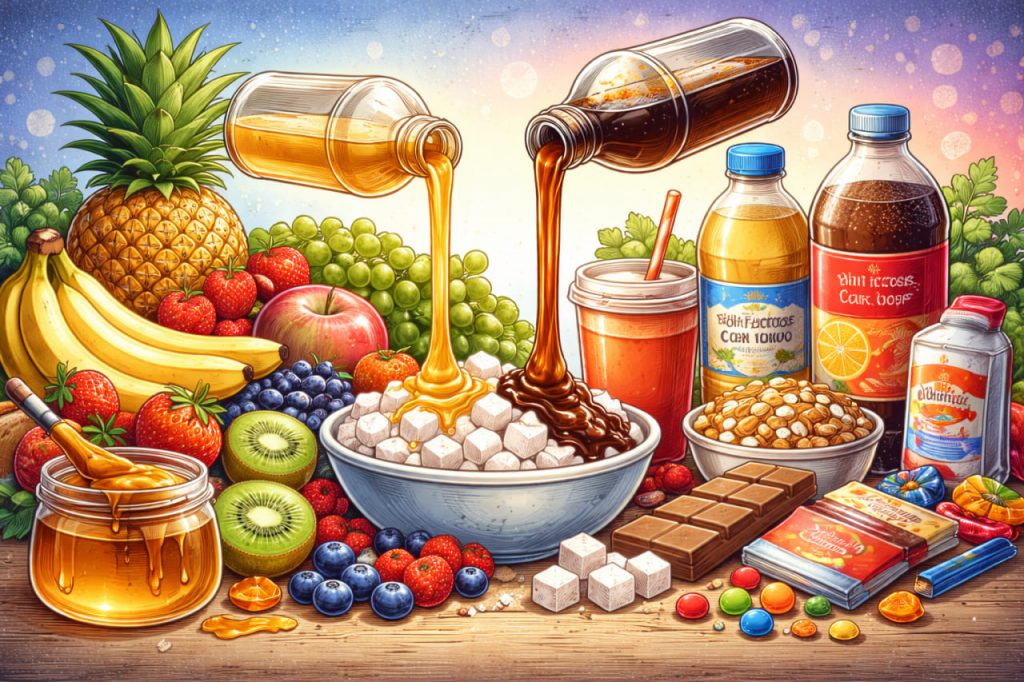
Fructose is a naturally occurring sugar that is widely consumed around the world, often without people fully realizing how much of it they ingest daily. It is found in fruits, honey, and vegetables, but it is also heavily used in processed foods and sweetened beverages. Because fructose tastes sweeter than glucose, food manufacturers often rely on it to enhance flavor while using smaller quantities. Despite its natural origin, fructose behaves differently in the body compared to other sugars, which has raised scientific concern. The discussion around fructose is not about eliminating it entirely, but about understanding where it comes from, how it is metabolized, and why excess intake matters. Awareness is key to distinguishing between naturally occurring fructose and industrial sources.
What Fructose Is and Where It Comes From
Fructose is a monosaccharide, meaning it is a simple sugar that does not need to be broken down during digestion. In nature, it is commonly paired with fiber, water, and micronutrients, as in whole fruits. This natural packaging slows absorption and reduces metabolic stress. In contrast, industrial fructose—often found in syrups and sweeteners—is isolated and added to foods without these protective components. One of the most common sources in processed products is high-fructose corn syrup, which is widely used in soft drinks, baked goods, and sauces. The source and context of fructose consumption make a critical difference in how it affects the body.
How Fructose Is Metabolized
Unlike glucose, which is used by nearly all cells in the body, fructose is metabolized primarily in the liver. When small amounts are consumed, the liver can process fructose efficiently, converting it into energy-related compounds. However, when intake is high and frequent, the liver redirects excess fructose toward fat production. This metabolic pathway explains why excessive fructose consumption is associated with fat accumulation and metabolic imbalance. Researchers emphasize that fructose does not trigger insulin release in the same way glucose does, which can interfere with appetite regulation. As one nutrition researcher explains:
“Fructose bypasses some of the body’s normal energy controls,
making excess intake easier and harder to detect.”
This unique metabolic route is central to understanding fructose-related risks.
Natural Fructose vs Added Fructose
A crucial distinction must be made between fructose from whole fruits and added fructose in processed foods. Whole fruits contain fiber, antioxidants, and water, all of which slow sugar absorption and promote satiety. Studies consistently show that fruit consumption is associated with positive health outcomes when eaten in reasonable amounts. Added fructose, however, is often consumed in liquid form or highly refined products, where it is rapidly absorbed and easy to overconsume. Fruit juices, sweetened drinks, and processed snacks are common sources of excessive fructose intake. This difference explains why fructose itself is not the problem, but rather how and how much it is consumed.
Fructose and Long-Term Health Concerns
High intake of added fructose has been linked to several long-term metabolic concerns. These include increased fat storage in the liver, disturbances in lipid balance, and elevated metabolic stress. Excess fructose may also contribute to inflammation and altered appetite signaling over time. Because its effects accumulate gradually, people may not notice immediate symptoms. Public health specialists warn that the combination of high fructose intake and sedentary lifestyles amplifies these risks. The issue is not sweetness alone, but the chronic overload of a metabolic pathway designed for much smaller amounts.
Managing Fructose Intake Wisely
Managing fructose intake does not require avoiding fruit or sweetness entirely. Instead, it involves prioritizing whole foods and reducing reliance on heavily processed products. Reading ingredient lists helps identify added fructose sources that may not taste overtly sweet. Choosing whole fruits over juices preserves fiber and reduces rapid sugar absorption. Over time, taste preferences adapt, making highly sweetened foods less appealing. Sustainable habits focus on balance, context, and awareness, rather than strict rules.
Interesting Facts
- Fructose is naturally sweeter than glucose, even in small amounts.
- The liver is the primary organ responsible for fructose metabolism.
- Whole fruits contain fructose but are rarely linked to negative health effects.
- Liquid sources of fructose are easier to overconsume than solid foods.
- Industrial fructose became widespread only in the late 20th century.
Glossary
- Fructose — a simple sugar naturally found in fruits and honey.
- Monosaccharide — the simplest form of sugar, requiring no digestion.
- High-Fructose Corn Syrup — a processed sweetener containing concentrated fructose.
- Metabolism — the set of chemical processes that convert food into energy.
- Added Sugar — sugar introduced during food processing rather than occurring naturally.