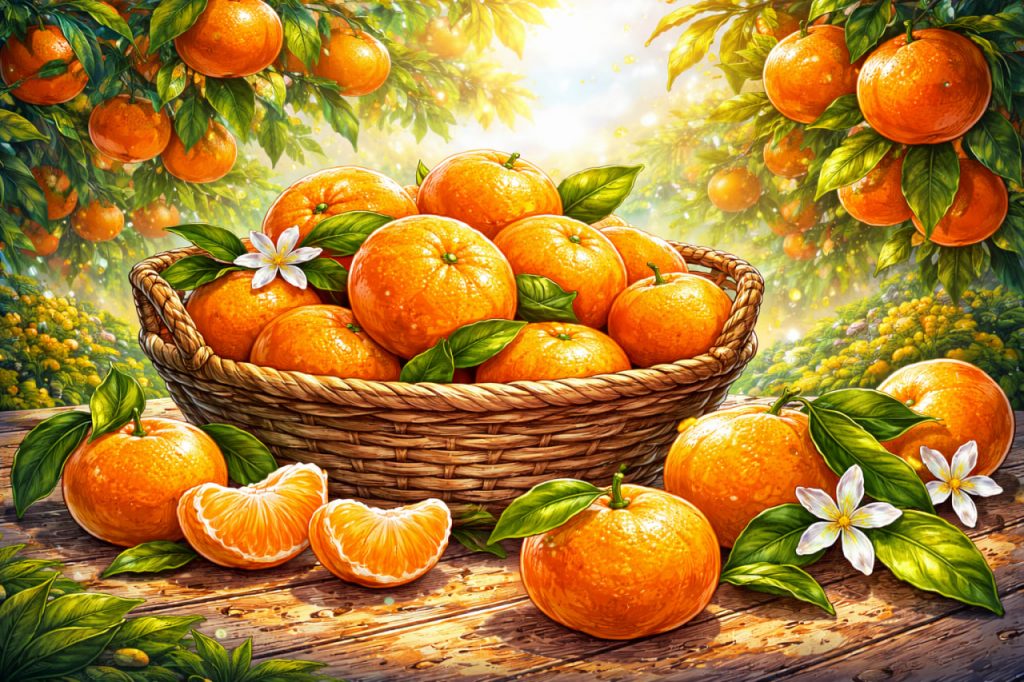
Mandarins are among the most recognizable and widely consumed citrus fruits in the world, valued for their bright flavor, easy peeling, and seasonal associations. Though often treated as a simple snack, mandarins have a long agricultural history and a complex place within global food systems. Their popularity is tied not only to taste, but also to convenience, trade routes, and selective cultivation over centuries. From traditional orchards in East Asia to modern plantations supplying international markets, mandarins reflect how human preferences shape crops over time. Understanding mandarins means looking beyond the fruit itself to the geography, biology, and culture behind it.
Origins and Early Cultivation
Mandarins originated in East Asia, particularly in regions of southern China and surrounding areas, where they were cultivated for thousands of years. Early farmers selected varieties for sweetness, thin peel, and aroma, gradually shaping the fruit we recognize today. The name “mandarin” is often linked to historical Chinese officials, reflecting the fruit’s association with status and refinement. Over time, mandarins spread along trade routes to Southeast Asia, the Middle East, and eventually Europe. Their adaptability to different climates helped them become a cornerstone of citrus agriculture worldwide.
What Makes Mandarins Different from Other Citrus
Although often grouped with oranges, mandarins are botanically distinct. They tend to be smaller, flatter in shape, and easier to peel, with looser skin than most sweet oranges. Their flavor profile is usually sweeter and less acidic, though this varies by variety. Mandarins also include several related types, such as tangerines, clementines, and satsumas, each developed through selective breeding. According to agricultural scientist Dr. Elaine Porter:
“Mandarins are not a single fruit type,
but a family shaped by centuries of human selection.”
This diversity explains why mandarins can taste and look quite different depending on origin.
Seasonality and Global Production
Mandarins are strongly associated with winter seasons in many countries, largely because their harvest aligns with cooler months. Major producing regions include China, Spain, Turkey, Morocco, and parts of South America. Advances in storage and transportation allow mandarins to be available year-round in many markets, though peak flavor usually corresponds to natural harvest periods. Their relatively long shelf life and resistance to handling damage make them well suited for global distribution. As a result, mandarins have become one of the most traded fresh fruits worldwide.
Cultural Significance and Traditions
Beyond agriculture, mandarins hold cultural meaning in many societies. In parts of East Asia, they symbolize prosperity and good fortune and are traditionally exchanged during holidays. In Mediterranean regions, mandarins are linked to seasonal meals and local markets. Their bright color and aroma have made them a symbol of winter freshness in many cultures. These traditions reinforce the fruit’s identity beyond nutrition, connecting it to ritual, memory, and seasonal rhythm.
Mandarins in Modern Food Systems
Today, mandarins are valued for their convenience and versatility. They are eaten fresh, used in desserts, salads, and sauces, and processed into juices and flavorings. Modern breeding focuses on seedless varieties, consistent sweetness, and uniform appearance to meet market demands. At the same time, concerns about sustainability, water use, and biodiversity are shaping how mandarins are grown and distributed. As a familiar fruit with a long history, mandarins offer insight into how everyday foods evolve alongside human societies.
Interesting Facts
- Mandarins are one of the oldest cultivated citrus fruits.
- Many “tangerines” sold today are actually mandarin hybrids.
- Their loose peel is a result of natural air gaps between skin and fruit.
- China is the world’s largest producer of mandarins.
- Mandarins were introduced to Europe only in the 19th century.
Glossary
- Mandarin — a group of small citrus fruits known for easy peeling and sweet flavor.
- Citrus — a genus of fruit-bearing trees that includes oranges, lemons, and limes.
- Hybrid — a plant produced by crossing different varieties or species.
- Seasonality — the natural timing of crop growth and harvest.
- Cultivation — the practice of growing and managing crops.