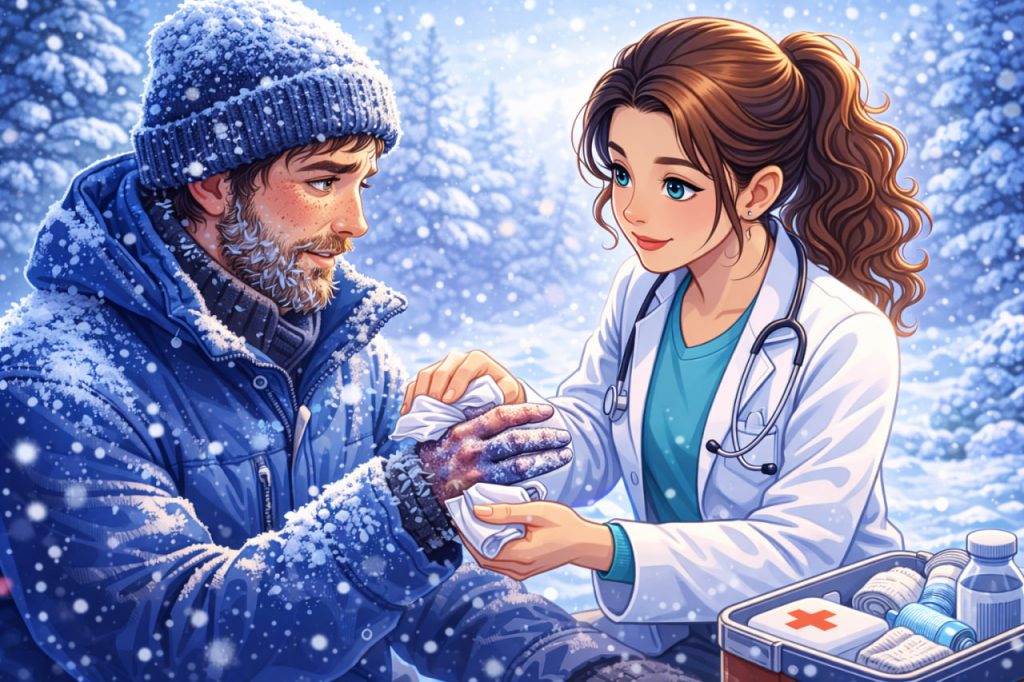
Frostbite is a serious cold-related injury that occurs when skin and underlying tissues freeze due to prolonged exposure to low temperatures. It most often affects fingers, toes, ears, nose, and cheeks, especially during strong wind and high humidity. Frostbite can develop faster than many people expect and may cause lasting damage if not handled correctly. The key to survival and recovery is early recognition, correct first aid, and avoiding dangerous mistakes. Understanding what frostbite is—and what it is not—can significantly reduce the risk of complications.
How Frostbite Develops
Frostbite occurs when the body prioritizes core warmth by reducing blood flow to extremities. As circulation decreases, tissues cool rapidly, and ice crystals begin to form inside cells, damaging them. Early stages may involve numbness and pale skin, while advanced frostbite can lead to blistering, tissue death, and loss of sensation. Wind dramatically accelerates heat loss, making frostbite possible even at relatively moderate subzero temperatures. According to emergency medicine specialist Dr. Karen Holt:
“Frostbite is not just frozen skin.
It is a circulation injury that worsens with time and improper handling.”
This is why quick but careful action is critical.
Recognizing the Symptoms
Early recognition of frostbite improves outcomes significantly. Initial signs include cold, numb, or tingling skin, followed by whitening or grayish coloration. As frostbite progresses, the skin may feel hard or waxy to the touch. In severe cases, blisters form after rewarming, and the affected area may turn blue or black days later. Pain may be minimal at first due to nerve numbness, which can be misleading. Never assume frostbite is harmless simply because it does not hurt immediately.
Immediate Actions to Take
If frostbite is suspected, the first priority is to stop further exposure to cold. Move to a sheltered, warm environment as soon as possible and remove wet or tight clothing. Rewarm the affected area slowly and gently, using body heat or warm (not hot) surroundings. Protect the injured area from friction or pressure, and keep it elevated if possible. It is crucial to rewarm only if there is no risk of refreezing, as repeated freezing causes severe tissue damage.
What You Must Never Do
Certain common reactions can make frostbite far worse. Do not rub or massage frostbitten skin, as ice crystals can tear damaged tissue. Avoid direct heat sources such as open flames, hot water, or heating devices, which can cause burns due to reduced sensation. Do not puncture blisters or apply snow or ice to the area. Alcohol and smoking should also be avoided, as they further impair circulation. These mistakes are among the leading causes of preventable complications after frostbite.
When to Seek Medical Help
Medical attention is necessary for moderate to severe frostbite, especially if blisters, discoloration, or loss of sensation persists after rewarming. Healthcare professionals can assess tissue damage and prevent infection or long-term complications. Even mild frostbite should be monitored closely in the following days, as symptoms can worsen after initial rewarming. Prompt professional care greatly improves the chance of recovery and tissue preservation.
Interesting Facts
- Frostbite can occur in less than 10 minutes in extreme wind conditions.
- Numbness often hides the severity of the injury in early stages.
- Repeated freezing and thawing causes more damage than continuous cold exposure.
- Ears, fingers, and toes freeze first due to reduced blood circulation.
- Proper first aid can significantly reduce the risk of permanent injury.
Glossary
- Frostbite — freezing injury affecting skin and underlying tissues.
- Hypothermia — dangerous drop in core body temperature.
- Rewarming — the gradual return of normal temperature to cold-injured tissue.
- Circulation — the flow of blood supplying oxygen and heat to tissues.
- Tissue Damage — injury to cells caused by freezing or lack of blood flow.