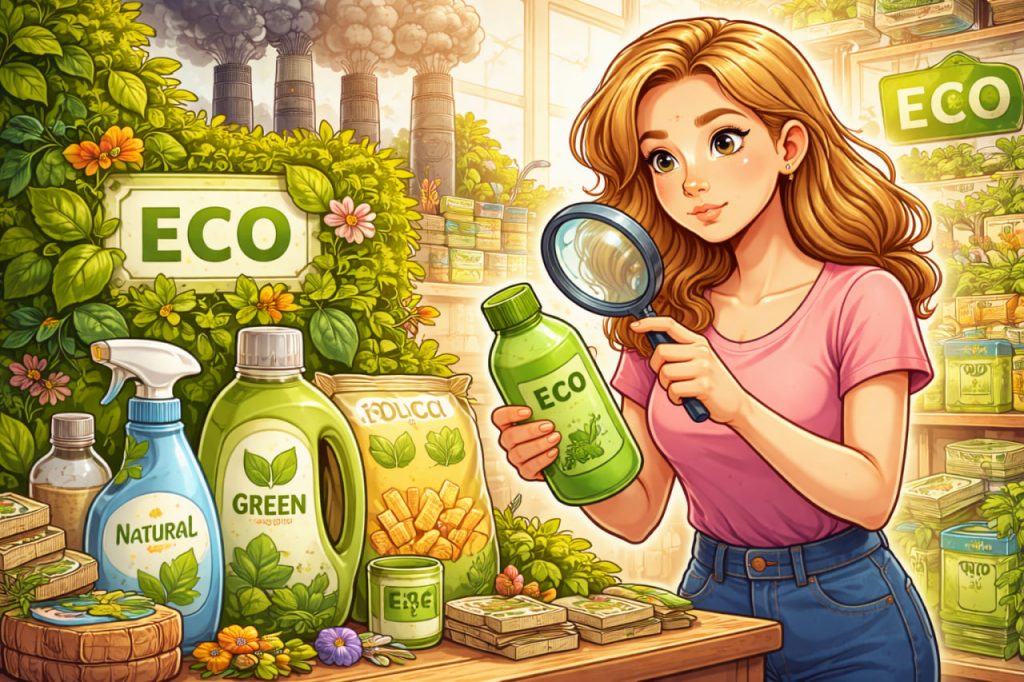
Greenwashing is a practice in which companies present their products, services, or policies as environmentally friendly without making meaningful or verifiable changes. As sustainability becomes more important to consumers, environmental claims have turned into powerful marketing tools. Unfortunately, not all of these claims are honest or accurate. Greenwashing creates a false sense of responsibility, allowing businesses to benefit from a “green” image while continuing harmful practices. This phenomenon undermines genuine environmental efforts and makes it harder for consumers to make informed choices. Understanding greenwashing is essential for distinguishing real sustainability from clever branding.
What Greenwashing Really Means
Greenwashing occurs when environmental language, imagery, or claims are used to mislead consumers about a company’s actual environmental impact. This can include vague terms like “eco-friendly,” “natural,” or “green” without clear definitions or evidence. Some companies highlight small positive actions while ignoring much larger sources of pollution within their operations. Others rely on green-colored packaging, nature imagery, or selective statistics to imply sustainability. In many cases, the issue is not outright lying, but strategic omission and exaggeration. According to sustainability analyst Dr. Rebecca Moore:
“Greenwashing doesn’t always rely on false statements.
It often works by telling a partial truth and hiding the full picture.”
This makes it particularly difficult for consumers to recognize.
Common Forms of Greenwashing
Greenwashing appears in many forms across industries. One common tactic is vague labeling, where products are marketed as “clean” or “eco” without third-party certification. Another is irrelevant claims, such as highlighting the absence of a harmful substance that was never used in that product category to begin with. Some companies use offset-based claims, focusing on carbon offsets while continuing high-emission activities. Others promote a single sustainable product line while the rest of their operations remain environmentally damaging. These strategies create confusion and blur the line between genuine progress and marketing manipulation.
Why Greenwashing Is Harmful
The damage caused by greenwashing goes beyond individual consumer deception. It slows down real environmental progress by rewarding appearance over action. When companies gain trust without changing their practices, they reduce pressure to invest in cleaner technologies or responsible supply chains. Greenwashing also erodes public trust in sustainability claims overall, making consumers skeptical even of truly responsible brands. Over time, this skepticism can weaken support for environmental initiatives and policies. From an ecological standpoint, greenwashing delays the systemic changes needed to address climate change and resource depletion.
How Consumers Can Recognize Greenwashing
Identifying greenwashing requires critical thinking and transparency checks. Reliable environmental claims are usually specific, measurable, and supported by independent certification. Consumers should look for clear data, lifecycle information, and third-party verification rather than broad slogans. Comparing company actions with their public statements can also reveal inconsistencies. Asking questions such as “What exactly is sustainable here?” or “What is not being mentioned?” helps uncover misleading narratives. Awareness is one of the strongest tools consumers have against deceptive environmental marketing.
Moving Toward Genuine Sustainability
Reducing greenwashing requires effort from businesses, regulators, and consumers alike. Clear standards, stronger regulations, and consistent reporting frameworks help limit misleading claims. Companies committed to real sustainability focus on measurable impact, long-term strategy, and transparency rather than image alone. At the same time, informed consumers drive change by supporting brands that demonstrate accountability. When sustainability is treated as a responsibility rather than a trend, greenwashing loses its power.
Interesting Facts
- Many green claims rely on undefined terms with no legal meaning.
- Green-colored packaging increases the perception of sustainability even without evidence.
- Greenwashing can occur unintentionally due to poor understanding of supply chains.
- Strong regulations significantly reduce misleading environmental claims.
- Transparency builds more trust than perfect-sounding slogans.
Glossary
- Greenwashing — misleading marketing that exaggerates or fabricates environmental benefits.
- Sustainability Claim — a statement about a product’s or company’s environmental impact.
- Third-Party Certification — independent verification of environmental standards.
- Carbon Offset — compensation for emissions through environmental projects elsewhere.
- Transparency — open and verifiable disclosure of environmental practices.