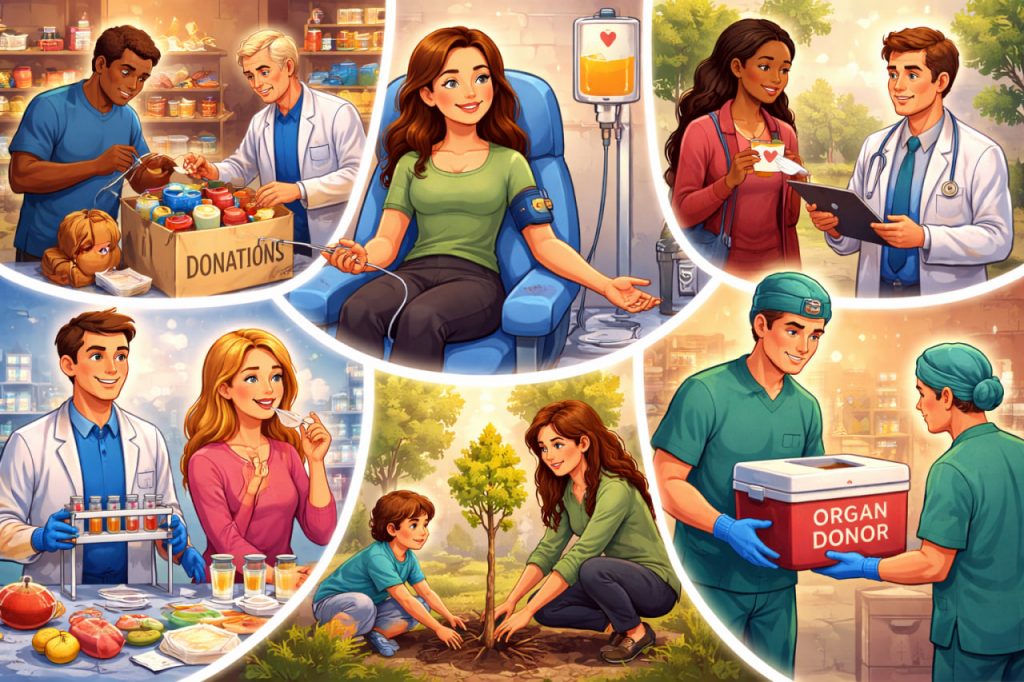
Donations are one of the most direct ways individuals can contribute to the well-being of society, often saving lives and improving quality of life for others. Beyond financial contributions, many forms of biological and time-based donations play a crucial role in healthcare, research, and community resilience. These acts of generosity support hospitals, emergency services, scientific progress, and vulnerable populations. Importantly, most donation types are carefully regulated and rely on voluntary participation to function effectively. Understanding the different ways people can donate helps raise awareness about how everyday actions can have extraordinary social impact. Each form of donation addresses specific societal needs, making collective participation essential.
Blood Donation and Its Social Importance
Blood donation is one of the most well-known and impactful forms of contribution to society. Donated blood is essential for surgeries, trauma care, cancer treatment, and managing chronic illnesses. Because blood cannot be artificially produced, healthcare systems depend entirely on voluntary donors to maintain sufficient supplies. Blood is often separated into components—red cells, plasma, and platelets—allowing one donation to help multiple patients. Public health expert Dr. Michael Turner explains:
“A single blood donation can support several medical treatments,
making it one of the most efficient ways to help others.”
Regular blood donation strengthens healthcare preparedness and saves lives every day.
Plasma and Platelet Donation
Plasma donation is especially valuable for treating patients with immune deficiencies, severe burns, and clotting disorders. Plasma contains antibodies and proteins that are critical for recovery and long-term treatment. Platelet donation, on the other hand, is vital for cancer patients and those undergoing chemotherapy, as platelets help prevent dangerous bleeding. These donations often require specialized equipment and may take longer than whole blood donation, but their medical importance is immense. Many hospitals rely on a steady supply of plasma and platelets to ensure continuity of care for critically ill patients.
Bone Marrow and Stem Cell Donation
Bone marrow and stem cell donation can be life-saving for individuals with leukemia, lymphoma, and other serious blood disorders. These donations help restore healthy blood-forming cells when a patient’s own bone marrow is damaged or destroyed. Matching donors and recipients is complex, which makes each registered donor extremely valuable. According to hematology specialist Dr. Laura Bennett:
“For many patients, a compatible stem cell donor represents their best chance at survival.”
Participation in donor registries significantly increases the likelihood of successful matches and improved outcomes.
Organ Donation After Life
Organ donation allows individuals to provide life-saving transplants after death, benefiting people with organ failure who have no other treatment options. Organs such as kidneys, liver, heart, and lungs can dramatically extend and improve lives. While organ donation involves personal and ethical considerations, its societal impact is profound. One donor can help multiple recipients, reducing transplant waiting lists and healthcare burdens. Clear communication of one’s wishes ensures that these donations are handled respectfully and effectively.
Donation of Time, Knowledge, and Skills
Not all donations involve biology. Volunteering time, sharing professional skills, or mentoring others also provides immense social value. Community organizations, educational programs, and humanitarian initiatives rely on volunteers to operate and expand their reach. Teaching, caregiving, environmental work, and crisis response all benefit from human involvement and compassion. These contributions strengthen social bonds and build more resilient communities.
Interesting Facts
- One blood donation can help up to three patients through component separation.
- Plasma donations are often used to create life-saving medicines for immune disorders.
- Stem cell registries rely on genetic diversity to improve matching success.
- Organ donation can save up to eight lives from a single donor.
- Volunteering has been linked to higher life satisfaction and stronger community trust.
Glossary
- Blood Components — red cells, plasma, and platelets separated from donated blood.
- Plasma — the liquid part of blood containing proteins and antibodies.
- Stem Cells — cells capable of developing into different blood cell types.
- Organ Transplant — a medical procedure replacing a failing organ with a donated one.
- Volunteering — donating time and skills to support individuals or communities.