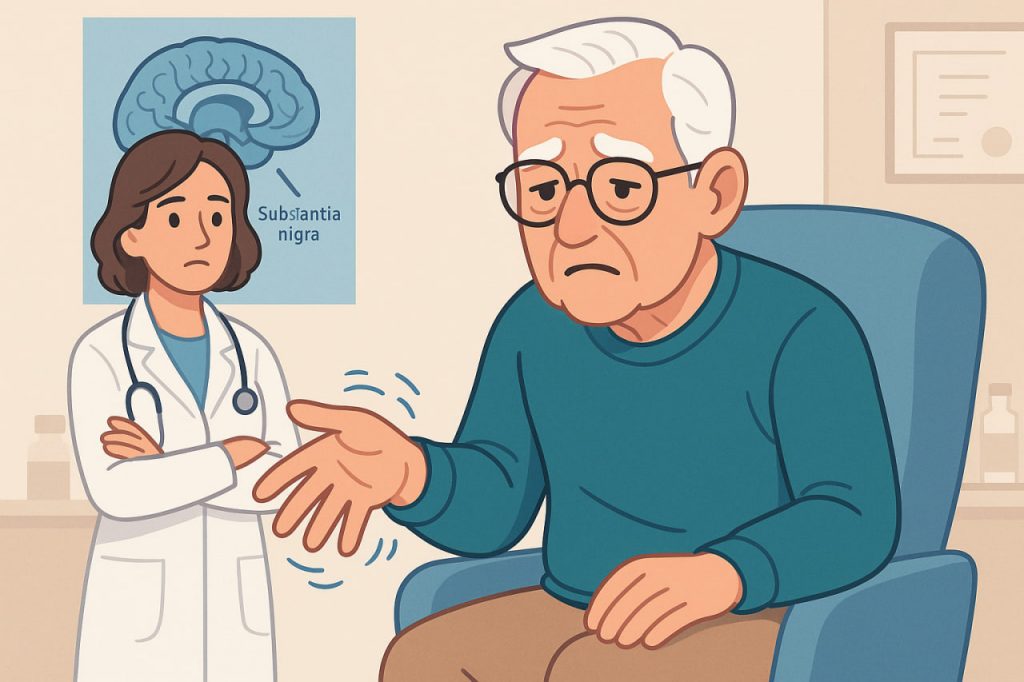
Parkinson’s disease is a chronic neurological disorder that primarily affects movement, coordination, and balance. It develops when nerve cells in a part of the brain called the substantia nigra begin to break down, reducing the production of dopamine, a neurotransmitter that plays a key role in controlling movement. As dopamine levels decline, individuals experience a range of motor and non-motor symptoms that gradually progress over time. Although Parkinson’s disease cannot be cured, early detection, lifestyle adjustments, and professional medical guidance can help people maintain a higher quality of life.
Parkinson’s disease affects millions worldwide and is more common in older adults, though younger people can develop it as well. The condition progresses slowly, and each person’s experience is unique. Understanding the biological mechanisms, early warning signs, and contributing factors helps support better awareness and earlier medical evaluation.
What Causes Parkinson’s Disease?
The exact cause is still unknown, but researchers have identified several contributing factors:
- degeneration of dopamine-producing neurons in the midbrain
- genetic mutations that increase susceptibility
- environmental exposures (such as certain toxins)
- age-related changes in brain structure and chemistry
- oxidative stress and inflammation
Most cases are considered idiopathic, meaning they arise without a single identifiable cause. According to neurologist Dr. Maria Ellington:
“Parkinson’s is not caused by one trigger —
it develops through a complex interaction of genes, aging, and environmental factors.”
This complexity makes research challenging, but progress continues.
Early Symptoms
Parkinson’s disease often begins subtly. Early signs may include:
- slight tremors in hands or fingers
- reduced arm swing while walking
- stiffness or slowness of movement
- trouble with handwriting
- changes in facial expression
- difficulty with balance
Because these symptoms can resemble those of other conditions, early medical evaluation is extremely important.
Progressive Motor Symptoms
As the disease advances, individuals may experience:
- more noticeable tremors
- muscle rigidity
- bradykinesia (slowing of movement)
- postural instability
- shuffling gait
- difficulty initiating or stopping movement
Motor symptoms remain the most recognized aspect of Parkinson’s disease.
Non-Motor Symptoms
Parkinson’s also affects bodily functions not related to movement. These may include:
- sleep disturbances
- fatigue
- anxiety or mood changes
- loss of smell
- digestive difficulties
- memory or concentration challenges
- autonomic dysfunction (blood pressure, heart rate changes)
These symptoms can appear years before motor issues emerge, making early diagnosis complex.
Risk Factors
Several factors increase the likelihood of developing Parkinson’s disease:
- age — risk rises significantly after 60
- family history — some genetic links exist
- male sex — men are slightly more affected
- environmental exposures — pesticides, heavy metals
- head injuries — repeated trauma may increase risk
However, many people with risk factors never develop the disease.
Diagnosis
Diagnosis is based on:
- neurological examination
- symptom history
- movement assessments
- imaging (optional, to rule out other conditions)
There is currently no single definitive test, which makes professional evaluation essential.
How People Manage Parkinson’s
Although Parkinson’s cannot be cured, many individuals live actively for years with proper medical support. Helpful approaches include:
- regular physical activity
- balanced nutrition
- structured daily routines
- physical and occupational therapy
- speech therapy
- stress management techniques
Any decision regarding treatment or medication must be made only with a qualified medical specialist, as everyone’s condition is unique.
Interesting Facts
- Parkinson’s disease was first described in 1817 by British physician James Parkinson.
- Loss of dopamine-producing neurons can begin years before symptoms appear.
- Tremors occur in about 70% of cases but are not present in everyone.
- Exercise such as walking, stretching, or dancing can help support motor function.
- Parkinson’s is the second most common neurodegenerative disorder after Alzheimer’s disease.
Glossary
- Dopamine — a neurotransmitter essential for movement and reward signals.
- Bradykinesia — abnormal slowness of movement, a key symptom of Parkinson’s.
- Substantia Nigra — a brain region that produces dopamine.
- Neurodegeneration — gradual loss of nerve cells and function.
- Autonomic System — the part of the nervous system that controls involuntary functions.