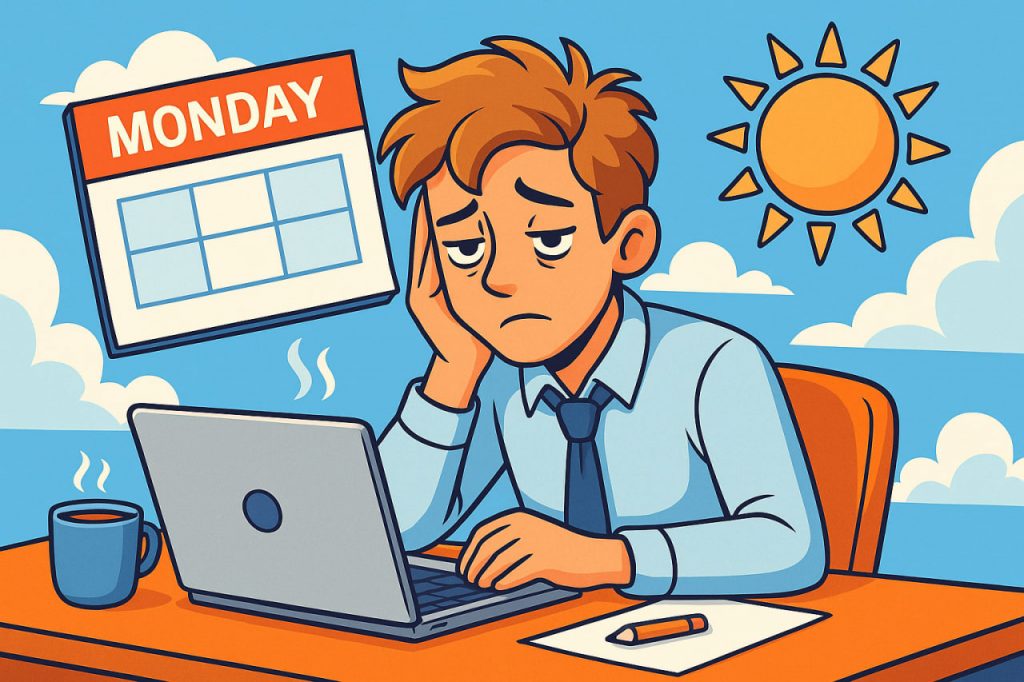
Many people feel more tired on Mondays, more stressed on Wednesdays, and more relaxed on Fridays — but does the day of the week truly affect human health? Surprisingly, scientific research shows that weekly cycles can influence mood, productivity, sleep patterns, and even some physiological processes. These effects arise not because the days themselves have biological meaning, but because human routines, expectations, and social structures create weekly rhythms that shape well-being. Understanding how these cycles work can help people plan healthier schedules and reduce stress associated with modern lifestyles.
Weekly fluctuations in stress hormones, sleep quality, emotional states, and work consistency have been documented in several large studies. Although these variations are influenced by culture and personal behavior, they show that the rhythm of a seven-day week can have real health outcomes.
Why Mondays Feel Harder
Across multiple countries, people report lower mood and higher stress on Mondays. This phenomenon is linked to:
- disrupted sleep schedules on weekends
- sudden return to responsibility and routine
- increased cognitive load after rest
- social pressure associated with productivity expectations
Research shows that cortisol — a stress-related hormone — tends to peak higher on Monday mornings. According to behavioral psychologist Dr. Lena Matthews:
“The Monday effect isn’t biological —
it’s psychological, shaped by how we transition from rest to responsibility.”
This explains why people often feel more fatigued or less motivated at the beginning of the workweek.
Midweek Stress Peaks
By Wednesday, many individuals reach their highest levels of mental fatigue. Factors include:
- workload accumulation
- reduced sleep quality midweek
- elevated stress from deadlines
- decline in motivation before the weekend
Some studies show a slight increase in headaches, irritability, and perceived stress on Wednesdays compared to other weekdays.
Friday Relief and Emotional Lift
Fridays often bring:
- improved mood
- reduced stress hormones
- anticipation of rest
- stronger social motivation
This “Friday uplift” reflects emotional reward and expectation rather than biological cycles.
Weekend Health Benefits — and Pitfalls
Weekends generally show:
- better sleep duration
- improved mood
- more time for physical activity
- better social interaction
- reduced stress load
However, irregular sleep schedules (“social jet lag”) can negatively affect:
- heart health
- metabolic stability
- energy levels on Monday morning
A consistent sleep schedule is more beneficial than compensating with long weekend sleep.
Physiological Effects Observed During the Week
Some studies show measurable weekly variations, including:
- blood pressure slightly higher early in the week
- sleep deprivation accumulating by mid-week
- heart attack rates statistically peaking on Mondays in some populations (due to stress, not the day itself)
- metabolic fluctuation based on weekday eating habits
- immune response variations linked to changing stress levels
These patterns are shaped by lifestyle rhythms, not by biological clocks.
Does the Body Recognize Days of the Week?
Biologically — no.
Humans do not have a built-in seven-day rhythm the way we have a 24-hour circadian rhythm.
But behaviorally — yes.
Routines create predictable patterns that the body responds to indirectly.
How to Use Weekly Rhythms to Improve Health
Understanding weekly variations can help improve well-being:
- plan demanding tasks later in the day on Mondays
- avoid oversleeping on weekends
- schedule physical activity midweek to combat stress
- create calming evening routines to stabilize sleep
- include short breaks more frequently during the workweek
- protect weekends for social rest and genuine relaxation
These strategies help offset stress cycles shaped by modern schedules.
Interesting Facts
- Heart attacks peak on Monday mornings in several studies, linked to stress transitions.
- People report their happiest moods on Fridays, even before work ends.
- “Social jet lag” — weekend sleep shifts — affects nearly 70% of adults.
- Productivity often peaks on Tuesdays for most office workers.
- Weekend sleep can improve memory consolidation, even if schedules vary.
Glossary
- Cortisol — a hormone released during stress that affects energy and alertness.
- Social Jet Lag — disruption caused by different sleep schedules on weekends vs. weekdays.
- Circadian Rhythm — the body’s natural internal 24-hour clock regulating sleep and energy.
- Workload Accumulation — the buildup of tasks and stress across the week.
- Metabolic Stability — balanced function of energy-related processes in the body.