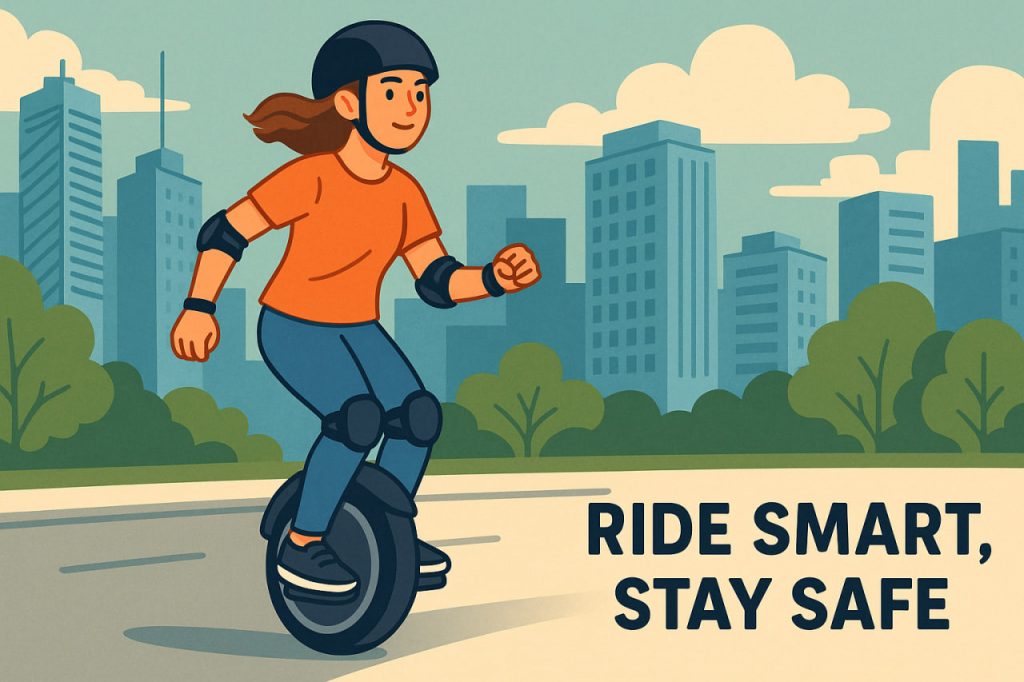
In recent years, one-wheeled vehicles such as electric unicycles have become increasingly popular among enthusiasts seeking innovative and eco-friendly modes of transportation. They promise compact mobility, impressive speed, and a futuristic feel that appeals to urban commuters and adventurers alike. However, the rise of these devices has also sparked heated debates about safety, regulation, and responsibility. While many users praise the freedom and thrill they offer, others question whether the potential dangers outweigh the excitement. As cities adapt to new transportation trends, society faces a growing need to balance innovation with safety.
The Appeal of One-Wheeled Transportation
The allure of one-wheeled vehicles lies in their combination of freedom and technology. These compact devices can travel at speeds exceeding 30 km/h, navigate narrow streets, and even handle moderate off-road terrain. For many, they represent a symbol of independence and modern living. Environmental advocates often highlight their zero-emission operation, making them a sustainable choice in the fight against urban pollution. According to transport engineer Dr. Laura Stein, “Electric unicycles fill a unique niche between bicycles and scooters—they’re efficient, portable, and surprisingly powerful.” Yet this convenience also introduces a steep learning curve that not every rider is prepared to handle safely.
The Safety Concerns Behind the Thrill
Despite their advantages, one-wheeled vehicles come with significant risks. Riders must maintain balance, anticipate road hazards, and master braking—all on a single wheel. Accidents often occur due to sudden loss of control, uneven surfaces, or lack of protective gear. Unlike bicycles or electric scooters, most unicycles lack handles or frames for stabilization, increasing the likelihood of serious injuries during falls. A 2024 European safety study revealed that over 40% of electric unicycle accidents result in head or upper-body trauma. Dr. Ahmed Navarro, a trauma specialist, warns, “Many injuries could be prevented if riders wore full protective gear and received proper training before riding in public spaces.”
Legal and Ethical Considerations
Legally, the status of one-wheeled vehicles varies widely across countries. In some regions, they are treated as motorized personal transporters and restricted to specific paths, while in others, they remain unregulated altogether. This legal gray area can create confusion for both users and law enforcement. Urban planners also struggle to integrate these vehicles into traffic systems designed for traditional transport. The ethical question arises: should technology that poses such clear risks be freely available without mandatory safety standards? As innovation outpaces legislation, societies must consider not only individual freedom but also collective safety.
The Psychology of Risk and Innovation
Part of the fascination with one-wheeled vehicles stems from human psychology. People are often drawn to new, challenging, and slightly dangerous activities because they trigger adrenaline and a sense of accomplishment. Psychologists describe this as “risk-based reward behavior,” where individuals perceive danger as part of the excitement. The community aspect also fuels this enthusiasm—online forums and social media groups celebrate impressive stunts and record-breaking rides, sometimes unintentionally normalizing risky behavior. While the sense of belonging and adventure can be empowering, it may also blur the line between responsible enjoyment and reckless behavior.
The Future of One-Wheeled Mobility
Manufacturers continue to improve design and safety features, introducing models with advanced gyroscopic stabilization, wider tires, and built-in speed limiters. Some companies are experimenting with smart helmets and protective suits equipped with impact sensors that sync with the vehicle. Cities are beginning to introduce regulations, such as speed caps and helmet requirements, to reduce accident rates. Still, experts emphasize that true safety depends on user awareness and training. As transport policy analyst Maya Petrov notes, “Technology can minimize risks, but it can’t replace responsibility. The human factor remains the greatest variable.” Ultimately, one-wheeled vehicles may remain a symbol of innovation—but one that demands respect, caution, and preparation.
Interesting Facts
- The first motorized unicycle was patented in 1931, long before electric models appeared.
- Some high-end electric unicycles can reach speeds of up to 70 km/h.
- Enthusiasts often refer to unicycles as “EUCs” (Electric Unicycle Community).
- Riders burn up to 300 calories per hour while maintaining balance on a unicycle.
- In some cities, unicycles are allowed in bicycle lanes but not on sidewalks.
P.S. Before you hit the road on a one-wheeled vehicle, think about your chances of survival if your vehicle breaks down and you fall in front of a multi-ton truck, even if you’re wearing all the necessary safety equipment. Is it worth the risk?
Glossary
- Gyroscopic stabilization — A technology that uses sensors to maintain balance by adjusting wheel rotation.
- Impact sensors — Devices in helmets or clothing that detect and record force during a fall.
- Zero-emission — A mode of transportation that produces no harmful pollutants during use.
- Risk-based reward behavior — A psychological concept describing how people are motivated by challenges that involve risk.
- Speed limiter — A safety mechanism that prevents a vehicle from exceeding a certain speed.