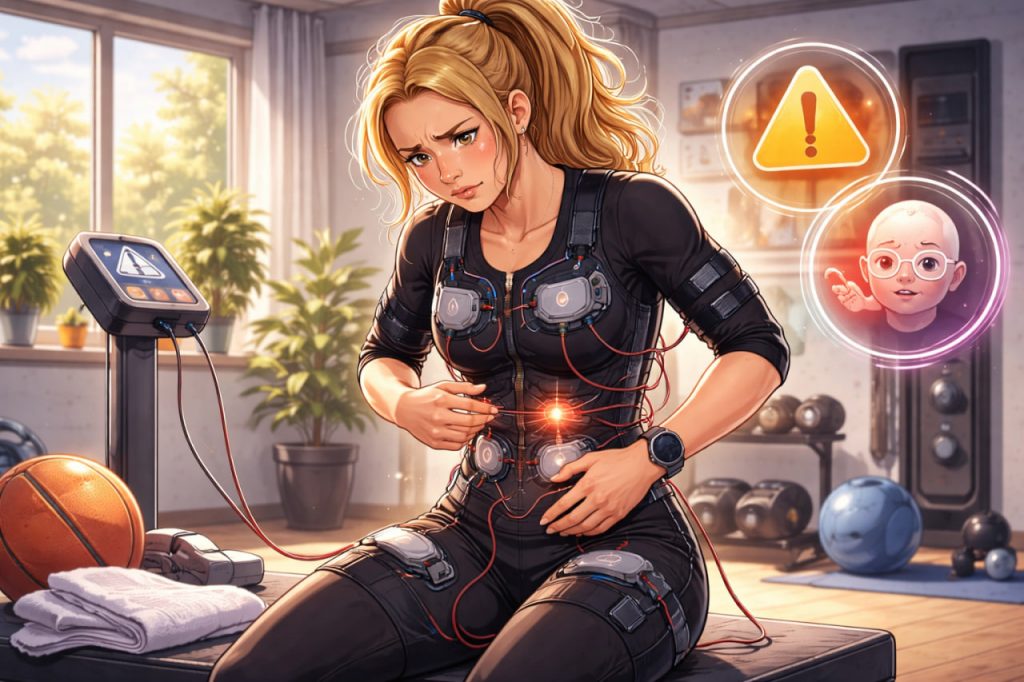
EMS (Electrical Muscle Stimulation) training is often marketed as a revolutionary shortcut to fitness — promising intense muscle activation in just 20 minutes. While the technology has legitimate medical applications in rehabilitation under strict supervision, its growing popularity in commercial fitness raises important concerns. Many advertisements emphasize rapid results without clearly explaining potential risks or limitations. For individuals considering EMS, understanding the physiological impact and possible complications is essential. Quick results may sound appealing, but muscle physiology and recovery processes cannot be bypassed without consequences. A critical look at EMS helps individuals make informed decisions about their health.
How EMS Affects the Body
EMS devices send electrical impulses through the skin to stimulate muscle contractions. These contractions can be stronger and more sustained than voluntary ones. While this may appear beneficial, artificially induced contractions place significant stress on muscle fibers and metabolic systems. Exercise physiologist Dr. Laura Bennett explains:
“Electrical stimulation forces muscle fibers to contract
without the natural protective feedback mechanisms
that regulate voluntary movement.”
Unlike traditional training, where the nervous system adjusts effort based on fatigue and joint stability, EMS can override natural pacing signals. This increases the risk of excessive muscle strain.
Risk of Muscle Damage and Rhabdomyolysis
One of the most serious concerns associated with intense EMS sessions is rhabdomyolysis, a condition involving severe muscle breakdown. In extreme cases, damaged muscle fibers release proteins into the bloodstream that can strain the kidneys. Although rare, cases have been reported after overly intense EMS sessions, particularly among beginners. Severe muscle soreness, swelling, dark urine, and extreme fatigue after training require medical attention. This risk underscores the importance of gradual progression — something often overlooked in promotional messaging.
Cardiovascular and Neurological Concerns
EMS training is not recommended for individuals with cardiac pacemakers, heart rhythm disorders, or certain neurological conditions. Electrical impulses may interfere with implanted devices or underlying cardiovascular stability. Even in healthy individuals, high-intensity stimulation can elevate heart rate and blood pressure. Fitness specialist Dr. Marcus Hill notes:
“Electrical stimulation should never replace medical screening.
The heart and nervous system must be considered
before applying external electrical currents.”
Without proper screening and supervision, risks increase.
Limited Functional Benefits
While EMS can trigger muscle contractions, it does not fully replicate coordinated, functional movement patterns. Real-world strength depends not only on muscle activation but also on joint stability, balance, coordination, and neuromuscular timing. Traditional resistance training develops these components naturally. Relying solely on electrical stimulation may create strength imbalances or neglect movement mechanics essential for injury prevention.
Overstimulation and Recovery Challenges
EMS sessions can feel deceptively short, leading some individuals to underestimate their intensity. Because multiple muscle groups are activated simultaneously, recovery demands may be higher than expected. Insufficient recovery increases fatigue and may reduce overall training sustainability. Long-term fitness depends on consistent, manageable routines rather than extreme stimulation.
Why Informed Decisions Matter
EMS is not a universal solution and carries risks that should be clearly understood. Sustainable health improvements require gradual adaptation, balanced training, and respect for the body’s recovery processes. Individuals considering EMS should consult healthcare professionals and weigh benefits against potential risks. Fitness progress cannot safely bypass physiology.
Interesting Facts
- Severe muscle overactivation can increase risk of rhabdomyolysis in extreme cases.
- EMS bypasses some natural fatigue-regulation mechanisms.
- Functional strength requires coordination and joint stability, not just muscle contraction.
- Recovery demands after EMS may be higher than traditional short workouts.
- Medical screening is essential before starting high-intensity stimulation programs.
Glossary
- EMS (Electrical Muscle Stimulation) — technology that triggers muscle contractions using electrical impulses.
- Rhabdomyolysis — a serious condition involving muscle breakdown and potential kidney strain.
- Neuromuscular Control — coordinated interaction between nerves and muscles during movement.
- Contraindication — a medical reason to avoid a specific treatment.
- Muscle Overactivation — excessive stimulation beyond normal voluntary contraction limits.