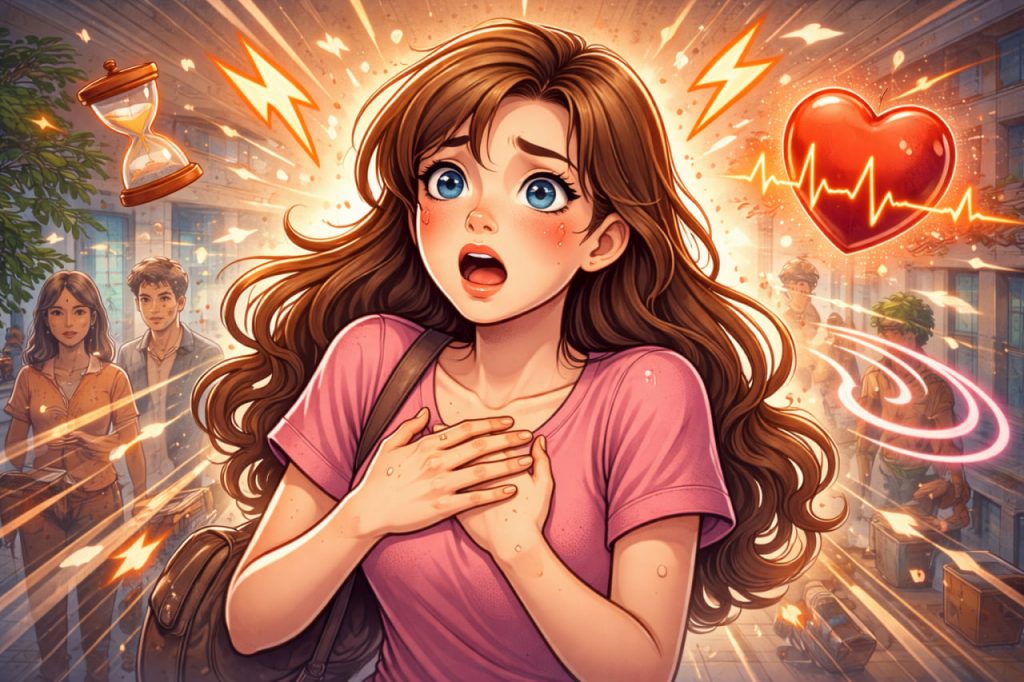
Panic is an intense psychological and physiological reaction to perceived danger, even when no immediate threat is present. Unlike ordinary anxiety, panic emerges suddenly and can feel uncontrollable. A person experiencing panic may feel as if they are losing control, suffocating, or facing imminent harm. Although panic is frightening, it is not dangerous in itself. Understanding how panic works helps reduce fear of the experience and regain a sense of control.
What Happens in the Body During Panic
Panic activates the same survival mechanisms as extreme stress. The brain rapidly interprets a situation as dangerous and triggers a powerful fight-or-flight response. Adrenaline surges into the bloodstream, increasing heart rate and breathing. Blood flow shifts to muscles, while digestion and rational analysis are suppressed. These reactions evolved to protect us from physical danger, but during panic they occur without a real external threat.
The Role of the Brain
The amygdala, the brain’s threat-detection center, plays a central role in panic. It sends alarm signals before the rational parts of the brain can assess the situation. As a result, logical reassurance often feels ineffective during an attack. The prefrontal cortex, responsible for reasoning, becomes temporarily less active. This neurological imbalance explains why panic feels irrational yet impossible to stop through logic alone.
Common Symptoms of Panic
Panic manifests both physically and emotionally. Symptoms may include rapid heartbeat, shortness of breath, dizziness, trembling, sweating, and chest discomfort. Emotionally, people may experience intense fear, detachment, or a sense of unreality. These sensations often reinforce each other, creating a feedback loop that intensifies the panic. The suddenness of symptoms is what makes panic especially frightening.
Why Panic Feels Like Loss of Control
One of the defining features of panic is the feeling of losing control or safety. This occurs because the body is acting independently of conscious intention. The mismatch between physical intensity and lack of external danger creates confusion. People often misinterpret bodily sensations as signs of serious illness, which further escalates fear. Panic feeds on misinterpretation rather than actual harm.
Panic Attacks vs. Panic Disorder
A panic attack is a single episode of intense fear, while panic disorder involves repeated attacks and persistent fear of their recurrence. Not everyone who experiences panic will develop a disorder. Frequency, anticipation, and avoidance behaviors distinguish clinical conditions from isolated episodes. Early understanding and coping strategies reduce the risk of escalation. Panic itself does not mean psychological weakness.
How Panic Naturally Ends
Although panic feels endless, it always subsides. The nervous system cannot maintain peak activation indefinitely. As adrenaline levels drop, physical symptoms gradually fade. The body returns to baseline even if the person does nothing. Recognizing this natural cycle helps reduce fear of future episodes.
Expert Perspective
According to clinical psychiatrist Dr. Elena Markov:
“Panic attacks are false alarms of the nervous system.
They feel dangerous, but they are not harmful.
Understanding this is often the first step toward recovery.”
This perspective reframes panic as a malfunction of alarm systems, not a sign of collapse.
Why Understanding Panic Matters
Fear of panic often becomes more disabling than panic itself. When people understand what is happening in their body and brain, the experience loses some of its power. Education reduces catastrophic thinking and restores confidence. Panic can be managed, and in many cases, fully overcome. Knowledge transforms panic from an enemy into a signal that can be addressed.
P.S. Personally, I recommend that everyone learn the simple autogenic training by Schultz, which is available on YouTube and other platforms. By practicing it every morning and evening for at least 12 minutes, you will find it much easier to live in this world and cope with stress and panic. If you are interested in prayer and meditation practices, please feel free to ask in the comments.
Interesting Facts
- Panic symptoms are caused by adrenaline, not danger.
- Panic attacks always end on their own.
- Fear of symptoms often worsens panic intensity.
- Panic does not cause heart attacks or loss of consciousness.
- Understanding panic reduces its recurrence.
Glossary
- Panic — an intense, sudden surge of fear without real danger.
- Fight-or-Flight Response — automatic survival reaction of the nervous system.
- Adrenaline — hormone responsible for rapid physical activation.
- Amygdala — brain structure involved in threat detection.
- Panic Attack — a short episode of extreme fear and physical symptoms.