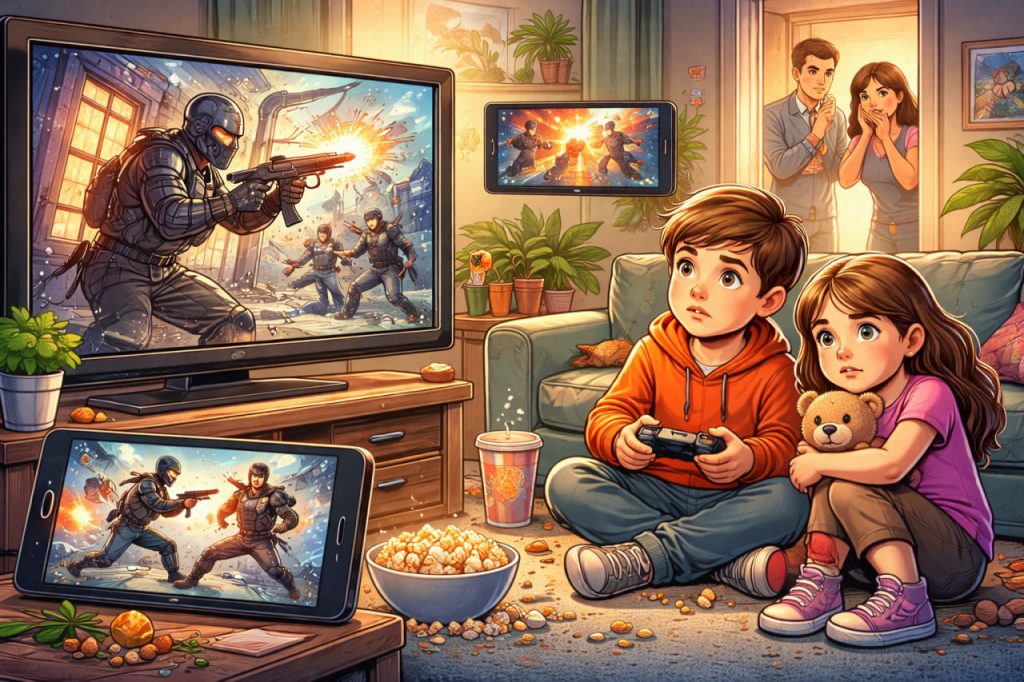
Violence has become a common element of modern media, appearing in films, television, video games, social networks, and online content. For adults, such content may be perceived as fiction or entertainment, but for children, whose cognitive and emotional systems are still developing, repeated exposure can have deeper effects. Media does not exist in isolation; it shapes norms, expectations, and emotional responses. When violence is normalized or glamorized, it can influence how children understand conflict, empathy, and acceptable behavior. Examining how violent media affects children’s mental health is essential for responsible parenting and social awareness.
How Children Perceive Media Violence
Children do not interpret media content the same way adults do. Younger children often struggle to distinguish clearly between fiction and reality, especially when violence is presented in stylized or heroic ways. Even older children may internalize repeated patterns they see on screens. Characters who solve problems through aggression can become behavioral models. Media violence can therefore shape expectations about how conflicts are resolved. The more emotionally engaging the content, the stronger its potential influence.
Psychological Effects of Repeated Exposure
Frequent exposure to violent media can affect children’s emotional regulation and sensitivity. Studies show that repeated violent imagery may reduce empathy and increase emotional numbness over time. Some children become more anxious or fearful, while others may show increased aggression or impulsivity. The effect is not uniform and depends on personality, environment, and parental guidance. However, the risk grows with duration and intensity of exposure.
Normalization of Aggression
One of the most significant impacts of media violence is normalization. When violence is portrayed as justified, humorous, or consequence-free, children may begin to view aggression as acceptable. This does not mean that media violence directly causes violent behavior, but it can lower psychological barriers. Over time, children may become less sensitive to others’ suffering. This normalization subtly shifts moral boundaries during critical developmental stages.
Fear, Anxiety, and Sense of Safety
Violent content can also increase fear and anxiety, especially in younger children. Scenes involving harm, threats, or chaos may lead to nightmares or persistent worry. Children exposed to excessive violence may develop an exaggerated perception of danger in the real world. This can affect sleep, concentration, and overall emotional well-being. Media that lacks context or reassurance amplifies these effects.
The Role of Context and Guidance
Not all depictions of violence have the same impact. Context, consequences, and framing matter greatly. Media that shows the real consequences of violence, including emotional and moral costs, has a different effect than content that glorifies it. Parental discussion helps children process what they see. According to child psychologist Dr. Anna Keller:
“Media violence does not act in isolation.
Its impact depends on guidance, emotional support,
and whether children are taught to reflect rather than imitate.”
Active mediation significantly reduces negative effects.
Digital Media and Increased Exposure
Unlike earlier generations, children today encounter violent content across multiple platforms. Short videos, memes, and interactive games can deliver intense stimuli in rapid succession. Algorithms may amplify sensational content, increasing exposure without parental awareness. This constant availability makes regulation more challenging. Digital environments require new forms of supervision and education.
Protective Strategies
Reducing harm does not require eliminating all media exposure. Age-appropriate content selection, screen time limits, and open communication are key strategies. Teaching children emotional literacy and conflict resolution skills builds resilience. Media literacy helps children question and analyze what they see. A supportive environment can counterbalance negative influences.
Why This Issue Matters
The popularization of violence in media reflects broader cultural trends, but its effects are felt most strongly by children. Mental health, empathy, and social behavior develop during early years and adolescence. Protecting these processes supports healthier individuals and communities. Addressing media violence is not about censorship, but about responsibility and awareness. How society presents violence shapes how future generations understand humanity.
P.S. My friends, you are adults, think about your children’s health and remove the unnecessary – it’s not for nothing that billionaires deprive their children of gadgets and the internet. Teach your children to do good, instill in them diligence, care, patience, love, and kindness through your own example.
Interesting Facts
- Children process violent media differently from adults.
- Repeated exposure can lead to desensitization.
- Media violence does not directly cause violence but can lower emotional barriers.
- Context and discussion significantly reduce negative impact.
- Media literacy is a key protective factor.
Glossary
- Media Violence — depiction of physical or psychological harm in media content.
- Desensitization — reduced emotional response after repeated exposure.
- Normalization — treating harmful behavior as acceptable or ordinary.
- Media Literacy — ability to critically analyze media content.
- Emotional Regulation — managing emotional responses appropriately.