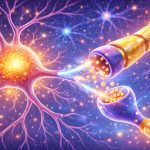
Human consciousness remains one of the most fascinating and challenging subjects in modern science. It refers to our subjective experience of the world—thoughts, emotions, perceptions, and the sense of self. Despite centuries of philosophical reflection and decades of neuroscientific research, consciousness is not yet fully understood. Scientists can observe brain activity with great precision, yet explaining how physical processes give rise to inner experience remains difficult. What is clear, however, is that consciousness is not a single process, but a complex combination of many interacting systems. Science has made important progress, even if some fundamental questions remain open.
What Scientists Mean by Consciousness
In scientific terms, consciousness is usually described as the state of being aware of oneself and the environment. This includes perception, attention, memory, emotions, and decision-making. Researchers often distinguish between different aspects, such as wakefulness, awareness, and self-reflection. Consciousness is not simply “on” or “off,” but exists in degrees and forms. Sleep, dreaming, anesthesia, and altered states all show that conscious experience can change dramatically. These variations help scientists study its underlying mechanisms.
The Role of the Brain
Modern science agrees that consciousness arises from the activity of the brain. Billions of neurons communicate through electrical and chemical signals, forming dynamic networks. Certain brain regions are especially important for conscious experience, including areas involved in sensory processing, integration, and attention. Consciousness appears to depend not on a single “center,” but on coordinated activity across multiple regions. Damage or disruption to these networks can alter or eliminate specific aspects of awareness. This supports the idea that consciousness is an emergent property of complex neural interaction.
Neural Correlates of Consciousness
Researchers study what are called neural correlates of consciousness—patterns of brain activity consistently associated with conscious experience. By comparing brain states when a person is aware versus unaware of a stimulus, scientists identify neural signatures linked to perception. Techniques such as brain imaging and electrophysiology allow these patterns to be measured. While correlation does not equal explanation, these findings narrow down where and when consciousness arises. They form a bridge between subjective experience and objective measurement.
Different Theoretical Approaches
Several scientific theories attempt to explain how consciousness emerges. Some focus on information integration, suggesting that consciousness arises when information is highly interconnected. Others emphasize global communication across brain networks, where information becomes conscious when it is widely shared. These theories differ in emphasis but share a common goal: explaining how unified experience emerges from distributed neural activity. None is universally accepted, but each provides testable predictions that guide research.
Consciousness and the Sense of Self
The feeling of having a self is a central feature of human consciousness. Neuroscience suggests that the self is not a fixed entity, but a constructed model created by the brain. It integrates memory, bodily signals, emotions, and social context. Experiments show that aspects of self-perception can be altered by brain stimulation, injury, or psychological conditions. This indicates that the sense of self is flexible rather than absolute. Understanding this helps explain phenomena such as identity, agency, and personal continuity.
Limits of Current Knowledge
Despite major advances, science still cannot fully explain why consciousness feels the way it does. This is sometimes referred to as the “hard problem” of consciousness—the gap between physical processes and subjective experience. While researchers can describe mechanisms and correlations, the inner quality of experience remains elusive. Many scientists believe progress will come through better models and data, rather than a single breakthrough. Consciousness research remains an open and evolving field.
Why Consciousness Research Matters
Studying consciousness has practical as well as philosophical importance. It improves understanding of sleep disorders, coma, anesthesia, and neurological conditions. It also influences discussions about artificial intelligence, ethics, and what it means to be human. By exploring consciousness scientifically, humanity gains insight into its own nature. Even incomplete answers deepen understanding of mind, brain, and experience.
P.S. From my personal observations of myself in a state of meditation, I can say that the consciousness is like a computer that controls our body, but it also has a sense of self-identity and tries to impose what it believes to be true, and tries to make us think that we are this computer, but – we are those who watch over and control it. To understand the mind, I recommend that you learn at least the autogenic training method by Schultz. If you are interested in this topic, please feel free to leave a comment, and I will be happy to share more information and practice on this subject.
Interesting Facts
- Consciousness exists in degrees, not just present or absent.
- Different brain states produce distinct conscious experiences.
- No single brain region fully controls consciousness.
- The sense of self is a dynamic construction.
- Consciousness research combines neuroscience, psychology, and philosophy.
Glossary
- Consciousness — subjective awareness of self and environment.
- Neurons — nerve cells that transmit information in the brain.
- Neural Correlates — brain activity patterns linked to experience.
- Emergent Property — a complex outcome arising from simpler interactions.
- Sense of Self — the brain-generated experience of personal identity.