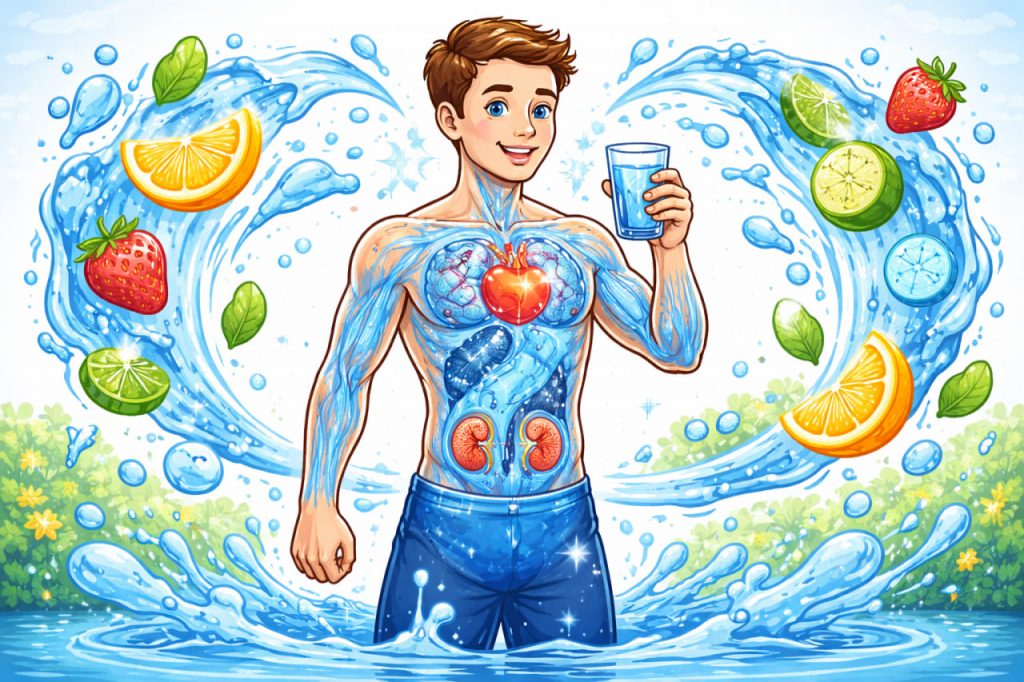
Water is the fundamental component of the human body and the basis of nearly all biological processes. On average, the adult human body consists of more than half water, with exact proportions varying by age, sex, and body composition. Every cell, tissue, and organ relies on water to function properly, from transporting nutrients to regulating temperature. Unlike many nutrients, water is not stored long-term, meaning the body depends on regular replenishment to maintain balance. Even small changes in hydration levels can affect physical performance, cognitive function, and overall well-being. Understanding the role of water in the body helps explain why it is essential for survival and long-term health.
Water at the Cellular Level
At the most basic level, water is the environment in which cellular life exists. Inside cells, water acts as a solvent, allowing biochemical reactions to occur efficiently. It supports the structure of proteins, enzymes, and DNA, enabling them to maintain their functional shapes. Water also facilitates the movement of ions and molecules across cell membranes, which is critical for nerve signaling and muscle contraction. Without sufficient water, cellular processes slow down, reducing the body’s ability to adapt to internal and external demands. This makes hydration a foundational requirement for all physiological activity.
Transport and Regulation Functions
One of water’s primary roles in the body is transport. Blood plasma is mostly water, allowing it to carry oxygen, nutrients, hormones, and metabolic byproducts throughout the body. Water also plays a key role in regulating body temperature through sweating and respiration. By absorbing and releasing heat, it helps maintain a stable internal environment despite external temperature changes. In addition, water supports kidney function by enabling the removal of waste products through urine. These regulatory roles demonstrate how water acts as a stabilizing medium for complex biological systems.
Water and the Nervous System
The nervous system is particularly sensitive to changes in hydration. The brain contains a high proportion of water, and even mild dehydration can influence concentration, alertness, and mood. Water helps maintain the electrical balance required for nerve impulses and supports the production and circulation of cerebrospinal fluid. This fluid cushions the brain and spinal cord, protecting them from mechanical stress. Because neural communication depends on precise chemical gradients, adequate hydration is essential for efficient cognitive and sensory function.
Muscles, Joints, and Movement
Water contributes significantly to physical movement and structural support. Muscles rely on water for proper contraction and relaxation, while joints depend on fluid for lubrication and shock absorption. Connective tissues such as cartilage contain water that helps them remain flexible and resilient. During physical activity, water loss increases through sweating, altering fluid balance within tissues. Maintaining this balance supports endurance, coordination, and recovery. These mechanical roles highlight water’s importance beyond simple fluid intake.
Balance, Adaptation, and Overall Health
The human body continuously adjusts water distribution between cells, blood, and tissues to maintain equilibrium. This balance is influenced by activity, environment, and internal regulation systems. When hydration is disrupted, the body prioritizes essential functions, which can affect less critical processes first. Over time, repeated imbalance may place stress on multiple systems simultaneously. Water’s role in adaptation underscores its importance not as a single factor, but as a unifying element across all physiological systems.
Interesting Facts
- The brain and heart are among the most water-rich organs in the body.
- Blood plasma is composed of over 90% water.
- Water helps regulate electrical signals in nerves and muscles.
- Joint fluid relies on water for lubrication and cushioning.
- The body continuously redistributes water to maintain internal balance.
Glossary
- Hydration — the state of adequate water content in the body.
- Cellular Metabolism — chemical processes occurring within cells.
- Blood Plasma — the liquid component of blood that transports substances.
- Thermoregulation — the process of maintaining stable body temperature.
- Electrolyte Balance — regulation of charged particles essential for nerve and muscle function.