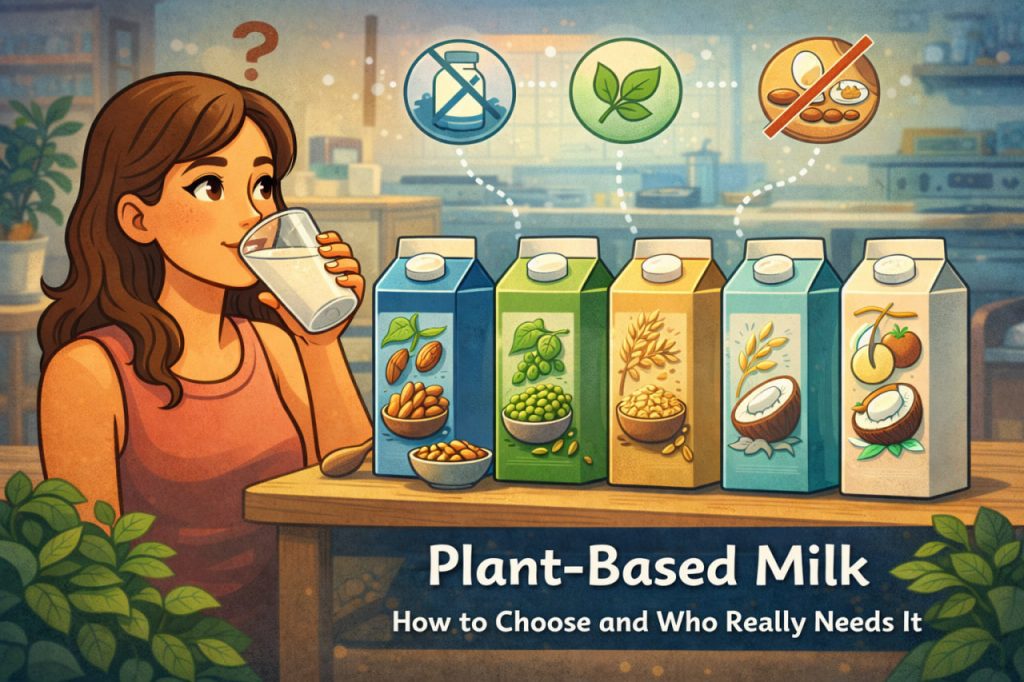
Plant-based milk has moved from a niche alternative to a mainstream product found in supermarkets around the world. Made from nuts, grains, legumes, or seeds, these beverages are often chosen for health, ethical, environmental, or dietary reasons. However, not all plant-based milks are the same, and their nutritional value, taste, and suitability can differ significantly. While some people genuinely benefit from replacing dairy milk, others may choose plant-based options simply due to trends or misconceptions. Understanding what plant-based milk is, how it differs from dairy milk, and who truly needs it helps consumers make informed decisions rather than emotional or marketing-driven ones.
What Is Plant-Based Milk
Plant-based milk refers to beverages produced by soaking, grinding, and filtering plant ingredients such as almonds, soybeans, oats, rice, or coconuts. The resulting liquid is designed to resemble dairy milk in appearance and usage, though its nutritional profile depends heavily on the source and processing method. Some plant-based milks are naturally low in protein, while others—especially soy-based options—contain protein levels comparable to cow’s milk. Many commercial products are fortified with calcium, vitamin D, and vitamin B12 to mimic dairy nutrition. According to food scientist Dr. Laura Bennett:
“Plant-based milk is not a single product category.
Each type behaves differently in the body and serves a different nutritional purpose.”
This diversity explains why choosing the right option matters more than simply choosing “plant-based.”
Nutritional Differences and Key Considerations
One of the most important differences between plant-based and dairy milk lies in protein content, fat composition, and micronutrients. Cow’s milk naturally provides complete protein, calcium, and several vitamins, whereas plant-based milks often require fortification to reach similar levels. Almond and rice milk are typically low in protein, making them less suitable as primary milk substitutes for children or highly active adults. Oat milk offers more carbohydrates and fiber, which may support energy needs but can raise blood sugar levels in some individuals. Soy milk stands out as the most nutritionally balanced alternative, containing high-quality protein and essential amino acids. Reading labels is crucial, as added sugars and stabilizers can significantly change the health profile of these products.
Who Truly Benefits From Plant-Based Milk
Plant-based milk is especially beneficial for individuals with lactose intolerance, milk protein allergies, or specific dietary preferences such as veganism. For people who experience digestive discomfort from dairy, switching to plant-based alternatives can improve overall comfort and adherence to a balanced diet. Those with ethical or environmental concerns may also prefer plant-based milk due to its generally lower greenhouse gas emissions and land use. However, experts emphasize that plant-based milk is not inherently healthier for everyone. Nutritionist Dr. Samuel Wright notes:
“For people without intolerance or allergy, dairy milk can remain a perfectly healthy option.
The key is nutritional adequacy, not ideology.”
This perspective highlights that personal health needs should guide the choice, not marketing trends.
Taste, Cooking, and Everyday Use
Beyond nutrition, taste and functionality play a major role in choosing plant-based milk. Some options perform better in coffee, baking, or cooking than others. Oat milk is popular for coffee due to its creamy texture and ability to foam, while almond milk has a lighter taste that works well in smoothies. Coconut milk adds richness but also contains higher saturated fat, making it better suited for occasional culinary use rather than daily consumption. Soy milk behaves similarly to dairy in cooking, making it a versatile choice for sauces and baking. Understanding these differences helps consumers match the product to their lifestyle rather than expecting one option to fit all needs.
Environmental and Social Impact
Environmental concerns are a major driver behind the rise of plant-based milk. In general, producing plant-based milk requires less water and generates fewer greenhouse gas emissions than dairy farming, though the impact varies by crop and region. Almond farming, for example, is water-intensive, while oat and soy production tend to be more resource-efficient. Social factors, including agricultural practices and supply chains, also influence sustainability outcomes. Choosing responsibly sourced products and avoiding excessive packaging can further reduce environmental impact. While plant-based milk is not a perfect solution, it represents one of many steps toward more sustainable food systems.
Interesting Facts
- Soy milk was developed over 2,000 years ago, making it one of the oldest milk alternatives.
- Oat milk became popular due to its natural creaminess and low environmental footprint.
- Some plant-based milks contain less than 2% actual plant material, with the rest being water and additives.
- Fortified plant-based milks can provide as much calcium as dairy milk, depending on the brand.
- Taste preference for plant-based milk often improves after two to three weeks of regular use.
Glossary
- Plant-Based Milk — a beverage made from plants and water, designed as an alternative to dairy milk.
- Lactose Intolerance — the inability to digest lactose, a sugar found in dairy products.
- Fortification — the process of adding vitamins or minerals to foods.
- Complete Protein — a protein source that contains all essential amino acids.
- Saturated Fat — a type of fat commonly found in coconut products and some animal foods.