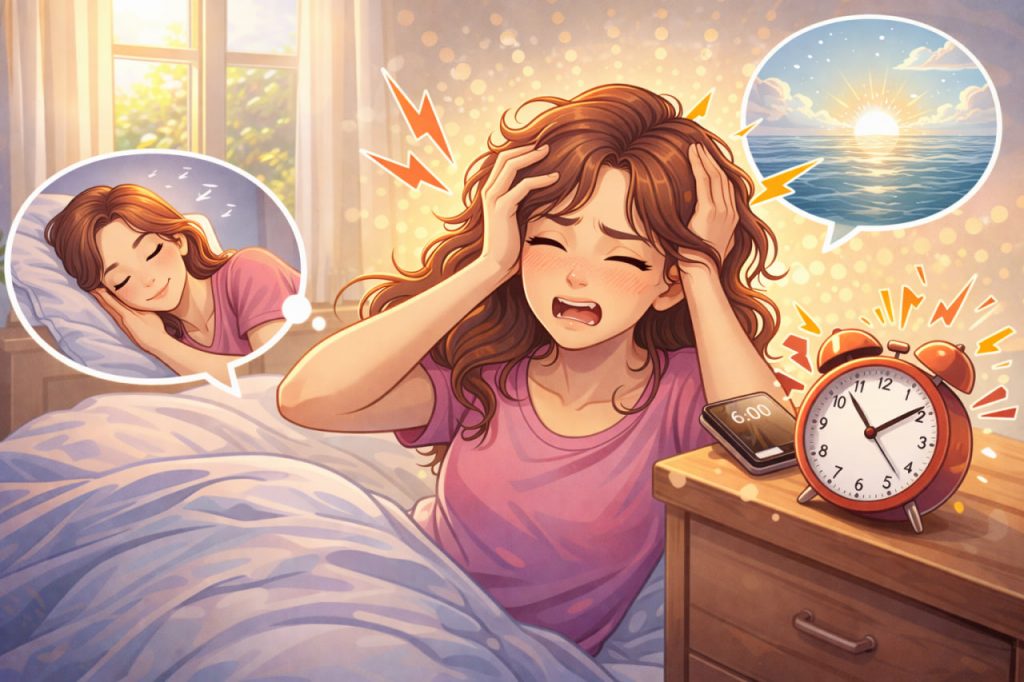
Alarm clocks are a nearly universal part of modern life, yet their influence on health is often underestimated. The way a person wakes up affects not only mood, but also stress levels, heart rate, cognitive performance, and long-term well-being. While alarms are designed to help maintain schedules, they can also conflict with natural biological rhythms. Understanding how alarms interact with the body helps explain why some mornings feel restorative while others begin with tension and fatigue.
Natural Sleep Cycles and Awakening
Human sleep is structured in repeating cycles, moving through lighter and deeper stages. Waking up naturally usually occurs during a lighter stage of sleep, when the brain is already transitioning toward alertness. An alarm can interrupt this process at any point, including deep sleep, which increases grogginess and stress. This mismatch between sleep stage and awakening is a key factor in how the body responds to alarms.
Stress Response to Sudden Awakening
Loud or abrupt alarms trigger an immediate stress response. Heart rate increases, stress hormones rise, and the nervous system shifts rapidly into alert mode. While this reaction helps ensure waking, repeated exposure can contribute to morning anxiety and fatigue. Over time, consistently stressful awakenings may affect how the body handles pressure throughout the day. The issue is not waking early, but waking suddenly and forcefully.
Timing Matters More Than Sound
The timing of an alarm relative to sleep duration often has a greater impact than the alarm sound itself. Irregular schedules, insufficient sleep, or shifting wake-up times disrupt the body’s internal clock. When alarms are used at inconsistent times, the brain struggles to predict when awakening will occur. Consistency helps reduce the physiological shock of waking, even when alarms are necessary.
Alarms and Cognitive Performance
How a person wakes up can influence attention, reaction time, and decision-making for hours afterward. Abrupt awakenings are associated with sleep inertia—a temporary state of reduced cognitive function. This effect is strongest when alarms interrupt deep sleep. Allowing the body a brief transition period after waking helps restore mental clarity more quickly.
Using Alarms More Wisely
Alarm clocks are tools, not inherently harmful devices. Their impact depends on how they are used. Supporting regular sleep schedules, sufficient sleep duration, and predictable wake times reduces negative effects. According to sleep researcher Dr. Matthew Walker:
“The goal is not to eliminate alarms,
but to align them with biology rather than fight it.”
This approach emphasizes cooperation with natural rhythms instead of constant override.
Interesting Facts
- Sudden awakening increases stress hormone release.
- Sleep inertia can last up to 30–60 minutes.
- Regular wake times improve alertness even with alarms.
- Waking during lighter sleep stages feels easier.
- Alarm-related stress depends more on timing than volume.
Glossary
- Sleep Cycle — repeating stages of light and deep sleep.
- Sleep Inertia — temporary grogginess after waking.
- Circadian Rhythm — the body’s internal 24-hour clock.
- Stress Response — physiological reaction to sudden stimulation.
- Awakening Phase — the transition from sleep to wakefulness.