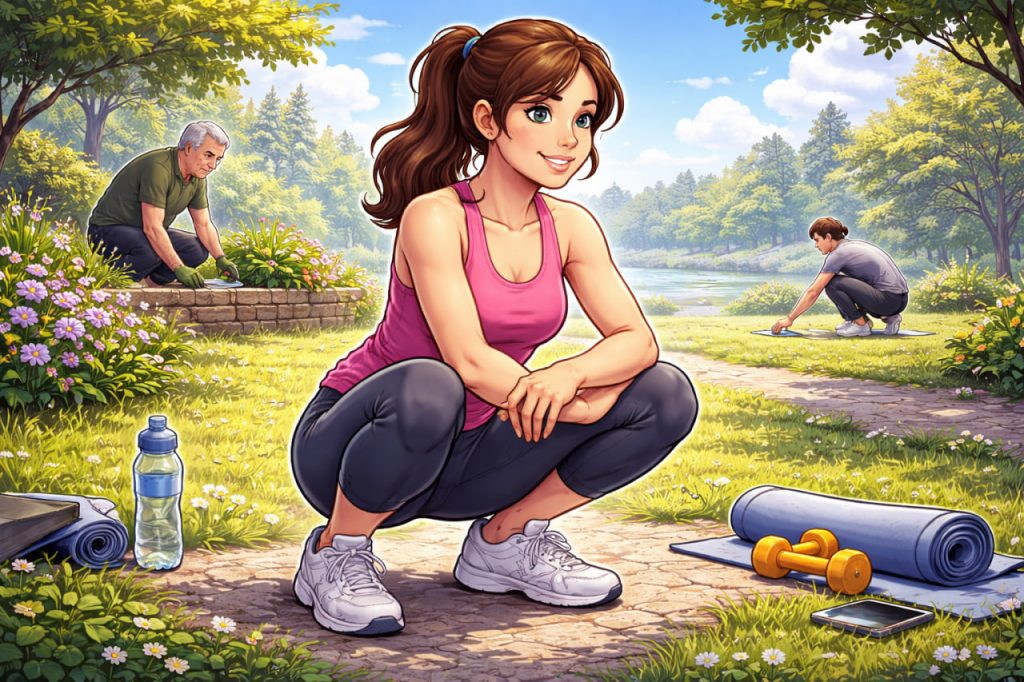
Sitting in a deep squat position—often described as sitting on the heels or “resting squat”—is a posture that humans have used for thousands of years. In many traditional societies, squatting remains a common resting position, while in modern lifestyles it has largely been replaced by chairs. This shift has subtly changed how our joints, muscles, and posture function over time. Far from being merely a cultural habit, squatting has important implications for mobility, balance, and overall physical health. Understanding the benefits of squatting helps explain why this natural position is gaining renewed attention in movement science.
A Natural Human Resting Position
From an evolutionary perspective, squatting is one of the most natural resting postures for the human body. Before the widespread use of furniture, people routinely squatted while cooking, socializing, or working. This position allows the body to rest without completely disengaging muscles, keeping joints active rather than static. Unlike prolonged chair sitting, squatting maintains alignment between the hips, knees, and ankles. According to movement researcher Dr. Kelly Starrett:
“Squatting is not an exercise invention —
it is a fundamental human position.”
This highlights its role as a baseline movement rather than a specialized activity.
Joint Mobility and Flexibility
Regular squatting gently loads the hips, knees, and ankles through their full range of motion. This helps maintain joint flexibility and reduces stiffness caused by prolonged sitting. Deep squats encourage ankle dorsiflexion and hip opening, areas commonly restricted in sedentary individuals. Over time, this mobility supports smoother walking, better balance, and more efficient movement patterns. Importantly, squatting distributes body weight evenly, avoiding excessive strain when performed correctly.
Muscle Engagement and Postural Support
Although squatting appears relaxed, it involves continuous low-level muscle engagement. Core muscles stabilize the spine, while leg and hip muscles support body weight dynamically. This active rest strengthens postural muscles without fatigue. Compared to chair sitting, squatting promotes upright spinal alignment and reduces reliance on passive support. As a result, it may help counteract some postural issues associated with long-term sitting.
Circulation and Digestive Effects
Squatting naturally compresses and releases muscles in the lower body, which can support blood circulation. This rhythmic pressure helps venous return and reduces prolonged pooling of blood in the legs. In addition, the squatting position alters abdominal geometry in a way that may support normal digestive processes. These effects help explain why squatting has traditionally been associated with comfort during rest and daily tasks.
Adaptation and Modern Limitations
For individuals unaccustomed to squatting, the position may initially feel uncomfortable or unstable. Reduced ankle mobility, hip stiffness, or balance limitations are common barriers. Gradual adaptation is important—forcing the posture can lead to strain. Using support, such as holding onto a stable surface, allows the body to adjust safely. With consistent practice, many people regain the ability to squat comfortably, restoring a movement pattern the body is designed to use.
Interesting Facts
- Many cultures still use squatting as a primary resting posture.
- Squatting maintains joint range of motion better than chair sitting.
- The position engages muscles without high energy expenditure.
- Loss of squat ability is largely linked to modern sedentary habits.
- Children naturally squat before learning to sit in chairs.
Glossary
- Deep Squat — a position where hips lower below knee level while feet stay flat.
- Ankle Dorsiflexion — upward movement of the foot toward the shin.
- Postural Muscles — muscles that support upright body alignment.
- Sedentary Lifestyle — a way of living with minimal physical movement.
- Active Rest — resting while maintaining low-level muscle engagement.