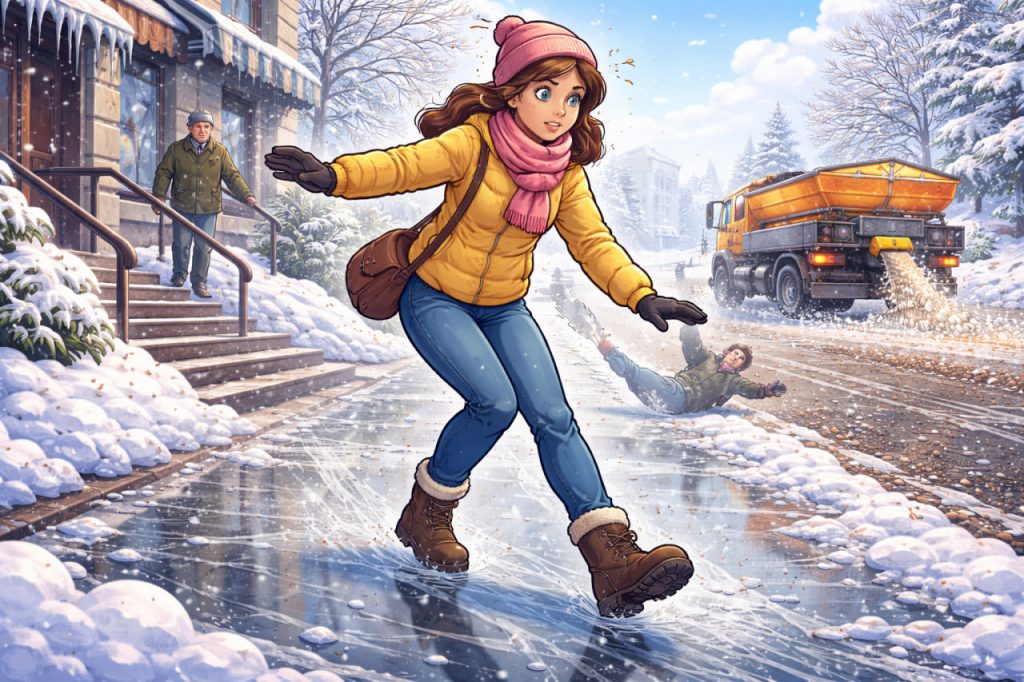
Icy conditions, often called black ice or glaze ice, are among the most dangerous winter hazards because they are difficult to see and quick to form. Sidewalks, roads, stairways, and entrances can become slippery within minutes, turning routine movement into a serious risk. Many injuries during winter happen not in extreme weather, but during ordinary trips on seemingly familiar surfaces. Surviving icy conditions is less about strength or speed and more about awareness, preparation, and controlled movement. Understanding how ice affects the body and environment helps reduce accidents significantly.
Why Ice Is So Dangerous
Ice dramatically reduces friction, making balance unreliable even at slow speeds. Black ice is especially hazardous because it blends visually with asphalt or concrete, offering little warning. Temperature fluctuations around freezing increase risk, as melting water refreezes into smooth, hard layers. Wind and shade can preserve ice even when air temperatures rise. According to injury prevention specialist Dr. Karen Willis:
“Most ice-related falls happen because people move normally
in conditions where normal movement no longer works.”
Recognizing when conditions demand different behavior is essential.
How to Move Safely on Ice
When walking on ice, posture and movement matter more than footwear alone. Take short, flat steps, keeping your feet close to the ground. Slightly bending the knees lowers the center of gravity and improves balance. Avoid sudden turns, stops, or changes in direction. Keep hands free—avoid pockets or phone use—to allow quick balance correction. Moving slowly is not weakness; it is a practical response to reduced traction.
Choosing the Right Footwear
Footwear with deep rubber treads provides better grip than smooth soles. Worn shoes significantly increase slipping risk. If available, temporary traction aids can greatly improve stability. Avoid hard, flat soles that offer little resistance on ice. While no shoe guarantees safety, proper footwear reduces risk when combined with careful movement.
Reducing Risk Around Buildings and Streets
Icy danger increases near entrances, stairs, slopes, and shaded areas. Use handrails whenever possible, and test surfaces with a gentle foot press before committing full weight. Stick to cleared or sanded paths, even if they are longer. Be cautious near parked vehicles, as melting snow often refreezes around tires and curbs. Planning routes with safety rather than speed in mind lowers exposure to hazardous areas.
When Conditions Are Severe
Sometimes the safest choice is limiting movement altogether. Postpone non-essential trips during freezing rain or sudden temperature drops. If you must go out, allow extra time and expect delays. Falls often happen when people rush to compensate for lost time. Patience is one of the most effective safety tools during icy conditions.
Interesting Facts
- Ice can reduce surface friction by up to 90%.
- Most winter falls occur during short, routine trips.
- Black ice is often invisible even in daylight.
- Slow walking reduces fall risk more than running footwear alone.
- Ice persists longer in shaded and wind-protected areas.
Glossary
- Black Ice — a thin, transparent layer of ice that is difficult to see.
- Friction — resistance between surfaces that prevents slipping.
- Traction — grip between footwear and the ground.
- Freezing Rain — rain that freezes upon contact with surfaces.
- Center of Gravity — the point where body mass is balanced.