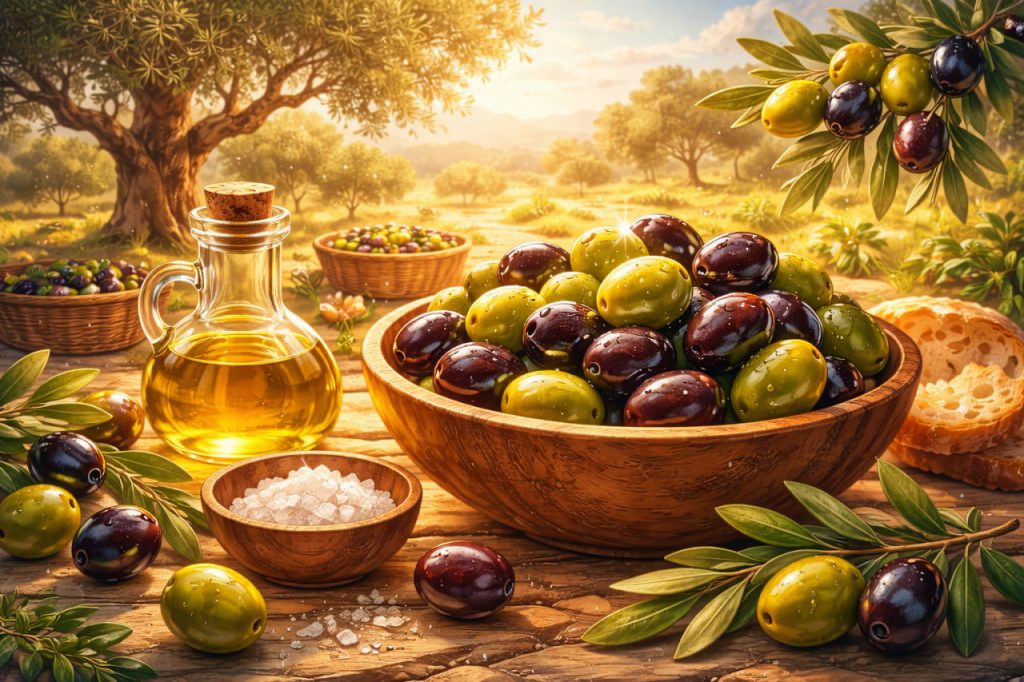
Olives are one of the oldest cultivated fruits in human history and a cornerstone of Mediterranean culture. For thousands of years, they have been valued not only as food, but also as a source of oil, medicine, and symbolism. Despite their small size, olives play a significant role in agriculture, cuisine, and economics across many regions of the world. Their unique taste and nutritional profile set them apart from most other fruits. Understanding olives means exploring botany, history, and traditional food systems at the same time. Today, olives remain a key example of how ancient crops continue to shape modern diets.
What Are Olives From a Botanical Perspective
Botanically, olives are drupes, a type of fruit that contains a single hard stone surrounded by flesh. They grow on olive trees (Olea europaea), which are evergreen and can live for hundreds, sometimes thousands, of years. Olive trees are adapted to dry climates, poor soils, and strong sunlight. Their slow growth and resilience make them well suited to Mediterranean environments. According to agricultural historian Dr. Marco Bellini:
“The olive tree is not optimized for speed,
but for endurance across centuries.”
This longevity contributes to the cultural and economic importance of olives.
Why Fresh Olives Are Not Eaten Raw
Freshly harvested olives are extremely bitter and generally inedible without processing. This bitterness comes from natural compounds, primarily oleuropein, which serve as a defense mechanism against pests. To make olives edible, they must undergo curing processes such as brining, dry salting, or water curing. These methods reduce bitterness while developing complex flavors. Different curing techniques produce distinct taste profiles, explaining the wide variety of olives available worldwide.
Green Olives and Black Olives
Green and black olives usually come from the same tree species, but differ in ripeness. Green olives are harvested earlier, while black olives are fully ripened. Ripeness affects texture, flavor, and oil content. Green olives tend to be firmer and more bitter, while black olives are softer and milder. Processing methods can also influence color, which is why appearance alone does not always indicate maturity.
Nutritional Characteristics of Olives
Olives are rich in monounsaturated fats, particularly oleic acid, which is associated with heart health in traditional diets. They also contain antioxidants, vitamin E, and plant-based polyphenols. While olives are calorie-dense relative to their size, they are typically consumed in small amounts. Their nutritional value depends heavily on processing and salt content. Olives are best understood as a flavorful complement rather than a primary food source.
Cultural and Economic Importance
Throughout history, olives have symbolized peace, prosperity, and continuity. Olive oil has been used for cooking, lighting, cosmetics, and rituals since ancient times. Today, olive cultivation supports millions of farmers and remains a key agricultural product in countries such as Spain, Italy, Greece, and Turkey. Modern production blends traditional knowledge with industrial techniques. Olives continue to connect ancient practices with contemporary food culture.
Interesting Facts
- Some olive trees are over 2,000 years old and still produce fruit.
- Olives were cultivated before written history in some regions.
- Olive oil was once used as lamp fuel in ancient cities.
- The bitterness of raw olives is a natural protective adaptation.
- Olive trees can survive long periods of drought and poor soil.
Glossary
- Drupe — a fruit with a hard stone surrounded by flesh.
- Oleuropein — a bitter compound naturally present in olives.
- Curing — processing methods used to make olives edible.
- Monounsaturated Fats — fats associated with traditional Mediterranean diets.
- Polyphenols — plant compounds with antioxidant properties.