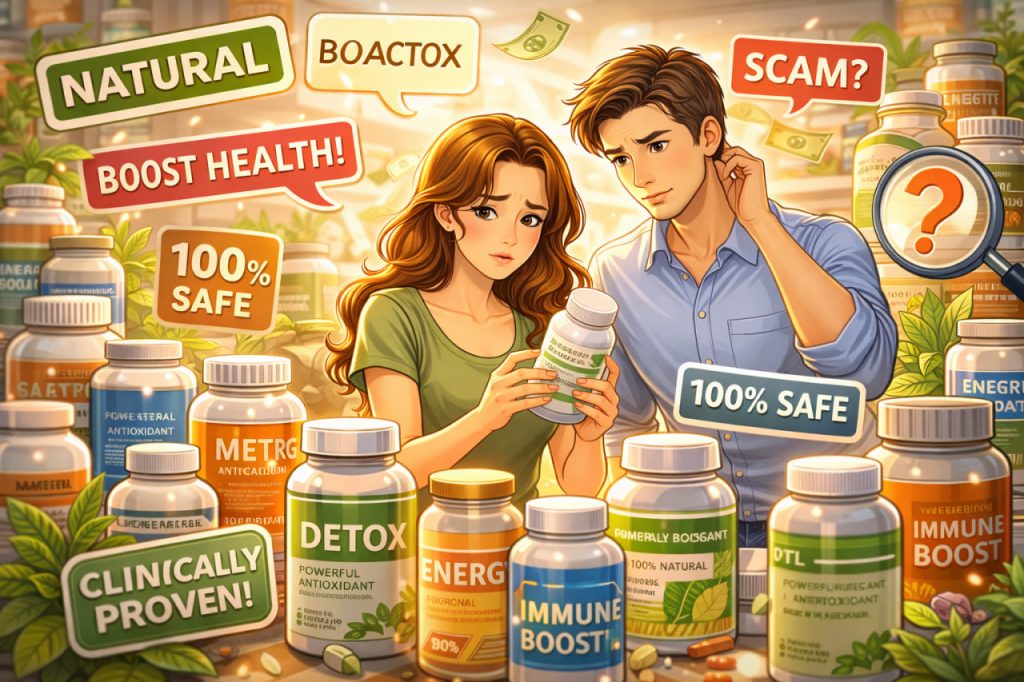
Dietary supplements have become a massive global industry, promoted as easy solutions for energy, immunity, beauty, and longevity. Shelves and online stores are filled with capsules, powders, and drops promising rapid improvements with minimal effort. However, the scientific reality behind supplements is far more complex than advertising suggests. Some supplements may be useful in specific contexts, while others offer little benefit beyond placebo effects. Understanding how supplements work—and how they are marketed—is essential for informed decision-making. A critical, evidence-based perspective helps avoid costly and potentially harmful mistakes.
What Dietary Supplements Actually Are
Dietary supplements are products intended to supplement the diet, not replace normal food or medical care. They may contain vitamins, minerals, amino acids, plant extracts, or other bioactive compounds. Unlike medicines, supplements are often regulated as food products in many countries. This means they are not required to prove effectiveness before being sold. According to nutrition scientist Dr. Marion Nestle:
“Supplements are regulated more like foods than drugs,
which shapes both their quality and the claims made about them.”
This regulatory gap explains why marketing messages can be far more confident than scientific evidence.
Potential Benefits and Legitimate Uses
In certain situations, supplements may be useful. They can help address specific nutrient deficiencies, support restricted diets, or complement medical supervision when appropriate. Some populations may struggle to obtain adequate nutrients due to lifestyle, absorption issues, or limited food access. In these cases, supplements may serve as a practical tool. However, benefits are typically context-dependent, not universal. Scientific support varies widely between different supplements and claims.
The Risks and Limitations of Supplements
Supplements are often perceived as harmless because they are sold without prescriptions. In reality, excessive intake or inappropriate use can cause unwanted effects. High doses of certain vitamins or bioactive compounds may disrupt normal physiological balance. Supplements can also interact with medications or mask underlying health issues. The absence of clear benefit does not guarantee absence of risk. This is why individuals should consult qualified healthcare specialists when health concerns are involved.
How Marketing Creates Illusions
Marketing plays a central role in shaping public perception of supplements. Words like “natural,” “detox,” “immune-boosting,” or “clinically proven” are often used without clear scientific definition. Testimonials, influencer endorsements, and selective study references create emotional trust rather than factual understanding. Visual design and packaging frequently imply medical credibility. Learning to separate regulated information from promotional language is a key skill in medical literacy.
How to Think Critically About Supplement Claims
Critical evaluation starts with asking the right questions. What specific benefit is claimed, and for whom? Is the claim supported by high-quality, independent research or only by marketing material? Are dosages clearly stated and realistic? Supplements should never be viewed as shortcuts to health. Long-term well-being depends on overall lifestyle, not isolated products. Informed skepticism protects both health and finances.
P.S. Personally, I don’t use supplements at all. I eat simple, budget-friendly, and healthy food, and I feel great. As it turns out, it’s also the most delicious. After eating homemade buckwheat porridge with sea salt and olive oil, I don’t feel like eating the junk food in plastic bags from the supermarket…
Interesting Facts
- Many supplements reach the market without clinical trials.
- “Natural” does not automatically mean safe or effective.
- Marketing claims often rely on selective interpretation of studies.
- Supplements are not required to prove benefit before sale in many regions.
- Consumer trust is often driven by branding, not evidence.
Glossary
- Dietary Supplement — a product intended to add nutrients or bioactive substances to the diet.
- Bioactive Compound — a substance that affects biological processes in the body.
- Regulatory Framework — the legal system governing product approval and oversight.
- Marketing Claim — a promotional statement not necessarily backed by strong evidence.
- Medical Literacy — the ability to understand and critically evaluate health-related information.