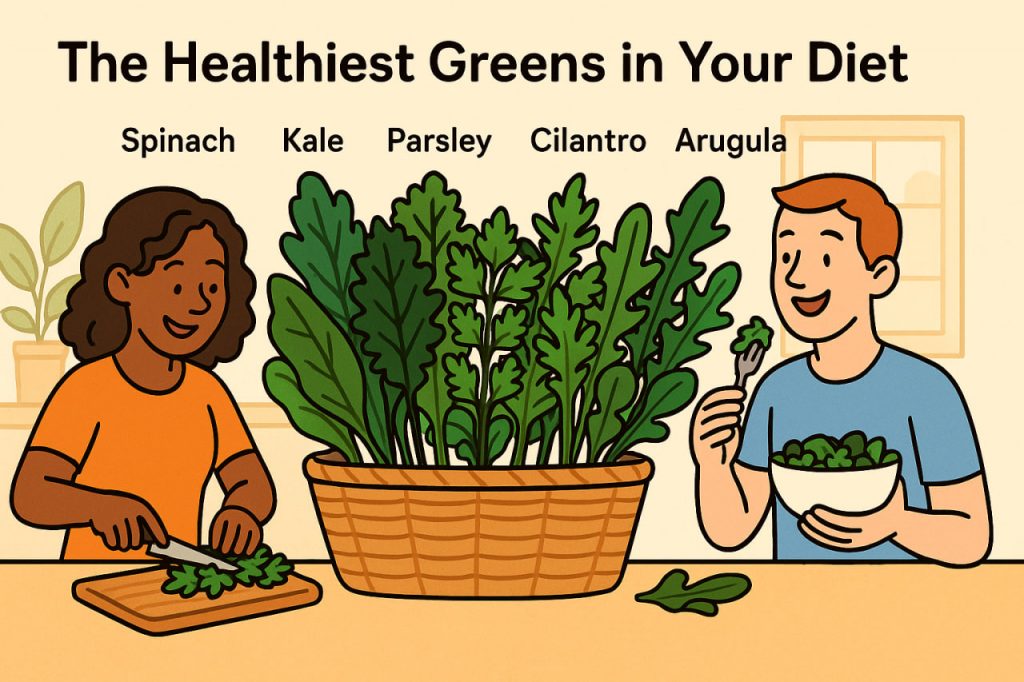
Green leafy vegetables are often called “nature’s medicine,” and for good reason. Packed with vitamins, minerals, fiber, and antioxidants, they play a vital role in maintaining health, preventing disease, and supporting overall well-being. Whether eaten raw in salads, blended into smoothies, or cooked in soups, greens are one of the most powerful and versatile foods you can add to your plate.
Why Greens Are So Important
Greens are low in calories but extremely rich in nutrients. They supply essential vitamins (A, C, K, and folate), minerals (iron, calcium, magnesium, and potassium), and phytonutrients that help reduce inflammation, detoxify the body, and boost immunity.
Nutritionist Dr. Maria López explains:
“A handful of leafy greens a day can do more for your health than many supplements — they nourish every cell in your body naturally.”
The Most Beneficial Greens
- Spinach
Rich in iron, folate, and vitamin K, spinach supports red blood cell formation, bone health, and brain function. It’s also high in lutein, which helps protect your eyes from age-related damage. - Kale
Known as a “supergreen,” kale is dense with antioxidants and vitamin C. It supports the immune system, helps detoxify the liver, and may reduce the risk of chronic diseases. - Parsley
More than a garnish — parsley is a powerful detoxifier. It contains chlorophyll, which helps clean the blood, and vitamin C, which strengthens the immune system. - Arugula (Rocket)
With its peppery flavor, arugula adds zest to salads while supporting digestion and heart health thanks to nitrates that help lower blood pressure. - Cilantro (Coriander leaves)
Cilantro aids in heavy metal detoxification and supports gut health. It’s also rich in antioxidants and vitamin A for healthy skin and eyes. - Watercress
One of the most nutrient-dense foods on the planet, watercress is high in vitamin K and beta-carotene. Studies link it to reduced oxidative stress and better metabolism. - Dill and Basil
Both herbs provide anti-inflammatory and antibacterial benefits. They’re perfect for seasoning while boosting digestion and supporting heart health.
How to Add More Greens to Your Diet
- Start your morning with a green smoothie (spinach + banana + apple).
- Add fresh herbs like parsley or dill to soups and sauces.
- Choose salads as a side dish for lunch or dinner.
- Use steamed kale or spinach as a base for grains or proteins.
- Sprinkle microgreens on sandwiches or omelets for an extra nutrient boost.
Expert Advice
According to dietitian Dr. Felix Nguyen:
“The secret to staying healthy isn’t in fancy diets — it’s in small, consistent habits like eating greens every day. They feed both the body and the gut microbiome.”
Interesting Facts
- Watercress was one of the first cultivated vegetables in human history.
- Darker greens usually contain more antioxidants than lighter ones.
- One cup of kale has more vitamin C than an orange.
- Chlorophyll, the pigment that makes plants green, helps neutralize toxins in the liver.
Glossary
- Antioxidants — compounds that protect the body from cell damage caused by free radicals.
- Folate — a B vitamin essential for cell growth and DNA repair.
- Chlorophyll — a natural plant pigment that supports detoxification.
- Phytonutrients — plant-based compounds that promote health and protect against disease.