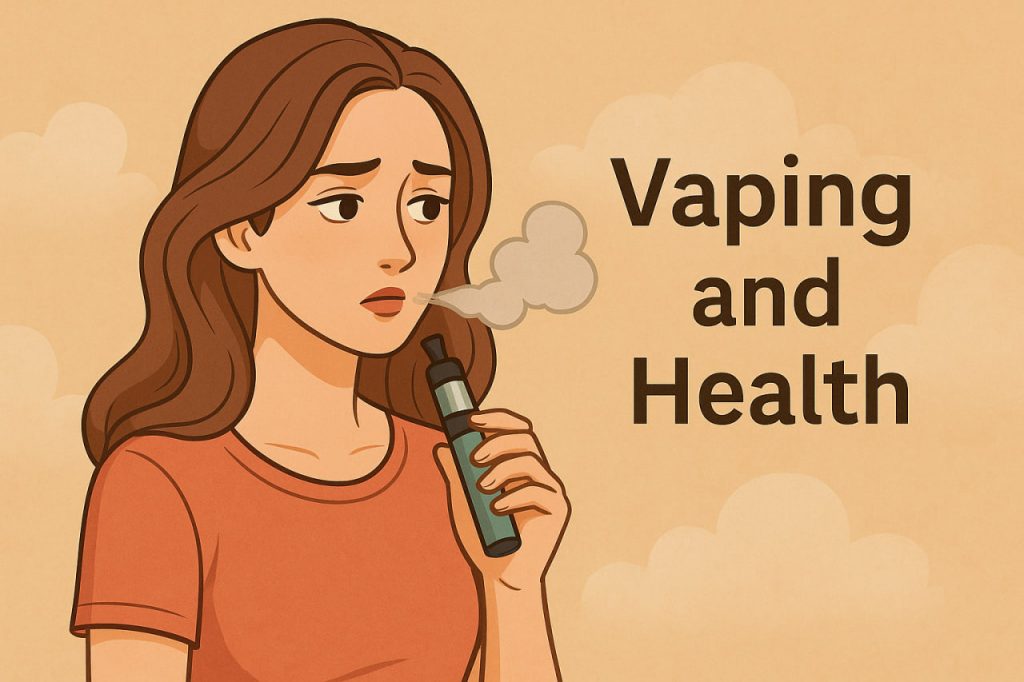
Vaping has become widespread in recent years, especially among teenagers and young adults, because it is often seen as a modern, cleaner, or more stylish alternative to smoking. However, despite its popularity and attractive marketing, vaping still carries health risks that are not always well understood. A vape device heats a liquid into vapor that is inhaled into the lungs, and this vapor can contain nicotine, flavoring chemicals, and other substances. While vaping may produce fewer harmful byproducts than traditional cigarettes, it can still affect the lungs, heart, and nervous system. Understanding these effects is important for making informed choices.
What Is Inside Vape Aerosol?
Vape liquids typically contain propylene glycol, vegetable glycerin, flavorings, and often nicotine. When heated, some of these ingredients can break down into compounds that may irritate lung tissue. Nicotine is a highly addictive substance that affects mood, concentration, and the brain’s reward system. According to public health researcher Dr. Michael Stanton, “The issue with vaping is not just the ingredients in the liquid, but the chemical changes that occur when the liquid is heated and inhaled.” This means the long-term effects may still be developing, especially among young users.
Effects on the Respiratory System
Vaping can affect the lungs by introducing fine particles and heated chemicals deep into the airways. Some people experience coughing, shortness of breath, or chest discomfort. In certain cases, inflammation or damage to lung tissue has been observed. Although vaping is generally considered less harmful than traditional smoking, it is not harmless. Researchers are still studying how long-term exposure to vape aerosol influences lung health over many years.
Nicotine and the Nervous System
Even when used without smoke, nicotine affects the brain. It stimulates the release of chemicals that create temporary feelings of focus or relaxation, but it also leads to dependence. This means stopping can cause irritability, mood changes, and strong cravings. For people whose brains are still developing—particularly teenagers and young adults—nicotine exposure may influence attention, learning, and emotional regulation. If someone is experiencing strong cravings or withdrawal symptoms, speaking with a specialist can provide guidance and support.
Social and Cultural Influence
Vapes are often marketed with appealing designs, flavors, and social media imagery that make them seem harmless or fashionable. This can create a perception of safety that does not match the scientific evidence. While vaping may be less harmful than smoking tobacco, it is still a habit that affects the body and carries risk. Making informed decisions requires separating advertising from scientific understanding.
P.S. You only have one life, and every vape shortens it. Remember that.
Interesting Facts
- Some vape flavors contain chemicals also used in food, but inhaling those chemicals can affect the lungs differently than eating them.
- Nicotine can change how the brain responds to stress and reward.
- The long-term effects of vaping are still being studied because the trend is relatively new.
- Many people start vaping because of social influence rather than personal preference.
- Vaping devices vary widely in power, which changes how chemicals are heated and inhaled.
Glossary
- Nicotine — A highly addictive chemical that affects the brain and nervous system.
- Aerosol — A suspension of fine particles in air, such as vapor from a vape device.
- Inflammation — Swelling or irritation in body tissues.
- Dependence — A condition in which the body or mind becomes reliant on a substance.
- Propylene glycol — A liquid substance used in many vape liquids to produce vapor.