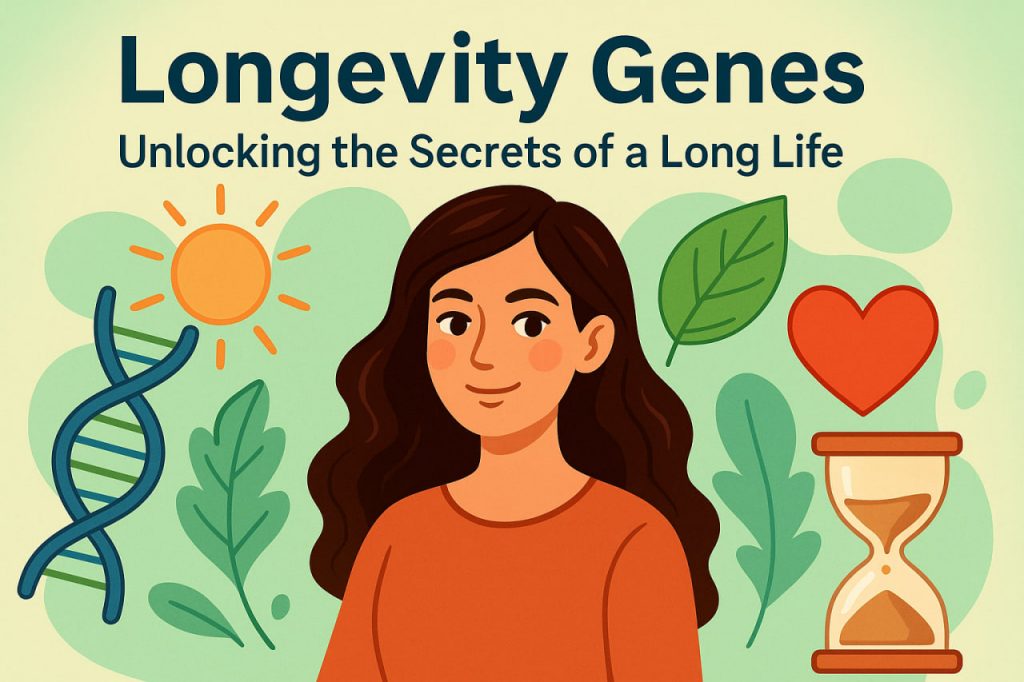
For centuries, humans have searched for the secret to a long and healthy life. Today, science is getting closer to understanding it, thanks to the study of longevity genes—specific genes that influence how long we live and how well our bodies resist aging. These genes are not just about reaching old age; they determine how gracefully we age, how our cells repair themselves, and how our organs adapt to stress over time. Scientists are now exploring how these genetic factors interact with lifestyle choices such as diet, exercise, and environment. The emerging field of genomics offers hope that one day, we may be able to extend both the length and quality of human life.
The Science Behind Longevity Genes
Longevity is not dictated by a single “immortality gene” but by a complex network of genetic pathways that regulate metabolism, inflammation, and DNA repair. Among the most studied are SIRT1, FOXO3, and mTOR, each playing a unique role in cellular health. For example, the FOXO3 gene is linked to stress resistance and has been found more frequently in people over 100 years old. Similarly, SIRT1 influences how efficiently cells remove damaged components, a process known as autophagy. According to geneticist Dr. Emily Nakamura, “Longevity genes don’t promise eternal youth, but they significantly influence how well the body maintains itself as we age.” Understanding these mechanisms helps scientists develop therapies aimed at slowing down aging-related diseases.
Environmental and Lifestyle Interactions
While genetics play an essential role, lifestyle factors can enhance—or weaken—the effects of longevity genes. Studies on centenarians show that even individuals with strong longevity markers live longer when they combine their genetic advantages with healthy habits. Regular physical activity, a balanced diet rich in antioxidants, and stress reduction practices all contribute to better gene expression. This concept, known as epigenetics, explains how behaviors and environmental factors can turn genes “on” or “off.” Dr. Rafael Torres, an expert in epigenetic research, emphasizes, “We can’t change the genes we inherit, but we can influence how they behave. Our daily choices have the power to activate protective genetic pathways.”
Longevity Genes and Disease Resistance
Many longevity-related genes are also connected to lower risks of chronic illnesses such as cardiovascular disease, diabetes, and neurodegenerative disorders. For instance, FOXO3 carriers are less likely to suffer from heart disease or Alzheimer’s, as their cells exhibit stronger repair mechanisms. Likewise, the APOE2 variant is known for its protective effects against dementia, unlike its counterpart APOE4, which increases risk. These findings suggest that genetic longevity is not about avoiding aging but about maintaining resilience against disease. Scientists are now exploring gene-targeted interventions that could mimic the natural advantages of long-lived individuals.
Ethical and Social Implications
As genetic research advances, ethical questions emerge. Should people be tested for longevity genes? Could genetic knowledge lead to discrimination in healthcare or insurance? There are also debates over the moral limits of life extension. Some argue that radically prolonging life might strain natural resources or alter social structures. On the other hand, supporters believe that extending healthy life would reduce suffering and medical costs. Policymakers and bioethicists are working to ensure that longevity research benefits everyone, not just the wealthy or genetically privileged. Transparency, fairness, and accessibility will be crucial as this science continues to evolve.
The Future of Longevity Research
Modern genetic engineering tools, such as CRISPR-Cas9, allow scientists to modify or enhance gene activity, raising the possibility of extending human lifespan through direct intervention. Experimental studies on animals have already demonstrated that altering longevity-related genes can significantly increase lifespan. Meanwhile, research into senolytics—drugs that remove aging cells—shows promise in improving vitality and reducing age-related decline. The long-term goal is not immortality but the creation of a future where people can live longer, healthier, and more active lives. The more we understand about longevity genes, the closer we move toward mastering the biological clock itself.
Interesting Facts
- The FOXO3 gene is present in nearly every person who lives beyond 100 years.
- Certain populations in Japan and Italy have a higher concentration of longevity-related genetic variants.
- Calorie restriction has been shown to activate the SIRT1 and mTOR pathways, promoting longer life in animals.
- Twins separated at birth often display similar lifespans, proving the strong role of genetics.
- The term epigenetics literally means “above genetics,” referring to how environment affects gene function.
Glossary
- Autophagy — A cellular process where damaged components are broken down and recycled.
- Epigenetics — The study of how environmental factors influence gene activity without altering DNA sequences.
- FOXO3 — A gene associated with longevity and protection against cellular stress.
- CRISPR-Cas9 — A genetic engineering tool used to modify DNA sequences precisely.
- Senolytics — Substances that target and eliminate aging cells to improve overall health and longevity.