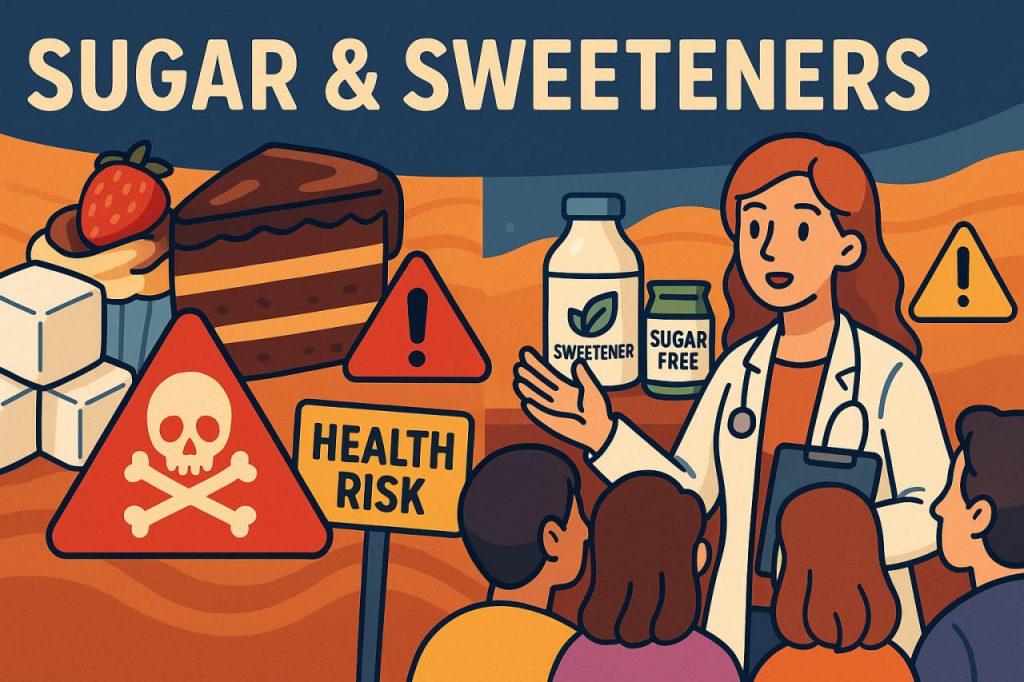
Sugar is one of the most consumed substances in the modern diet—and one of the most controversial. Found in everything from breakfast cereals to sauces, it provides quick energy and irresistible taste, yet its long-term health impact has become a major global concern. As awareness of sugar’s dangers grows, artificial and natural sweeteners have taken its place, promising sweetness without the calories. But how much healthier are they really? Scientists, nutritionists, and doctors are still debating whether these substitutes solve the problem or simply create new ones.
The Hidden Dangers of Sugar
For centuries, sugar has symbolized pleasure and luxury. However, modern research links excessive sugar intake to obesity, diabetes, heart disease, and even cognitive decline. When consumed in large amounts, sugar floods the bloodstream with glucose, forcing the pancreas to release insulin repeatedly. Over time, this can lead to insulin resistance, a precursor to type 2 diabetes. Moreover, sugar feeds inflammation in the body and affects the brain’s reward system, making it addictive much like a drug. Nutrition experts such as Dr. Robert Lustig, author of Fat Chance, argue that sugar is not just empty calories—it’s a toxin when consumed chronically in high doses.
The Rise of Artificial Sweeteners
As the dangers of sugar became public, the food industry turned to artificial sweeteners such as aspartame, sucralose, and saccharin. Marketed as guilt-free alternatives, these substitutes are hundreds of times sweeter than sugar but contain almost no calories. Initially hailed as a health revolution, artificial sweeteners soon became controversial. Some studies suggested they might disrupt gut bacteria, alter appetite regulation, or even increase sugar cravings. While health agencies like the FDA and EFSA consider approved sweeteners safe in moderation, scientists continue to debate their long-term metabolic and neurological effects.
Natural Sweeteners – A Healthier Alternative or Marketing Trick?
In recent years, natural alternatives like stevia, erythritol, and monk fruit extract have gained popularity. These plant-based sweeteners promise low calories and minimal blood sugar impact. However, not all “natural” options are entirely innocent. Stevia, for example, can have a bitter aftertaste and may cause bloating in some users. Erythritol—often found in “keto-friendly” foods—has been linked in some studies to blood clot risks when consumed excessively. Nutritionists stress that even natural sweeteners can perpetuate sugar dependency by keeping the brain accustomed to constant sweetness, thus undermining the effort to reduce cravings altogether.
The Psychology of Sweetness
The craving for sweetness is deeply rooted in human biology. Early humans relied on sweet foods like fruits as a source of quick energy and safety from toxins (most poisonous plants are bitter). Today, this instinct is exploited by the food industry through “hyper-palatable” products engineered to trigger the brain’s dopamine response. Psychologists warn that switching from sugar to artificial sweeteners does not necessarily break this addiction—it may actually reinforce it. According to experts like Dr. David Ludwig from Harvard, true health improvement comes not from substitution but from retraining taste preferences to appreciate less sweetness over time.
Expert Opinions – Divided but Insightful
Experts remain divided on the role of sweeteners in a healthy diet. Supporters like Dr. Susan Swithers argue that artificial sweeteners can help reduce calorie intake and combat obesity when used wisely. Critics, however, caution that they can interfere with metabolic signaling and gut microbiota. The consensus is that moderation and awareness are crucial. Both sugar and sweeteners can be part of a balanced diet if consumed consciously—but the real solution lies in overall lifestyle and food education. The ultimate goal is not finding the perfect substitute but escaping the cycle of sweetness dependence.
The Global Health Perspective
The World Health Organization (WHO) now recommends reducing free sugar intake to less than 10% of daily calories—and ideally below 5%. Despite these guidelines, global sugar consumption continues to rise, especially among children and adolescents. The sugar industry spends billions on marketing to preserve demand, often using misleading labels like “low fat” or “natural” to disguise added sugars. Public health experts emphasize that education and transparent labeling are essential for combating sugar-related diseases, which now rank among the top global health challenges.
The Future of Sweetness
As technology advances, scientists are developing new generations of sweeteners that aim to combine taste with safety. Innovations include biotechnologically engineered proteins and prebiotic fibers that mimic sweetness while nourishing the gut. Some companies are even exploring neuroadaptive food design, teaching the brain to perceive sweetness differently. While these innovations are promising, experts agree that the ultimate solution still lies in mindful consumption and redefining what pleasure in food means. The future of sweetness may depend less on chemistry—and more on consciousness.
Interesting Facts
- The average person consumes about 22 teaspoons of sugar per day—far above health recommendations.
- Aspartame is roughly 200 times sweeter than regular sugar.
- The first artificial sweetener, saccharin, was discovered by accident in 1879.
- Excess sugar can suppress the immune system for several hours after consumption.
- Some people experience headaches or digestive discomfort from artificial sweeteners due to gut sensitivity.
Glossary
- Glucose – A simple sugar and primary source of energy for the body.
- Insulin – A hormone produced by the pancreas that regulates blood sugar levels.
- Insulin Resistance – A condition in which cells become less responsive to insulin, leading to elevated blood glucose.
- Aspartame – A low-calorie artificial sweetener used in diet beverages and sugar-free products.
- Stevia – A natural sweetener derived from the leaves of the Stevia rebaudiana plant.
- Erythritol – A sugar alcohol used as a low-calorie sweetener, found naturally in some fruits.
- Microbiota – The community of microorganisms living in the human gut that influence health.
- Dopamine – A neurotransmitter involved in pleasure and reward.
- Free Sugars – Added sugars plus those naturally present in honey, syrups, and fruit juices.
- Prebiotic Fiber – A type of dietary fiber that feeds beneficial gut bacteria.