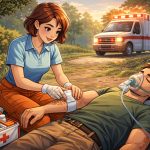
Cardiopulmonary resuscitation (CPR) is a life-saving emergency procedure used when a person’s heart stops beating or they stop breathing. It is designed to maintain blood circulation and oxygen flow to the brain and vital organs until professional medical help arrives. Brain damage can begin within minutes after the heart stops, which makes immediate action critical. CPR does not restart the heart in most cases, but it keeps the body viable long enough for advanced treatment such as defibrillation. Understanding CPR and acting quickly can significantly increase survival chances. Every minute without intervention reduces the likelihood of recovery.
When CPR Is Needed
CPR is required when a person is unresponsive and not breathing normally. This may occur due to cardiac arrest, drowning, electric shock, severe trauma, or choking. If the person does not respond when spoken to or gently shaken and shows no normal breathing, emergency services must be contacted immediately. Occasional gasping does not count as normal breathing. Time is the most critical factor, so CPR should begin without delay. Quick recognition of cardiac arrest dramatically improves outcomes.
The Basic Steps of CPR
Modern CPR focuses primarily on chest compressions. Place the person on a firm surface and kneel beside them. Position your hands in the center of the chest and press down firmly and quickly at a steady rhythm of about 100–120 compressions per minute. Compressions should be deep enough to circulate blood effectively while allowing the chest to fully recoil between presses. If trained, rescue breaths can be given after every 30 compressions. However, hands-only CPR is recommended if the rescuer is untrained or uncomfortable providing breaths.
Emergency medicine specialist Dr. Laura Henderson explains:
“Immediate chest compressions keep oxygen flowing to the brain.
Even imperfect CPR is better than no CPR at all.”
Using an Automated External Defibrillator (AED)
An Automated External Defibrillator (AED) is a device that analyzes heart rhythm and delivers a shock if necessary. AEDs are commonly available in public places such as airports, malls, and offices. Once turned on, the device provides voice instructions that guide the rescuer step by step. CPR should continue until the AED is ready to analyze the rhythm. Early defibrillation combined with CPR greatly increases survival probability.
Why Speed Matters
Survival rates decrease by approximately 7–10% for every minute without CPR in cases of cardiac arrest. Immediate bystander intervention can double or even triple survival chances. Many cardiac arrests occur outside hospitals, which makes public knowledge of CPR essential. Training programs emphasize quick recognition and decisive action. The faster CPR begins, the better the outcome.
Training and Preparedness
Although CPR can be performed without formal training, certified courses significantly improve technique and confidence. Practice helps maintain correct hand placement, compression depth, and rhythm. Regular refreshers are recommended because skills can fade over time. Communities with widespread CPR education show higher survival rates from cardiac arrest. Preparedness transforms hesitation into effective action during emergencies.
Interesting Facts
- Immediate CPR can double or triple survival chances.
- Most cardiac arrests happen outside hospitals.
- Hands-only CPR is effective when performed quickly and consistently.
- AED devices provide step-by-step voice guidance.
- Brain damage can begin within 4–6 minutes without oxygen.
Glossary
- CPR (Cardiopulmonary Resuscitation) — emergency chest compressions to maintain blood circulation.
- Cardiac Arrest — sudden loss of heart function.
- Chest Compressions — rhythmic pressing on the chest to circulate blood.
- AED (Automated External Defibrillator) — device that delivers an electric shock to restore heart rhythm.
- Rescue Breathing — assisted breaths given during CPR.