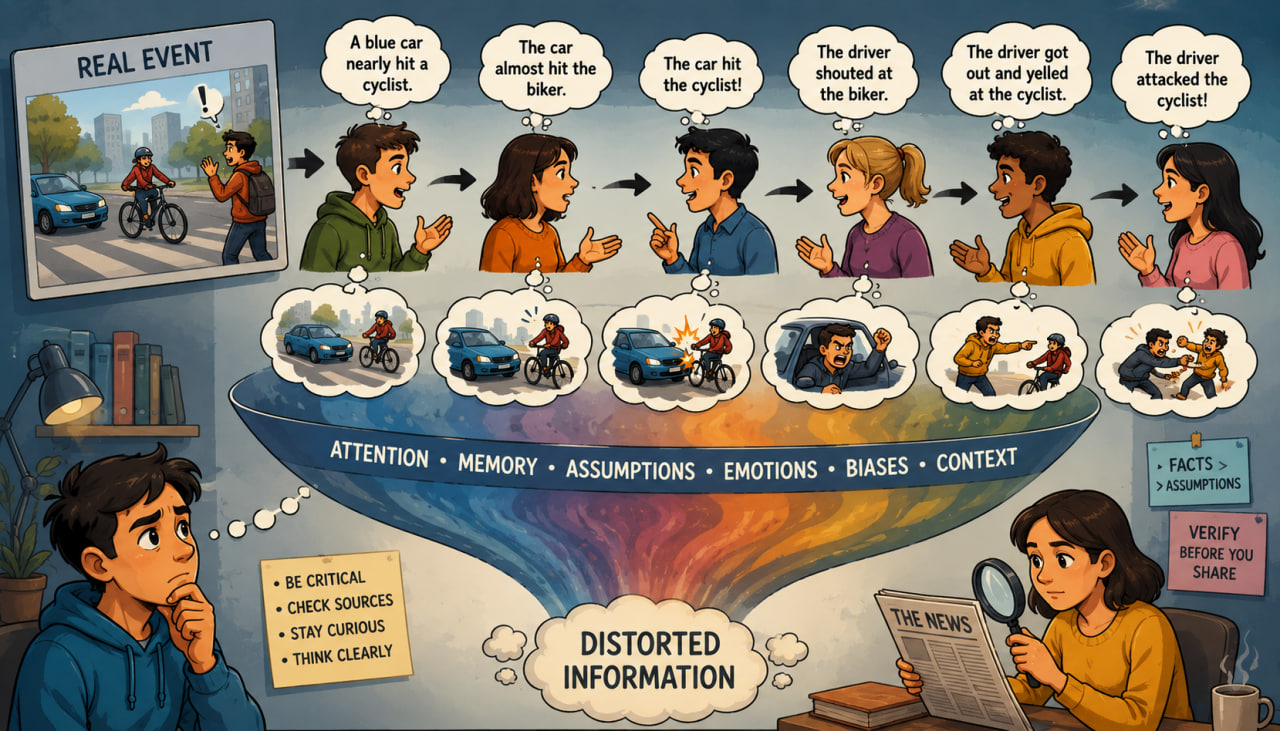
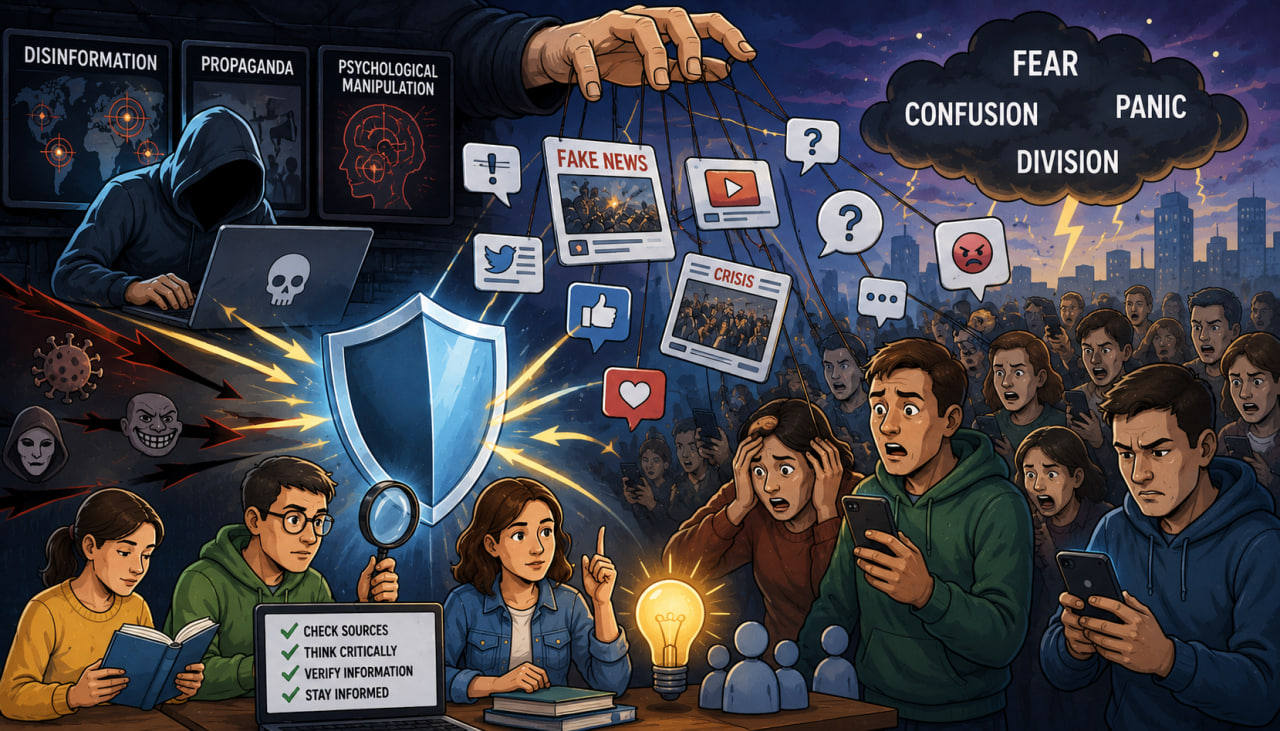
Every day, people share stories, news, observations, memories, and opinions. We often assume that information travels from one person to another like a file being copied from one computer to another. In reality, human communication works very differently. Psychologists have long known that information changes as it passes through individual minds. Memory is imperfect, perception is selective, emotions influence interpretation, and personal beliefs shape understanding. As a result, facts can become distorted, exaggerated, simplified, or completely transformed during transmission. This phenomenon affects everything from everyday conversations and workplace communication to journalism, social media, politics, and historical records. Understanding how the human mind alters information can help us become more critical consumers and communicators of knowledge.