
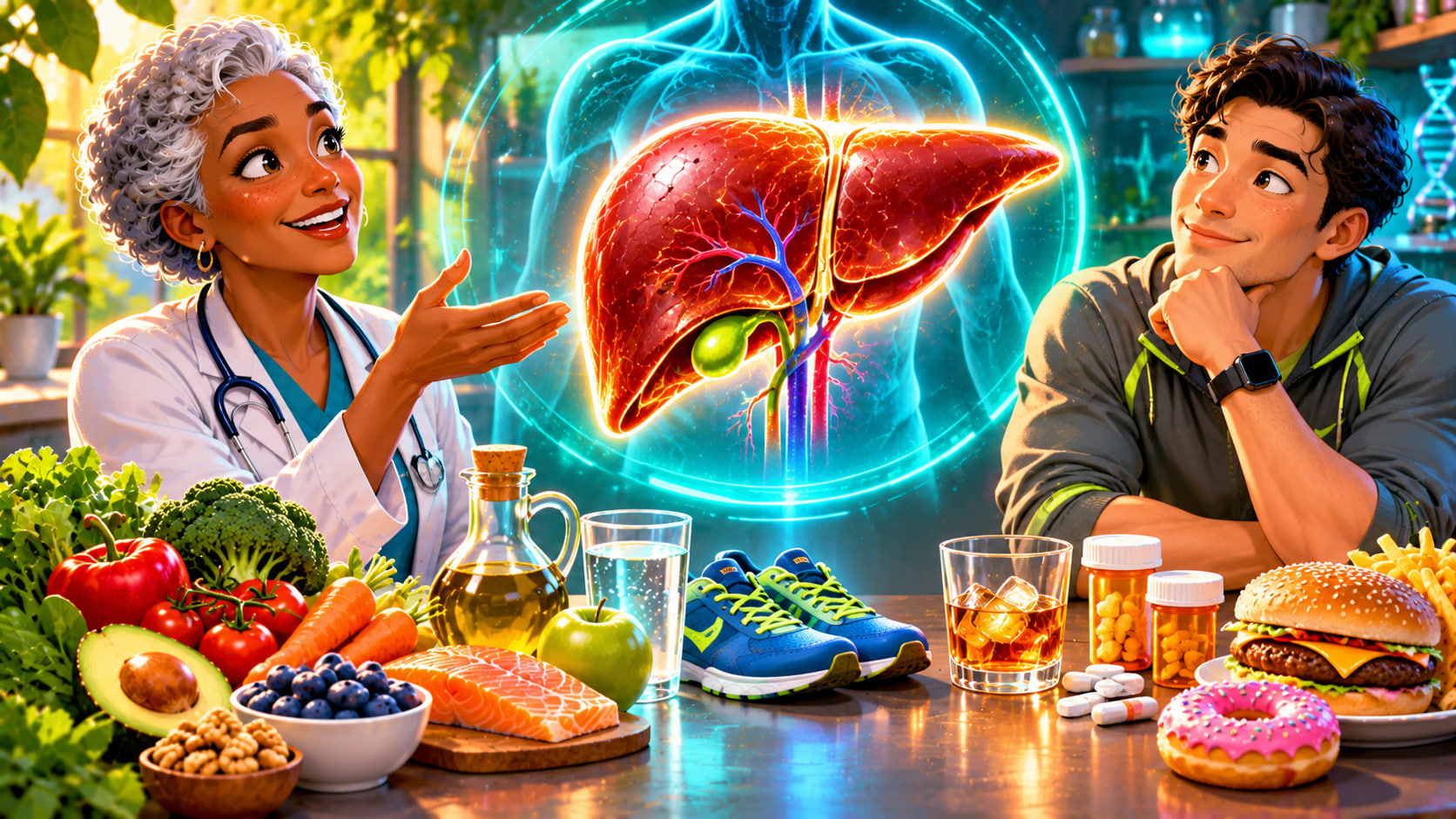
Imagine having a powerful chemical laboratory inside your body that works around the clock, processing nutrients, managing energy, and helping remove harmful substances from your bloodstream. This extraordinary laboratory is your liver, one of the largest internal organs and one of the most important components of human metabolism.
Every meal, medication, and alcoholic drink can influence the liver's workload. Yet most people rarely think about this remarkable organ until something goes wrong. The liver can perform hundreds of essential functions and even regenerate damaged tissue, but its impressive abilities do not make it indestructible. Understanding how it works reveals why everyday habits matter so much for long-term health.
What Is the Liver and Where Is It Located?
The liver is a large, reddish-brown organ located primarily in the upper right portion of the abdomen, beneath the diaphragm and protected by the lower ribs. In a typical adult, it weighs approximately 1.4–1.8 kilograms, although its size varies with body characteristics.
Unlike organs that perform one dominant task, the liver coordinates numerous processes involving digestion, metabolism, immunity, and blood chemistry. It receives blood from the digestive organs through the portal vein and oxygen-rich blood through the hepatic artery. This unusual dual blood supply allows the liver to process nutrients absorbed from food while maintaining its own energy needs.
How Does the Liver Process Everything You Eat?
After digestion, many nutrients absorbed by the intestines travel directly to the liver. There, specialized cells decide whether substances should be stored, transformed, released into circulation, or used to produce other compounds. This process helps maintain a stable internal environment despite changes in what and when we eat.
For example, the liver stores glucose as glycogen after meals and can release glucose when blood sugar levels fall. It also processes amino acids, produces important blood proteins, and participates in fat metabolism. Without these functions, the body would struggle to maintain energy supplies, regulate blood chemistry, and support normal tissue repair.
The Liver's Surprising Role in Digestion
Although most people associate digestion with the stomach and intestines, the liver is essential for processing dietary fats. It produces bile, a digestive fluid containing bile acids, cholesterol, and other substances that help the intestines absorb fats and fat-soluble vitamins.
Much of this bile is stored in the gallbladder until food enters the small intestine. When a meal contains fat, the gallbladder releases bile to assist digestion and nutrient absorption. The liver also uses bile to help eliminate certain waste products, demonstrating how one biological fluid contributes to both digestion and the removal of unwanted substances.
Does the Liver Really Detoxify Your Body?
The liver plays a major role in processing alcohol, medications, and substances produced during normal metabolism. Its enzymes transform many compounds into forms that can be further processed or eliminated through urine or bile. However, these reactions do not always make substances harmless immediately, and some chemical transformations can temporarily produce more reactive compounds.
This is why the popular idea of flushing toxins from the liver with special juices or cleansing supplements is misleading. A healthy liver already performs complex metabolic processing continuously, without needing a commercial detox program. The most effective way to support liver function is to reduce harmful exposures rather than attempt to cleanse the organ afterward.
How Alcohol Can Gradually Damage the Liver
Alcohol is one of the best-known causes of preventable liver damage. When the liver metabolizes ethanol, it produces acetaldehyde, a toxic intermediate that contributes to cellular stress and tissue injury. Repeated heavy drinking can lead to fat accumulation, inflammation, and eventually extensive scarring.
The early stages of alcohol-related fatty liver may improve after alcohol consumption stops, but advanced damage can be much harder to reverse. Alcohol-related liver disease also varies between individuals because genetics, nutrition, drinking patterns, and existing health conditions influence susceptibility. Drinking less reduces alcohol-related liver risks, and people with established liver disease may need to avoid alcohol completely.
Fatty Liver Disease Can Develop Without Alcohol
A particularly important discovery in modern medicine is that substantial liver fat can accumulate in people who drink little or no alcohol. This condition is now commonly described as metabolic dysfunction-associated steatotic liver disease, or MASLD, and is closely associated with insulin resistance, type 2 diabetes, excess body fat, and abnormal blood lipids.
Some people develop more serious inflammation and liver-cell damage, a condition known as MASH, which can progress to fibrosis and cirrhosis. Hepatologist Dr. Rohit Loomba of the University of California, San Diego has contributed extensively to research on metabolic liver disease and methods for detecting liver damage without invasive procedures. His work reflects the growing medical recognition that liver health and metabolic health are deeply interconnected.
Medications and Supplements: Hidden Liver Risks
Medicines can provide essential treatment, but certain drugs may cause liver injury when taken incorrectly or, occasionally, even at prescribed doses. Paracetamol, also called acetaminophen, is a well-known example because excessive amounts can overwhelm the liver's protective mechanisms and lead to acute liver failure.
Accidental overdoses may occur when several cold, flu, and pain medications contain the same ingredient. Some herbal extracts and concentrated dietary supplements have also been associated with liver injury, despite being marketed as natural products. Always follow medication instructions and check active ingredients before combining treatments, particularly when using products that affect the liver.
Can the Liver Really Regenerate Itself?
One of the liver's most extraordinary characteristics is its ability to restore lost tissue. After certain injuries or surgical removal of part of the organ, surviving liver cells can multiply, allowing the remaining tissue to regain much of its original mass and function.
This remarkable capacity makes living-donor liver transplantation possible under carefully controlled medical conditions. However, regeneration has limits, particularly when repeated injury leads to extensive fibrosis or cirrhosis. The liver can recover from some forms of damage, but its ability to regenerate should never be mistaken for unlimited protection against harmful habits.
How Can You Keep Your Liver Healthy?
Protecting the liver involves many of the same habits that support cardiovascular and metabolic health. Regular physical activity, balanced nutrition, appropriate weight management, and reduced alcohol consumption can help lower the risk of liver disease. Meals rich in vegetables, fruits, whole grains, legumes, and unsaturated fats support overall metabolic health.
For people with excess liver fat, gradual weight reduction may produce meaningful improvements, while exercise can reduce liver fat even without major weight loss. Vaccination against hepatitis A and B, when recommended, and appropriate screening for viral hepatitis provide additional protection. There is no single miracle food for the liver; consistent everyday habits matter far more than occasional detox diets.
Warning Signs That Your Liver May Need Attention
Liver disease can develop silently, sometimes progressing for years without obvious symptoms. When signs do appear, they may include persistent fatigue, abdominal swelling, dark urine, unusual bruising, or jaundice, which causes yellowing of the skin and eyes.
Doctors can assess liver health through blood tests, imaging, and other investigations, particularly for people with diabetes, obesity, viral hepatitis risks, or heavy alcohol exposure. New jaundice warrants prompt medical evaluation, while confusion, vomiting blood, or severe illness requires emergency care. Early recognition can make a substantial difference because some liver conditions respond much better to treatment before advanced scarring develops.
The liver supports your body every minute, quietly maintaining processes essential for survival. Which everyday habit do you think people underestimate most when it comes to liver health: alcohol consumption, diet, unnecessary supplements, or physical inactivity? Share your thoughts in the comments!
Interesting Facts
- The liver is the largest internal solid organ in the human body.
- It receives blood from two major sources: the hepatic artery and the portal vein.
- The liver produces bile, which supports the absorption of dietary fats and fat-soluble vitamins.
- It stores glycogen and helps regulate blood glucose between meals.
- The liver can regenerate substantial amounts of lost tissue under suitable conditions.
- Serious liver disease can develop without noticeable symptoms during its early stages.
- Some herbal supplements can cause liver injury despite being advertised as natural.
Glossary
- Hepatocyte — A specialized liver cell responsible for many metabolic functions.
- Metabolism — The chemical processes that transform substances and maintain life.
- Bile — A fluid produced by the liver that helps digest fats and eliminate certain waste products.
- Glycogen — The stored form of glucose found primarily in the liver and muscles.
- MASLD — Metabolic dysfunction-associated steatotic liver disease, characterized by excess liver fat associated with metabolic risk factors.
- MASH — A more inflammatory form of metabolic fatty liver disease that can cause liver-cell damage.
- Fibrosis — The accumulation of scar tissue following ongoing injury.
- Cirrhosis — Advanced liver scarring that disrupts the organ's normal structure and function.
- Hepatitis — Inflammation of the liver caused by infections, toxins, immune disorders, or other conditions.
- Jaundice — Yellowing of the skin or eyes caused by increased bilirubin levels.